Portable routers with 4G support come in various sizes. The most compact models are only slightly larger than USB modems in shape and dimensions, a prime example being the Vinga Hotspot 4G M301 (VMRL-M301B) priced around ₴1600. However, there are also larger solutions that resemble classic routers and are equipped with at least one network WAN/LAN port.
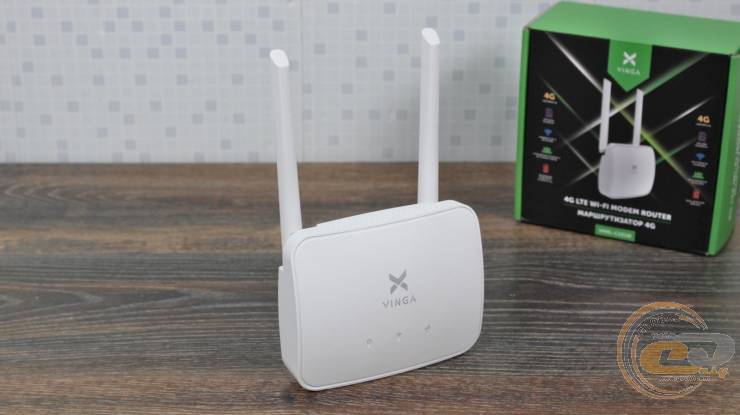
One of these devices is the Vinga IndHome 4G C101 (VMRL-C101W) priced around ₴2500. We will further examine its appearance, functional capabilities, and test its performance in Ukrainian mobile networks.
Specification
|
Model |
Vinga IndHome 4G C101 (VMRL-C101W) |
|
Type |
Mobile Wi-Fi router |
|
Wireless communication standards |
802.11b/g/n/ax (Wi-Fi 6) 1×1 4G/3G (FDD-LTE, TDD-LTE, WCDMA) |
|
Supported Wi-Fi frequency bands |
2.4 GHz |
|
Supported LTE bands |
4G FDD-LTE: B1/B3/B5/B7/B8/B20 4G TDD-LTE: B38/B40/B41 3G WCDMA: B1/B5/B8 |
|
Maximum 4G LTE throughput |
150 Mbps download 50 Mbps upload |
|
Maximum number of connections |
10 |
|
Number of antennas |
2 |
|
Indicators |
Power, Wi-Fi, 4G |
|
Connectors |
Nano-SIM (4FF) WAN/LAN 100Base USB Type-C Power |
|
Buttons |
Power Reset |
|
Security |
WPA/WPA2/WPA3 |
|
Supported protocols |
IPv4, IPv6 |
|
Power supply |
12 V, 1 A |
|
Power consumption |
<10 W |
|
Battery |
3.7 V, 4000 mAh, 14.8 Wh |
|
Operating temperature |
from -10 to 40°C |
|
Dimensions |
134 × 46.2 × 104.9 mm |
|
Warranty |
2 years |
|
Device page |
|
|
Manufacturer's website |
|
|
Purchase page |
Packaging and Delivery Set
The box is quite informative, with data provided in both Ukrainian and English. As expected, the manufacturing facilities are located in China.
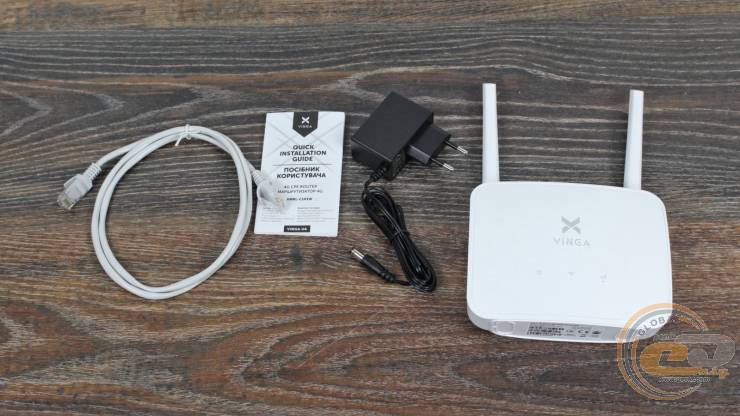
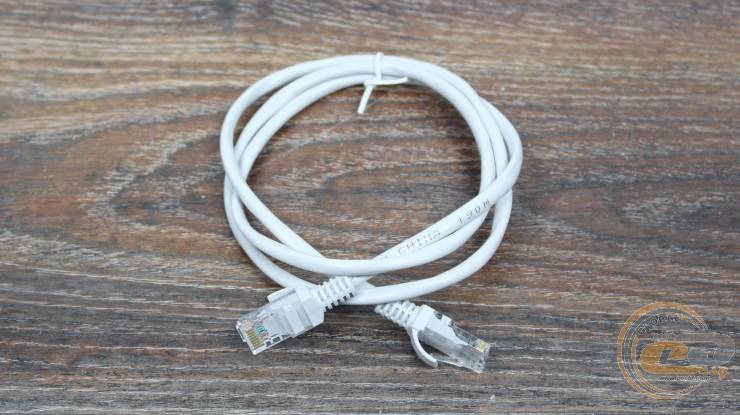
The Vinga IndHome 4G C101 package includes a user manual, a patch cord, and a power adapter.
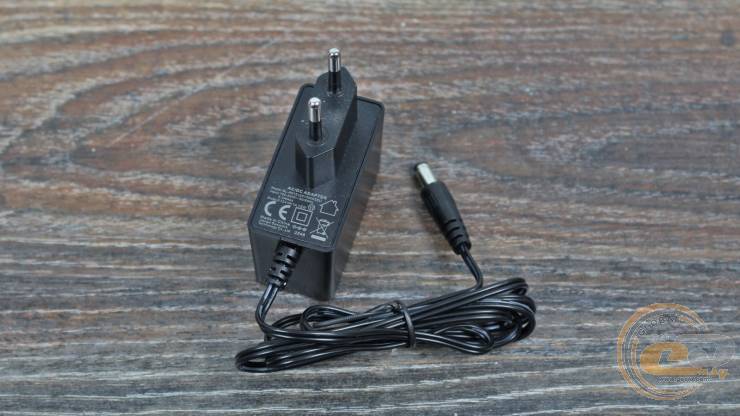
The latter has a power of 12 W (12 V at 1 A), while the manufacturer claims that the actual power consumption does not exceed 10 W.
Appearance
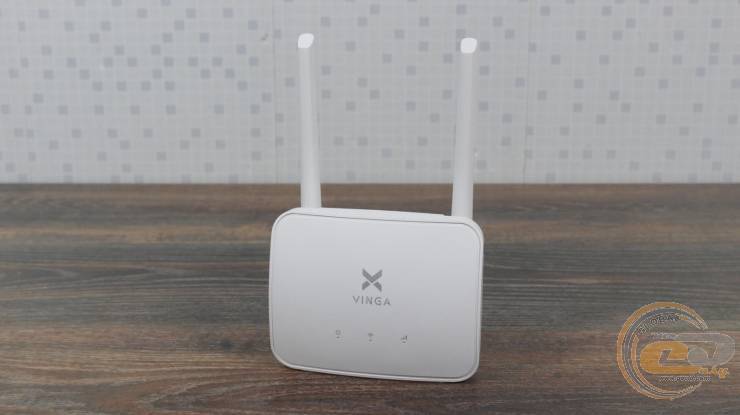
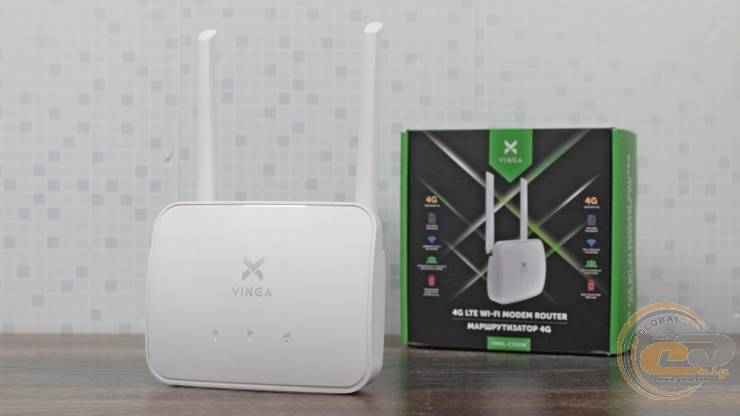
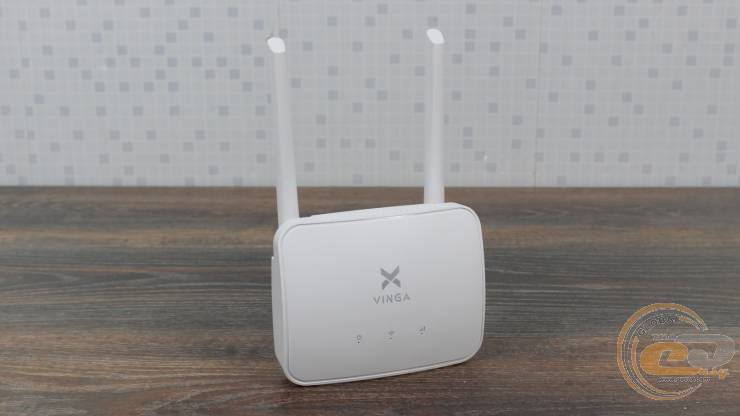
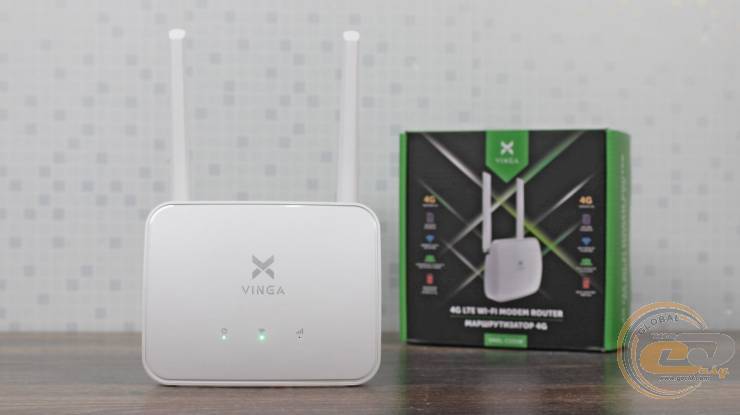
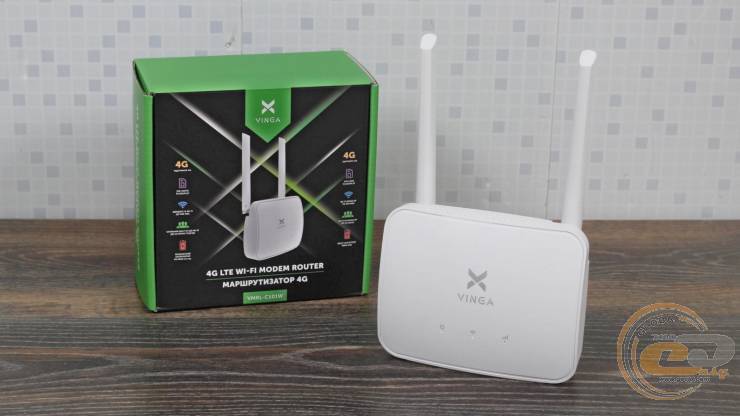
We have a very compact router measuring 134 × 46.2 × 104.9 mm, made in a white matte case with smooth lines and rounded corners.
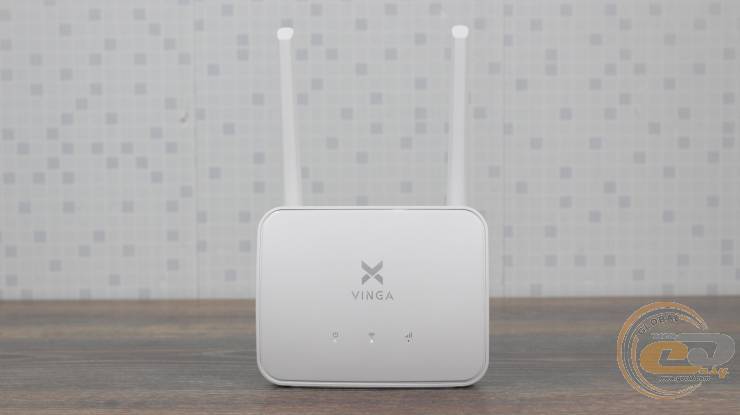
The device is adorned with the manufacturer's logo, beneath which are three green indicators: power, Wi-Fi, and 4G.
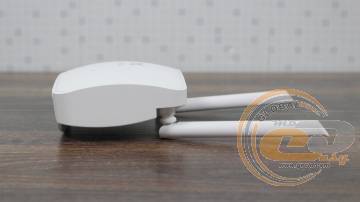
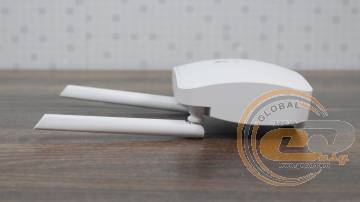
The sides are devoid of any elements, except for a pair of antennas at the top. The latter are non-detachable, but they can be directed towards clients to ensure a better signal level.
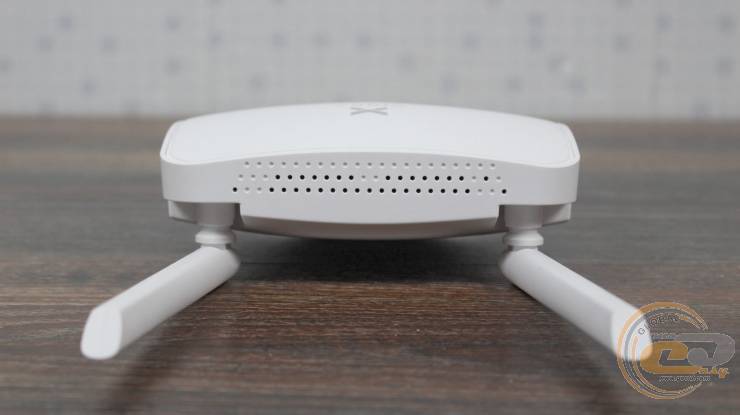
Ventilation holes are located on the top panel, allowing the air heated by internal components to freely exit the case.
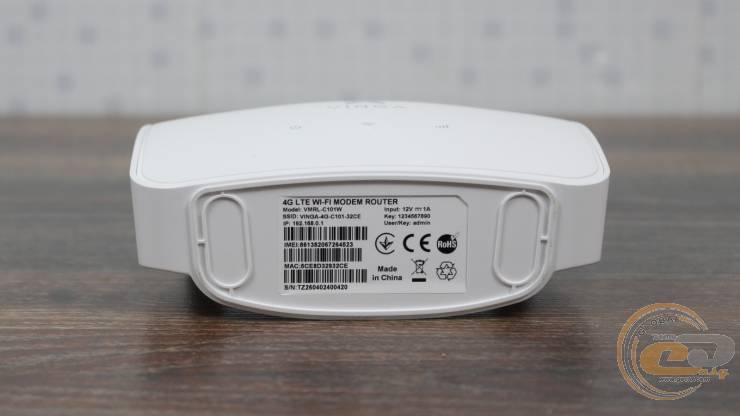
On the opposite side of the Vinga IndHome 4G C101, there is a plastic stand and a sticker with useful information. The latter contains data for accessing the web interface and connecting to an existing Wi-Fi network. Since the default passwords are very simple, we recommend changing them at the first opportunity.
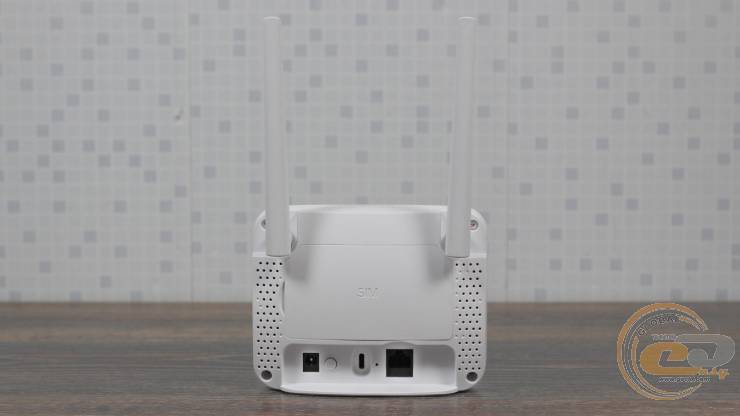
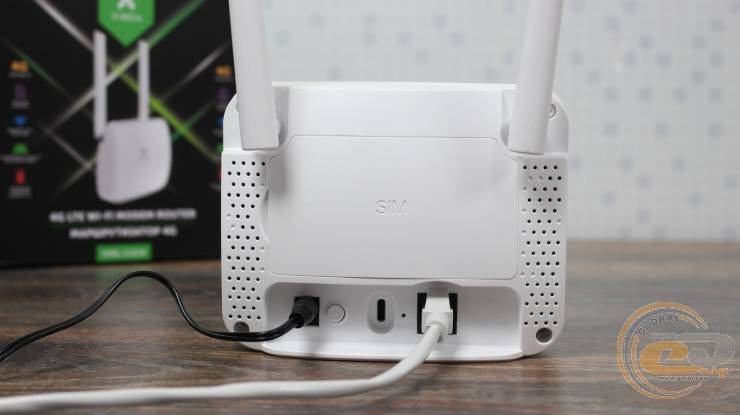
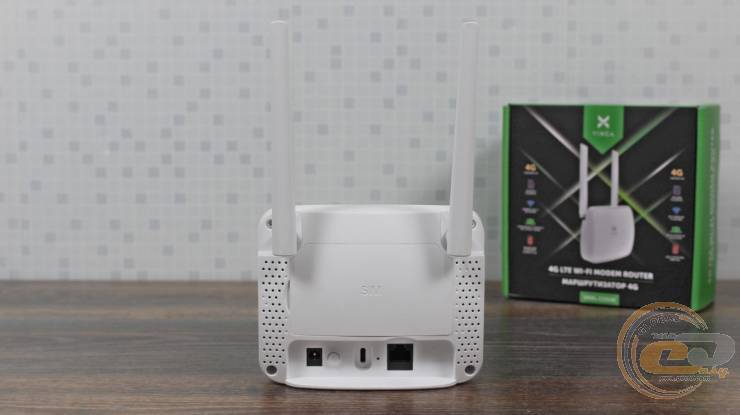
The most elements are located on the rear panel. Ventilation holes are provided on the sides, four mounting screws (one with a warranty seal) are located at the corners, and in the lower niche, there is a power connector, a power button, a USB Type-C port, a "Reset" button, and a 100-megabit WAN/LAN port. The latter effectively allows the device to be used as a stationary solution.
The USB Type-C port, in turn, allows powering the router from an external power supply with parameters of 5V / 2A or a power bank — this is especially convenient during power outages or when there is no access to the power grid.
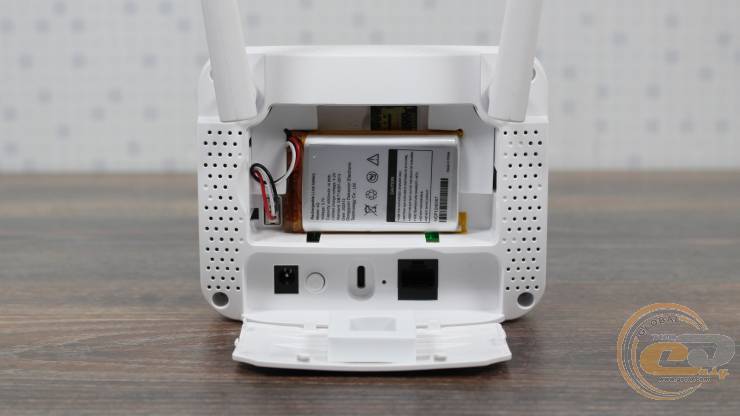
Above is a removable cover that opens without any tools. Underneath it is a removable battery with a capacity of 4000 mAh or 14.8 Wh, which is a good indicator.
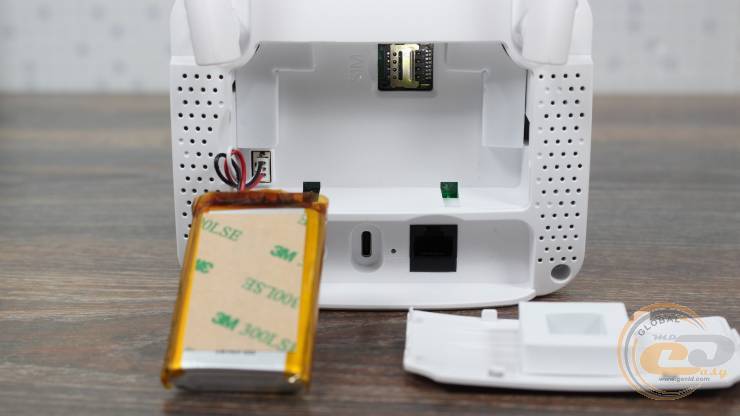
It is secured with double-sided tape, but it can be dispensed with. In this case, maximum convenient access to the Nano-SIM card slot located at the top will be provided.
Functional capabilities
Now let's talk about what is not visible from the outside. The Vinga IndHome 4G C101 router supports Wi-Fi 4 (802.11n) and Wi-Fi 6 (802.11ax) standards only in the 2.4 GHz range — given the presence of a 100-megabit WAN port, this will be quite sufficient. Traditionally, there is support for older clients of the Wi-Fi 802.11b/g standards. In total, up to 10 clients can be connected to the device simultaneously.
In addition, the device has full support for 4G and 3G band standards:
- 4G FDD-LTE: B1/B3/B5/B7/B8/B20
- 4G TDD-LTE: B38/B40/B41
- 3G WCDMA: B1/B5/B8
The most important thing is that the list includes the necessary bands for working with SIM cards of Ukrainian operators: Band 3 (1800 MHz), Band 7 (2600 MHz), and Band 8 (900 MHz). Others will be useful when using the router abroad. The theoretical maximum data transfer speed in 4G LTE networks is 150 Mbps for download and 50 Mbps for upload.
Well, purely in terms of characteristics, the listed capabilities do not differ from the compact Vinga Hotspot 4G M301.
Setup
After installing the Nano-SIM card, battery, and power supply, we turn on the device with the button on the rear panel. After booting and searching for a mobile network, the router is ready to connect clients.
To access the web interface, from a connected device, go to http://192.168.0.1. The login and password are very simple: "admin" and "admin".
This environment allows monitoring the network status, viewing traffic usage statistics (which is very useful for limited tariff plans), selecting the internet source, performing quick network settings, exchanging SMS messages, viewing contacts saved on the SIM card, and sending USSD requests.
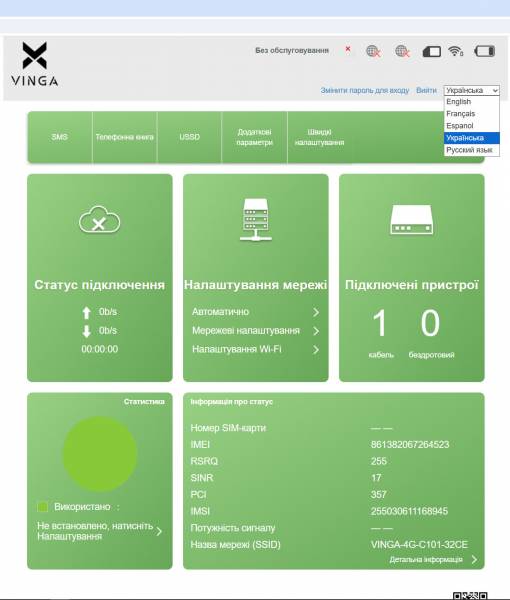
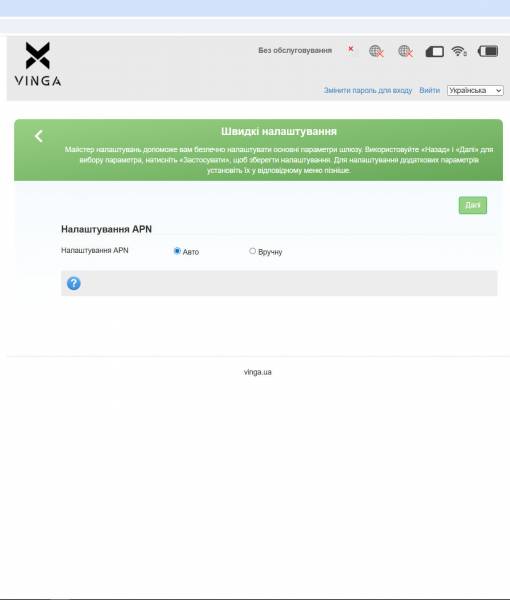
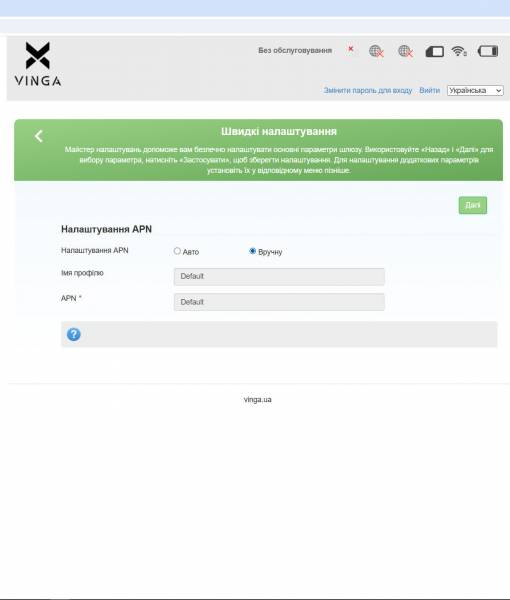
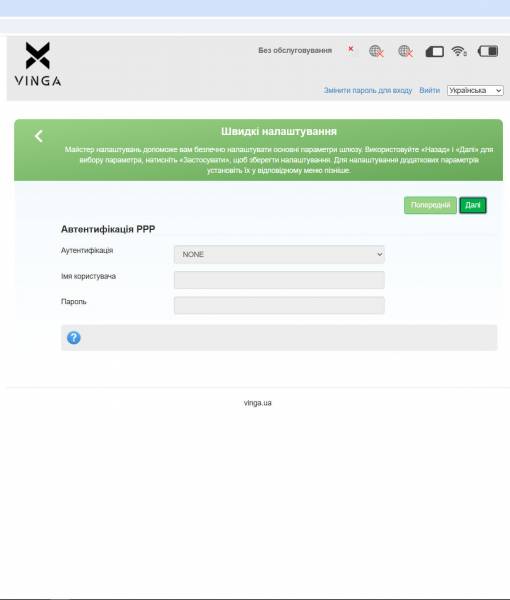
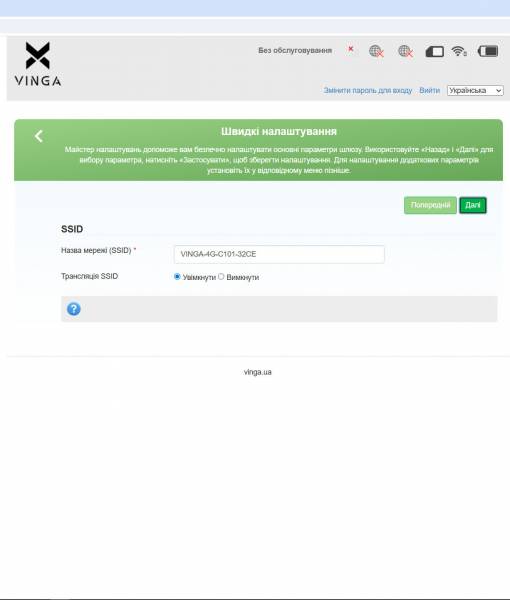
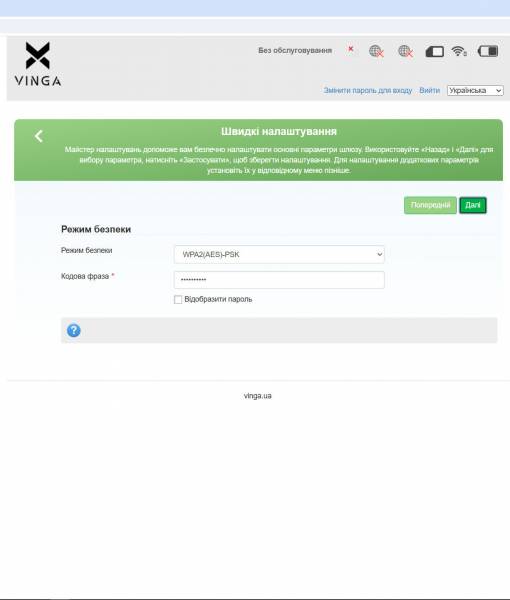
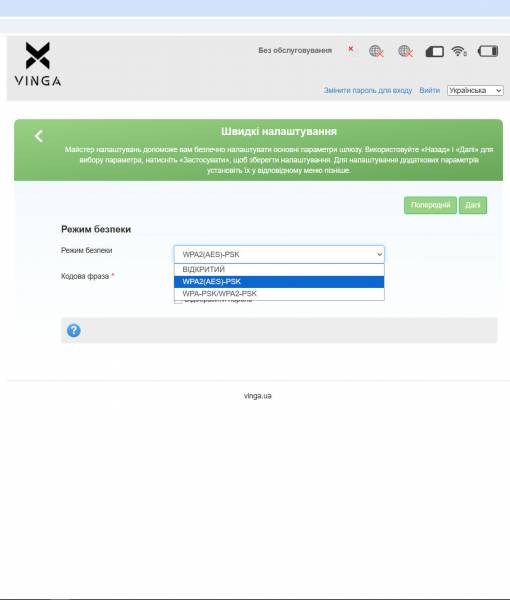
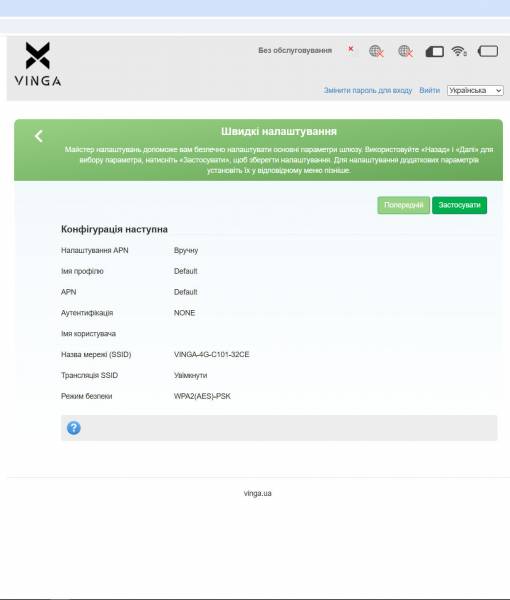
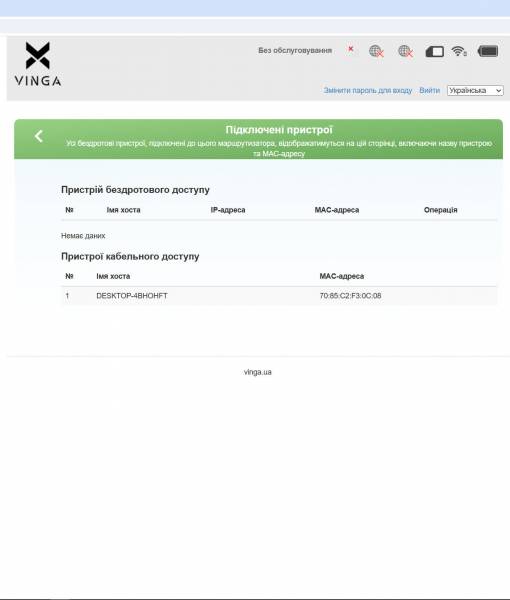
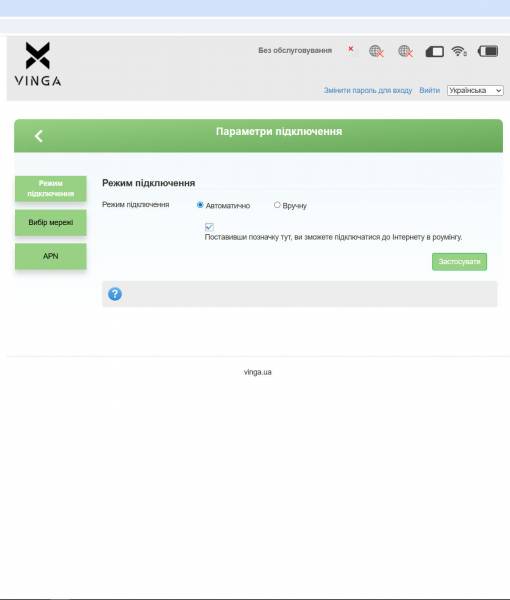
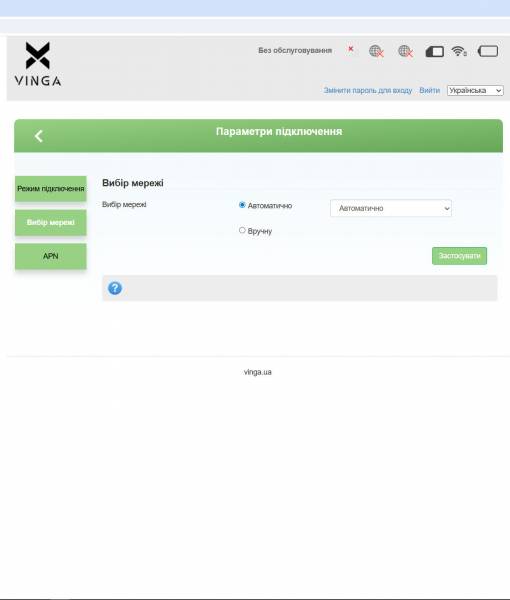
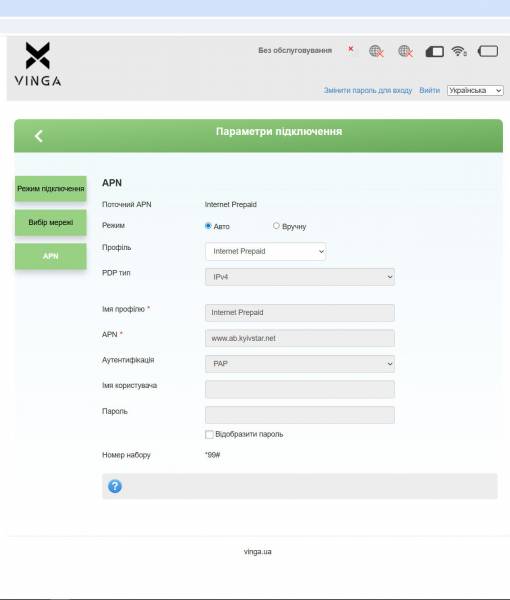
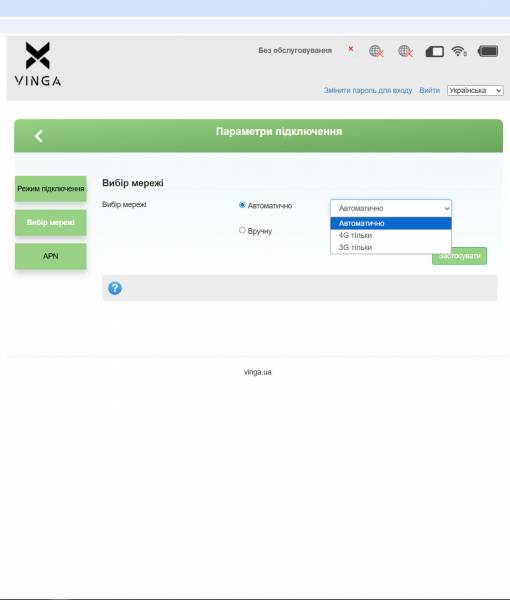
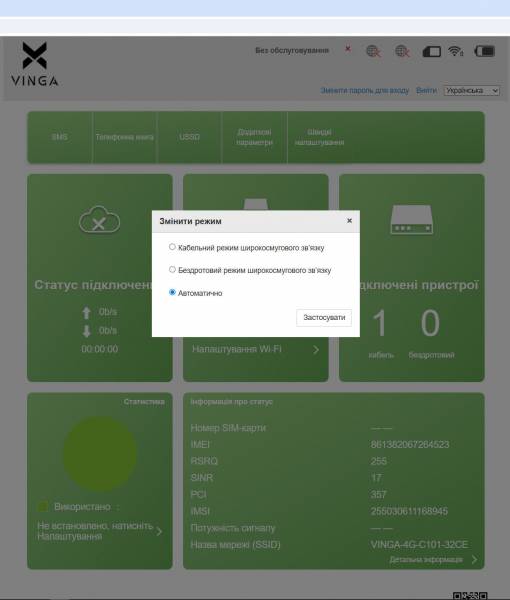
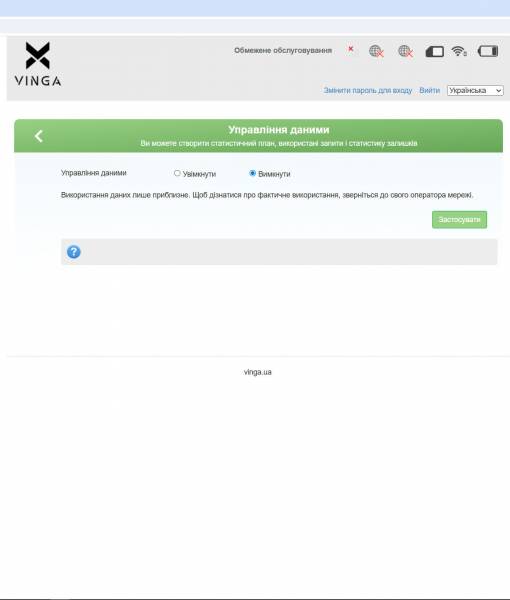
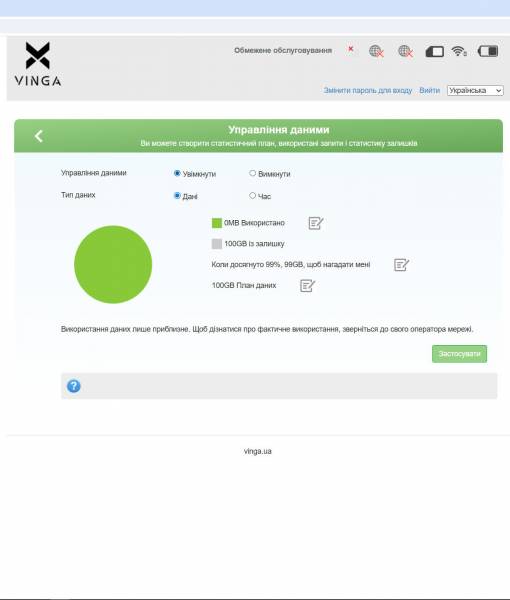
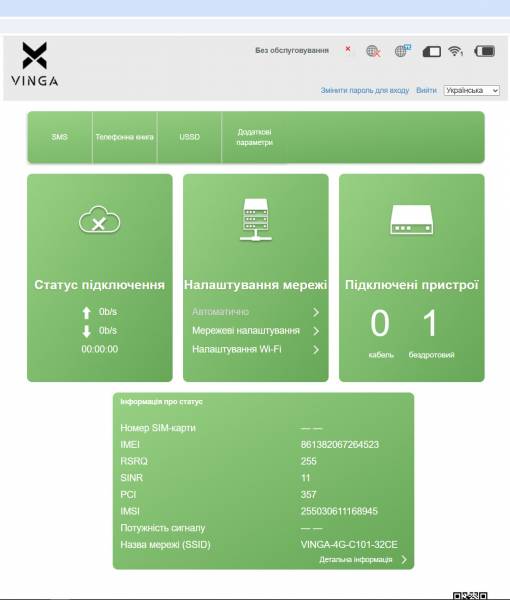
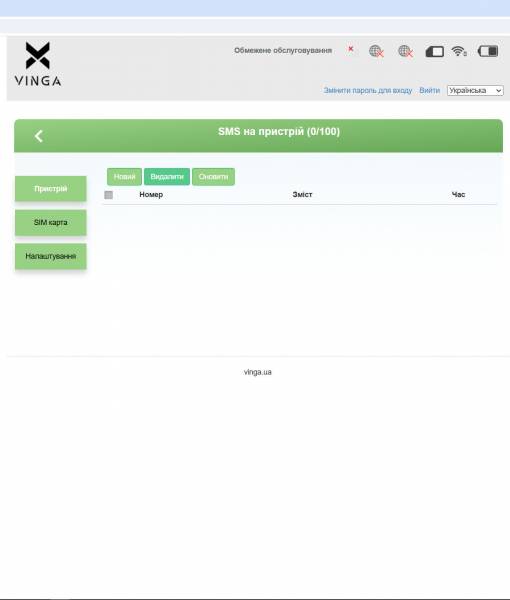
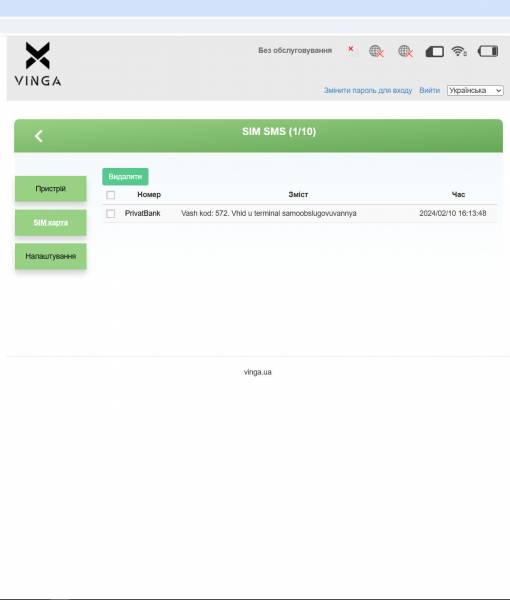
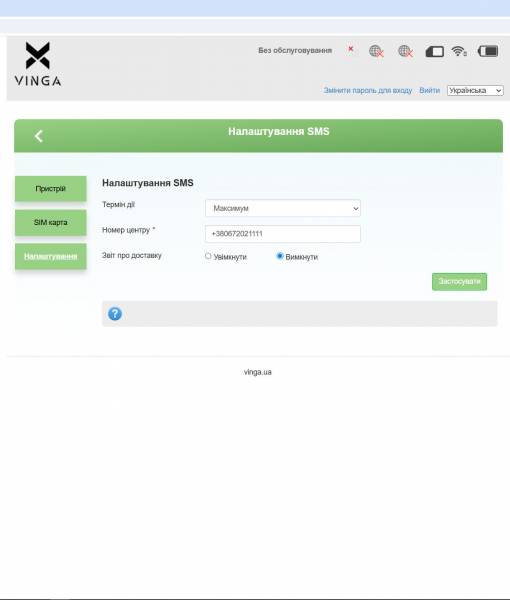
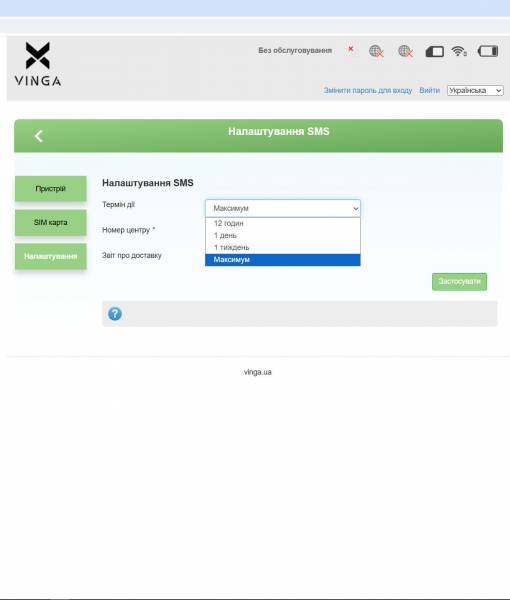
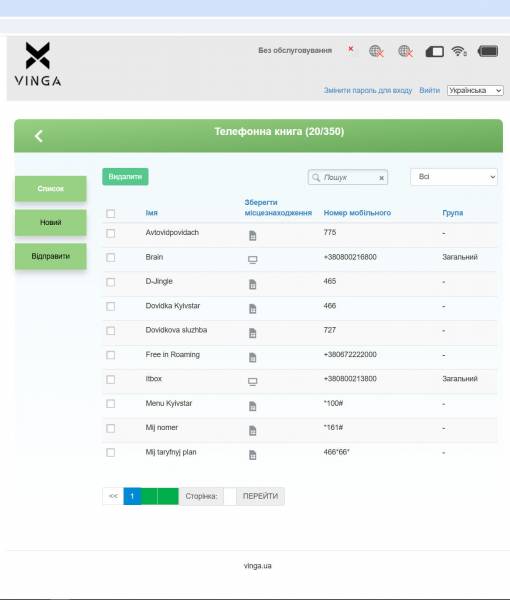
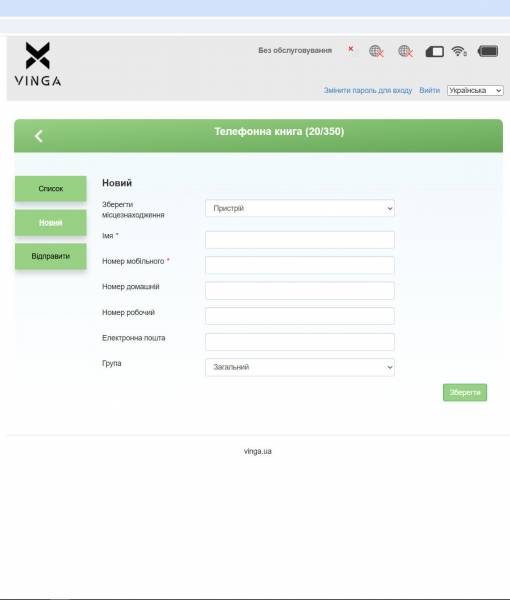
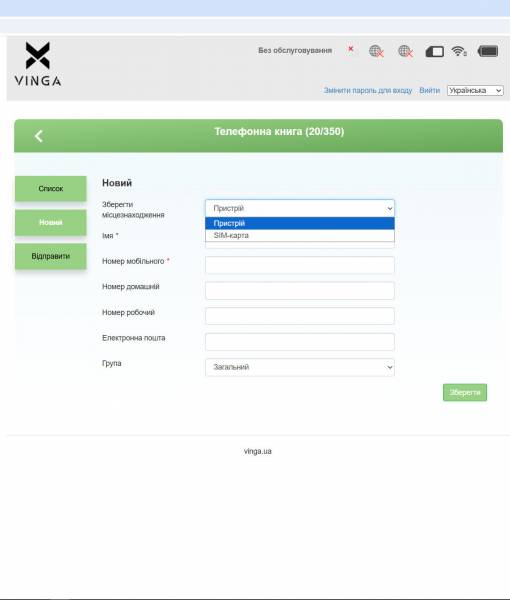
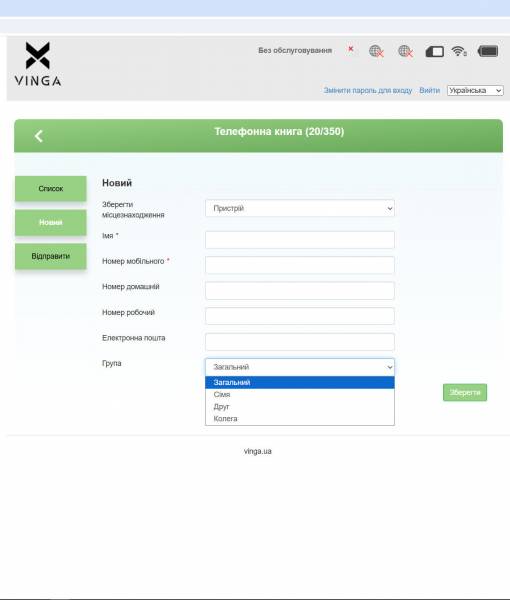
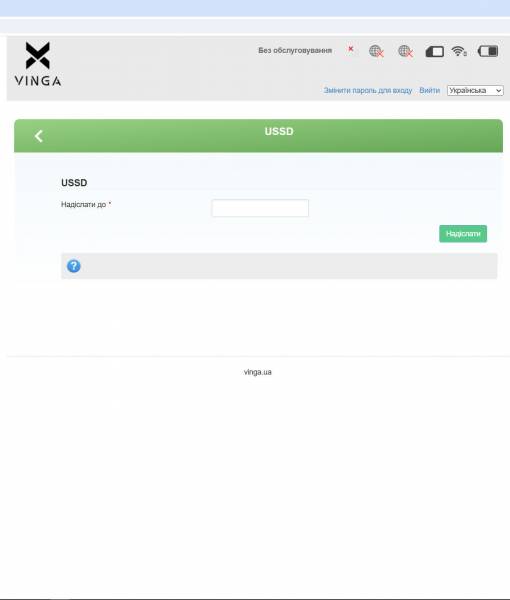
Additionally, you can change a number of parameters here: configure the Wi-Fi coverage area to optimize performance or autonomy, activate sleep mode, change routing settings, use the built-in firewall, update software, deactivate certain bands, configure VPN, etc. Note the high-quality Ukrainian localization of the interface, which will significantly simplify the setup process.
Testing
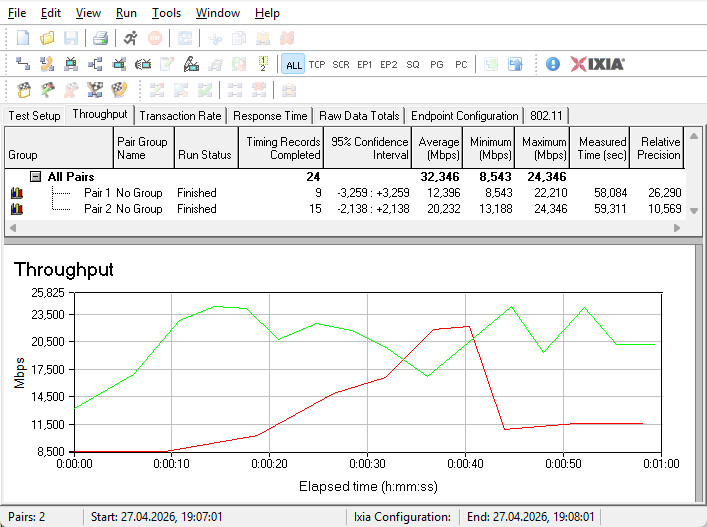
Data flow in both directions
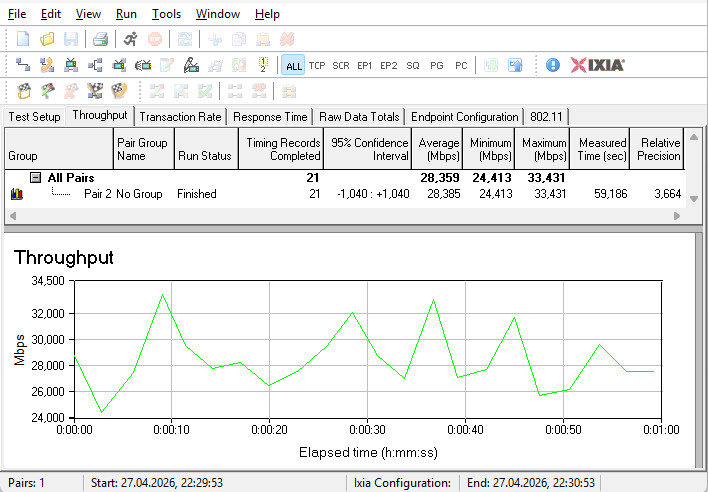
Data flow from client to router
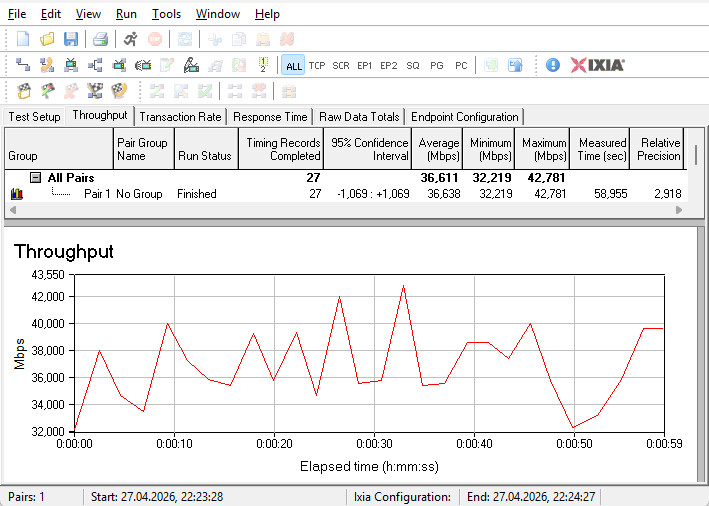
Data flow from router to client
Let's move on to testing the Vinga IndHome 4G C101. The average mobile data transfer speed in both directions is about 32 Mbps. In one direction, we got 33 Mbps for download and 43 Mbps for upload. We remind you that these figures actually demonstrate the data transfer speed in the mobile network, not the maximum capabilities of the device, so the obtained values are quite expected for the test location. At the same time, they indicate that the tested router performs its functions correctly.
In practice, these indicators depend on a number of factors: the quality of the 4G network signal, its load, and the distance to the base station. In addition, the final result is also influenced by the number of connected clients and the distance to them.
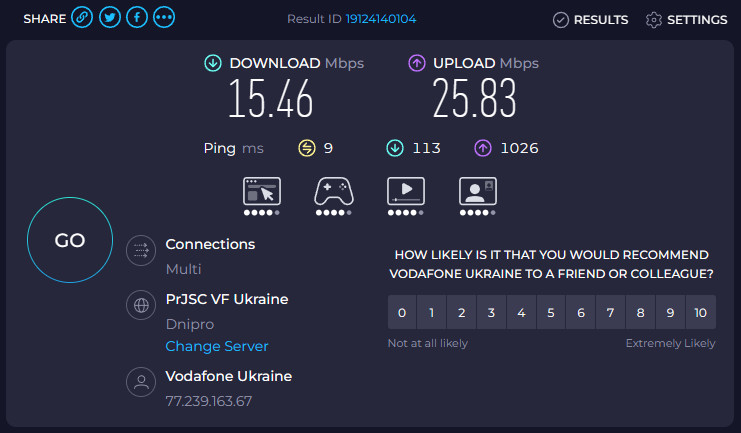
During testing with a Vodafone SIM card in the Speedtest.net service, the speed turned out to be slightly lower — 15 Mbps for download and 26 Mbps for upload. However, these figures are quite sufficient for comfortable video viewing, working with web pages, and downloading small files.
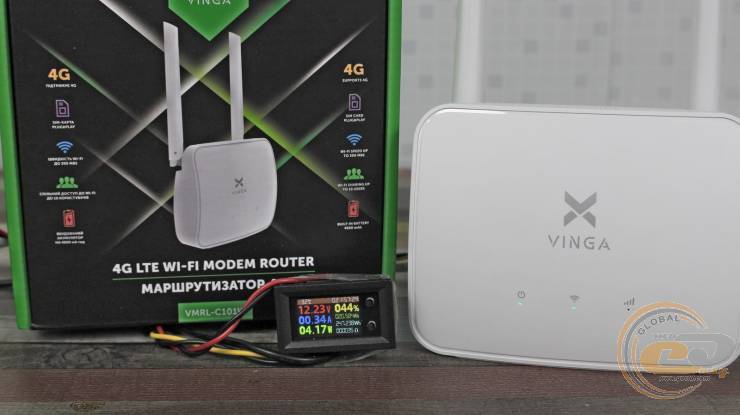
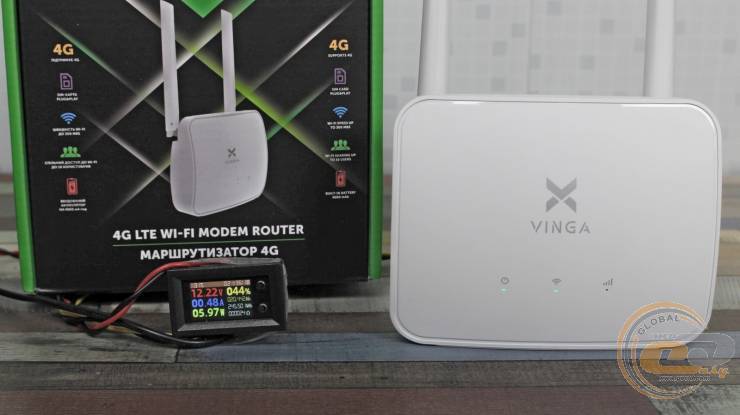
The router's power consumption is about 4 W (12 V, 0.3-0.35 A) with a charged battery and up to 6 W (12 V, 0.48 A) with simultaneous load and charging. In turn, the battery provides autonomy of about 3-3.5 hours — this is approximately half as much as in the case of the portable Vinga Hotspot 4G M301 (VMRL-M301B), even despite the increased 4000 mAh capacity.
Conclusions
Vinga IndHome 4G C101 (VMRL-C101W) — an interesting portable device that can be useful both on trips and during blackouts. It combines the capabilities of a mobile 4G-LTE modem and a compact Wi-Fi router, providing internet access for up to ten clients simultaneously.
In terms of functionality, it is close to the previously tested Vinga Hotspot 4G M301, as it also supports all major 4G bands and operates in the 2.4 GHz range with Wi-Fi 4 and Wi-Fi 6. However, while the M301 focused on pocketability and maximum mobility, the C101 is positioned as a miniature alternative to a full-fledged stationary router. This is facilitated by two external antennas and the presence of a LAN/WAN port with speeds up to 100 Mbps.
At the same time, due to more powerful "hardware," autonomy here is more modest — about 3-3.5 hours of battery life, although its capacity is increased. For longer use, you will need to connect a power bank via USB Type-C, which, however, is not a problem for modern users.
The settings interface is traditionally simple and clear, with full Ukrainian localization. At the same time, the absence of a display can be a drawback: the battery charge level can only be checked through the web interface, so there is a risk of unexpected discharge at an inappropriate moment. Therefore, the device should be considered as a router powered by a power bank with limited autonomy.
Overall, Vinga IndHome 4G C101 looks like a practical solution for those looking for a compact but more functional mobile router than pocket models. The two-year warranty also adds confidence, distinguishing it favorably from devices from foreign platforms.
Advantages
- built-in 4G-LTE modem with support for all domestic LTE operators;
- support for Wi-Fi 4 and 6 (802.11n and 802.11ax);
- presence of a 100-megabit LAN/WAN port;
- functional web interface with Ukrainian localization;
- two external antennas for better signal level;
- powered via USB Type-C, including from a power bank;
- autonomous operation for 3-3.5 hours thanks to a 4,000 mAh battery;
- support for connecting up to 10 clients simultaneously;
- use of Nano-SIM (4FF) format SIM card.
- 2-year warranty.
Features:
- the charge level can only be determined through the web interface;
- relatively low autonomy compared to pocket models.