Recently, Vinga has delighted us with a whole range of various Full Tower cases. For example, Cobalt and Sigurd belong to the category of affordable solutions, yet they possess everything necessary for building a powerful gaming or work system. Starkad is a premium-class model with a corresponding price and maximum wide functional capabilities. Meanwhile, Ark has embraced all modern trends - a large number of transparent panels and multi-colored lighting. In general, there is plenty to choose from - for any color, taste, and wallet.
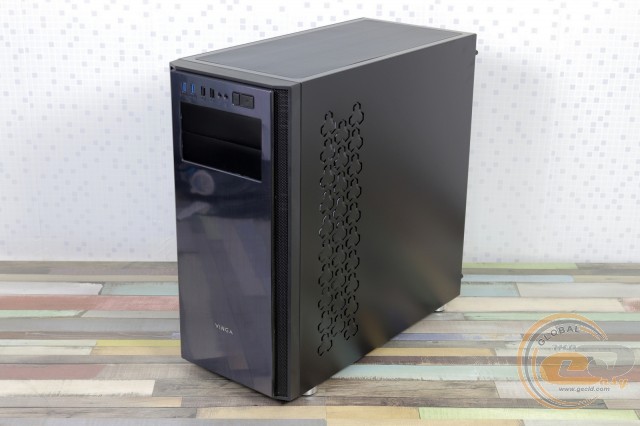
But we don't stop there, and in this review, we will get acquainted with another affordable ($62) large-format chassis - Vinga Vanguard. It has enough internal space to accommodate the largest components and organize an effective cooling system.
Specification
|
Model |
Vinga Vanguard |
|
|
Case Size |
Full Tower |
|
|
Motherboard Form Factor Support |
ATX / microATX / Mini-ITX |
|
|
Color |
Black |
|
|
Bays |
2 x 5.25” (external) 2 x 3.5” (internal) 3 x 2.5” (internal) |
|
|
Expansion Slots |
8 |
|
|
Maximum GPU Length (in parentheses - own measurements) |
440 mm (435 mm) |
|
|
Maximum CPU Cooler Height (in parentheses - own measurements) |
180 mm (181 mm) |
|
|
Maximum PSU Length (in parentheses - own measurements without drive cage) |
238 mm (230 mm) |
|
|
Ports |
2 x USB 3.0 2 x USB 2.0 2 x audio ports |
|
|
Pre-installed Fans |
On the rear panel |
1 x 120-mm (1200 RPM) |
|
Fan Installation Options |
On the front panel |
2 x 120-mm / 140-mm |
|
On the rear panel |
1 x 120-mm / 140-mm |
|
|
On the top panel |
3 x 120-mm / 140-mm |
|
|
Liquid Cooling Installation Options |
On the front panel |
1 x 120 mm / 240 mm / 280 mm |
|
On the rear panel |
1 x 120 mm |
|
|
On the top panel |
1 x 120 mm / 240 mm / 280 mm / 360 mm |
|
|
Power Supply |
None |
|
|
Materials |
Front Panel |
Plastic |
|
Chassis |
Steel thickness 0.72 - 0.79 mm |
|
|
Right Side Panel |
Steel thickness 0.91 mm |
|
|
Left Side Panel |
With acrylic window |
|
|
Case Dimensions (in parentheses - own measurements) |
507 x 230 x 492 mm (510 x 230 x 493 mm) |
|
|
Weight (own measurements) |
8.135 kg |
|
|
Manufacturer's Website |
||
Packaging and Supply Kit
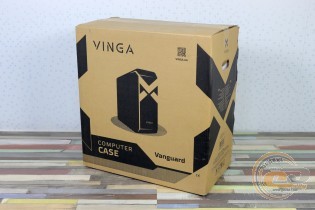
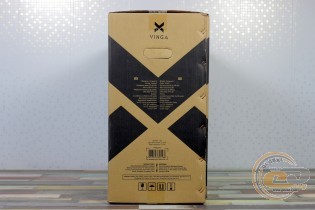
Vinga Vanguard comes in a standard cardboard box with monochrome design and brief technical information about the product. However, there are inaccuracies, so it's worth being attentive. It's pleasing that they didn't forget about handles for convenience during transportation.
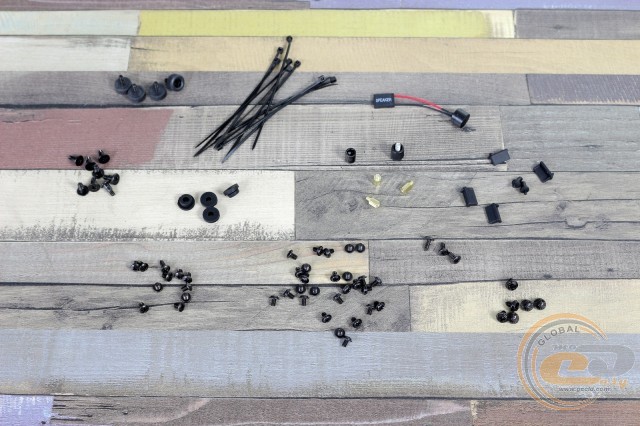
Along with the case, you will find various screws, thumb screws for their installation, a system speaker, a set of ties, and interface plugs.
Appearance
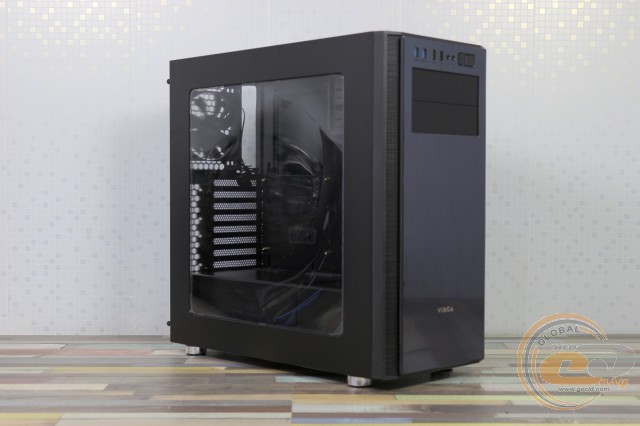
"Vanguard" translates from English as "avant-garde." Therefore, we expected a bright and unconventional design from it. However, in reality, the novelty looks quite simple and restrained. A steel (0.72 - 0.79 mm with paint) rectangular box with a plastic front and front ventilation openings. There is a recessed acrylic window. Although the metal parts are painted with matte paint, at certain angles, fingerprints are visible on them. Fortunately, they can be easily wiped off with a cloth. In this regard, polycarbonate would have been more practical.
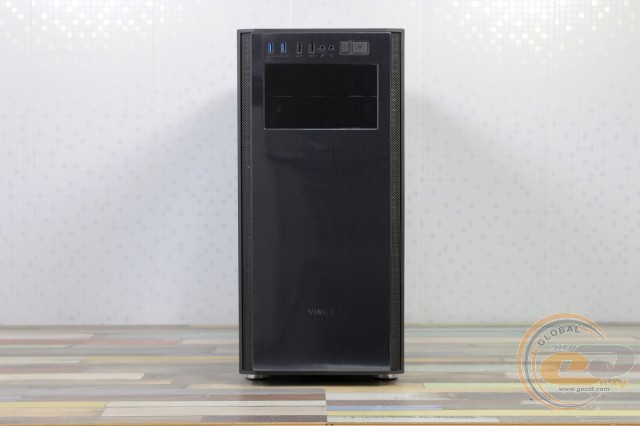
The front panel is notable for its brushed metal finish and side inserts with fine mesh, through which fresh air enters the system. In Vinga Cobalt and Sigurd, it is done better, as the ventilation area is larger.
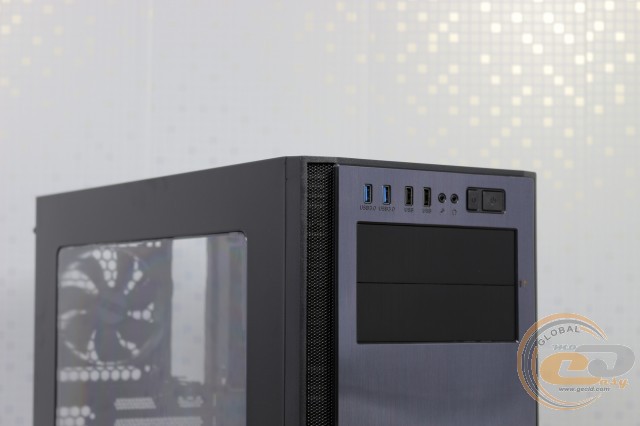
At the top, there are two slots for external 5.25" devices. There are also a pair of USB 3.0 and USB 2.0 ports, as well as two 3.5-mm jacks for a microphone and headphones. Next to them are the power and reset buttons. The buttons have built-in standard indicators.
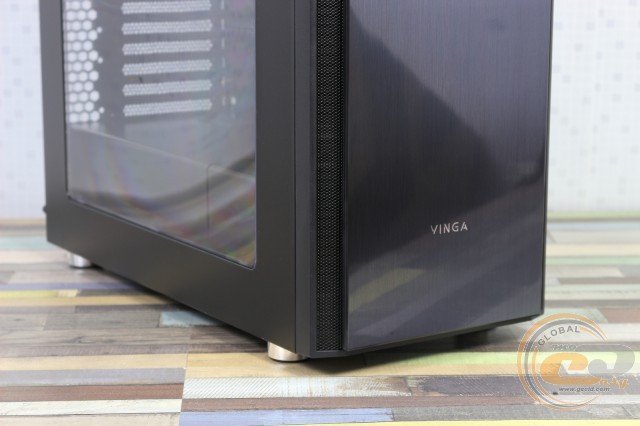
The top part can be dismantled, providing access to the mounting locations for two 120/140-mm fans or a similar-sized liquid cooling system.
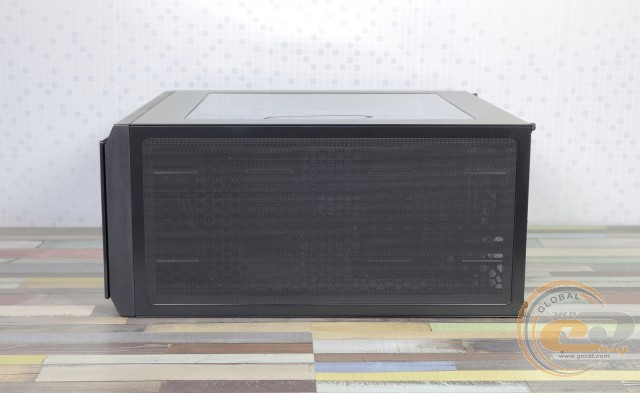
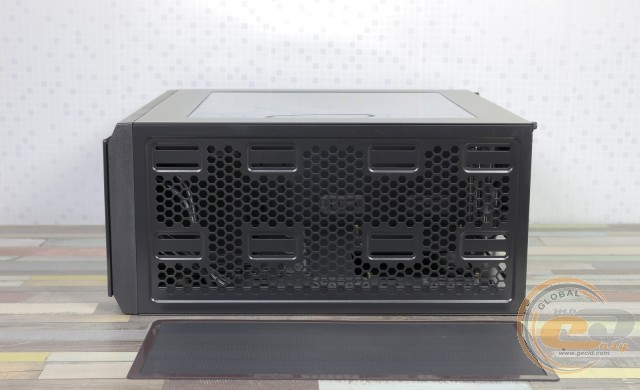
The top part of the Vinga Vanguard is entirely dedicated to a magnetic mesh filter. Underneath it are the mounting locations for three 120-/140-mm fans or a liquid cooling radiator.
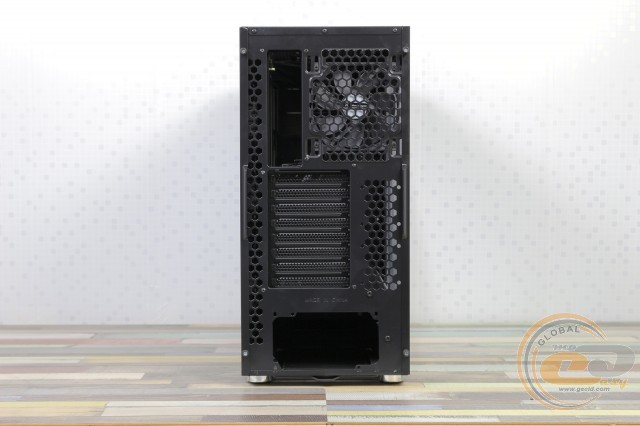
The back of the case has a familiar structure with a bottom-mounted power supply unit. Above its mounting location are eight expansion slots, a cutout for the motherboard's interface panel, and an installed exhaust fan. Thanks to the vertical slots, the fan can be moved up or down, optimally adjusting it to the airflow of a tower-style CPU cooler. Also noteworthy is the large amount of perforation in the form of hexagons.
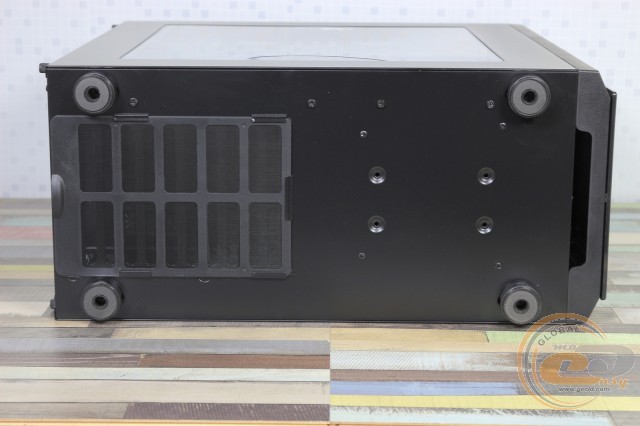
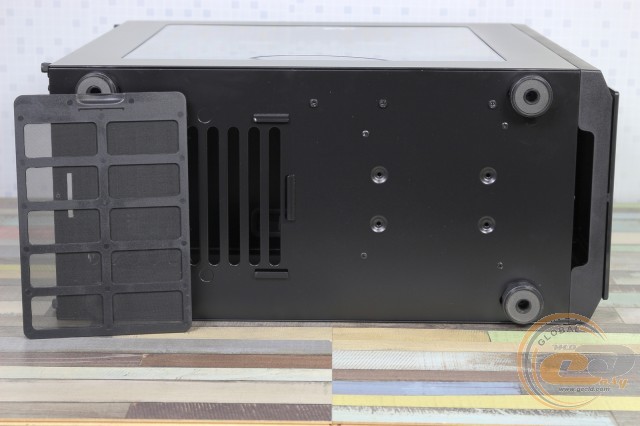
At the bottom of the case, there is a ventilation opening with a dust filter, designed to provide cold air access to the PSU. There are two pairs of plastic feet, 18 mm high, with thin rubber pads that provide good stability on different types of surfaces and sufficient airflow for the power supply.
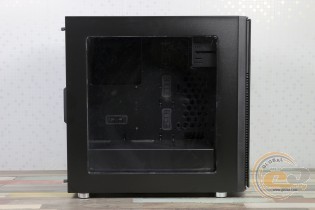
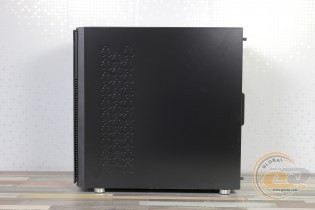
The side panels of the Vinga Vanguard are made of sheet steel (thickness with paint 0.91 mm). On the left, there is an acrylic window (385 x 365 mm), and on the right, there is decorative perforation. They are held in place by convenient screws with plastic knurled heads. For easier dismantling, a handle is provided, and for increased strength, stiffening ribs are used.
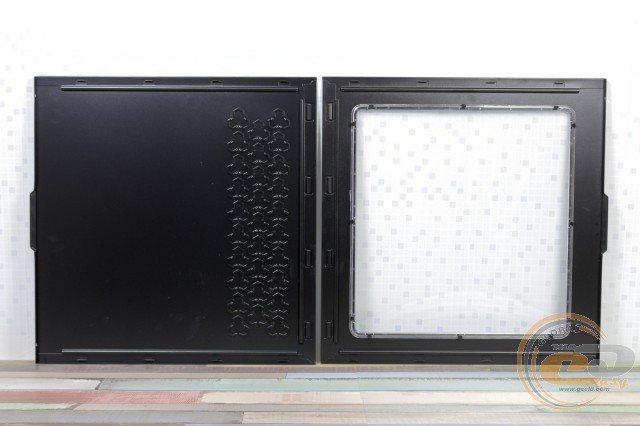
The process of dismantling them is easy and effortless - even a beginner can handle it.
Internal Structure
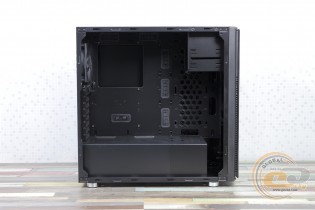
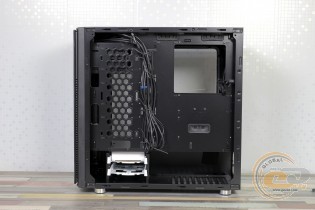
If the exterior of the Vinga Vanguard is hard to call avant-garde, then the interior quite fits this style. All thanks to the large internal space. A familiar two-section design is used. At the bottom, under a removable steel cover, is the power supply unit and the drive cage. The motherboard compartment is located at the top. In front, there is a removable cage for two 5.25-inch devices. The cutout in the motherboard tray will help install a CPU cooler with a backplate without dismantling the board itself. For cable management, there are six holes equipped with silicone grommets, as well as a number of hooks. The layout is very reminiscent of Vinga Sigurd.
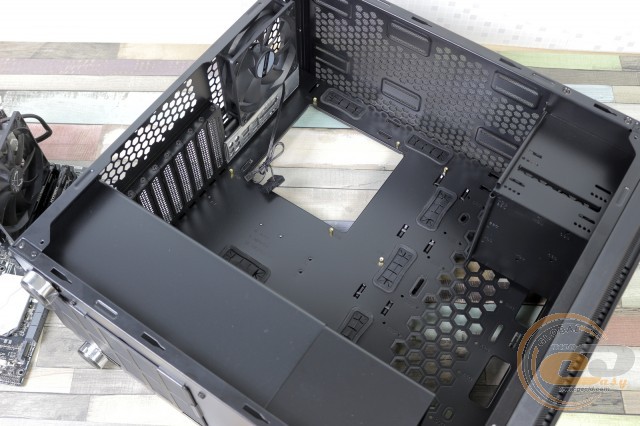
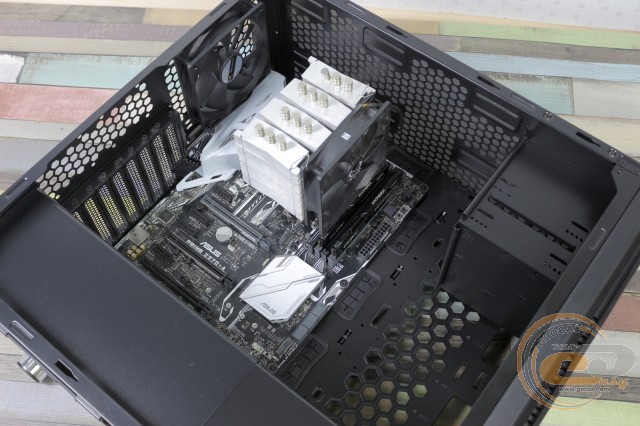
The motherboard is mounted on standard standoffs from the supply kit. The following form factors are supported: ATX, microATX, and Mini-ITX.
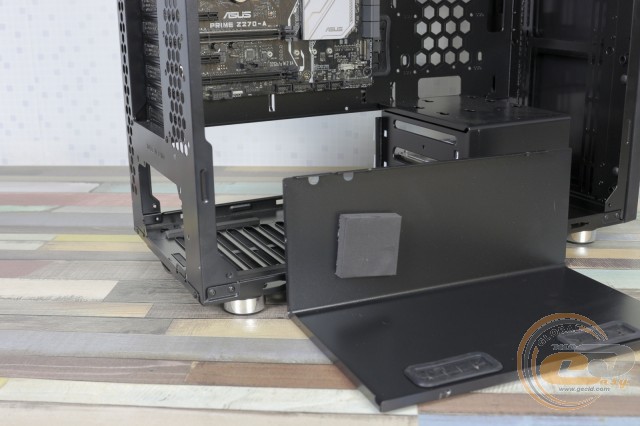
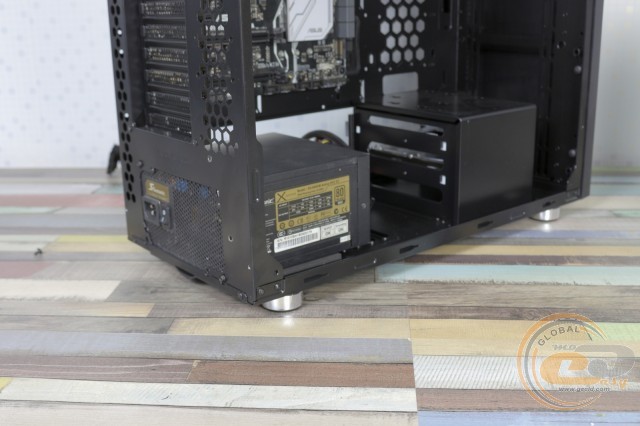
The power supply mounting location is equipped with anti-vibration pads, and the mounting is done with the included screws. According to our measurements, the maximum PSU length is 230 mm. This leaves about 40 mm for cable management.
In its stock state, the Vinga Vanguard can accommodate three 2.5-inch and two 3.5-inch drives. For 3.5" drives, there are two sliding plastic trays in a transverse cage with tool-less mounting. You can also install 2.5" models here, but you'll need to use a screwdriver. For smaller drives, there are two locations on the tray to the right of the motherboard and one more on the HDD cage cover. A regular hard drive can also be easily secured on it. If desired, the latter can be placed at the bottom of the cage and secured with screws on the right.
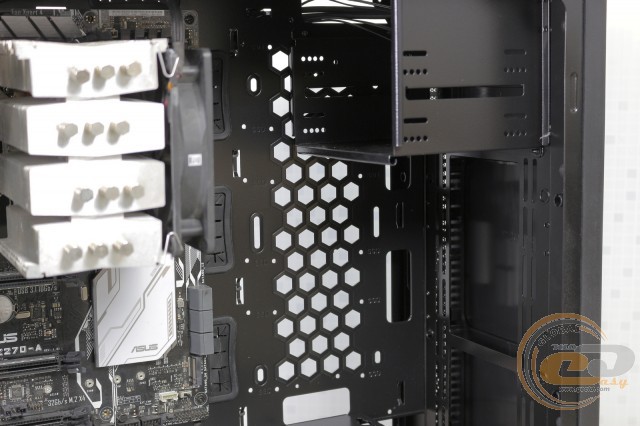
If you remove the cage for 5.25-inch devices, you can secure another 2.5-inch drive.
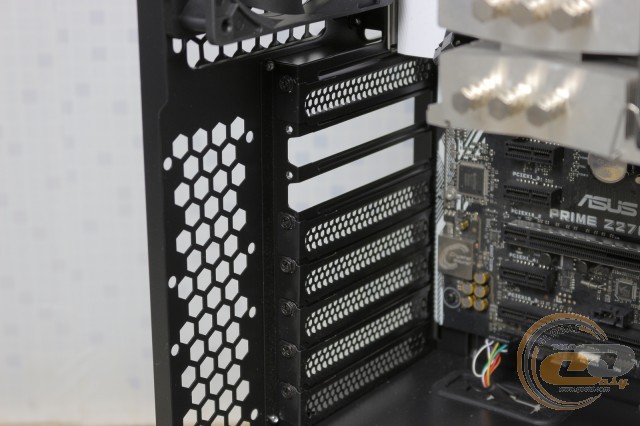
The expansion slot covers are reusable. A tool-less mounting system is not provided - you need to use regular screws.
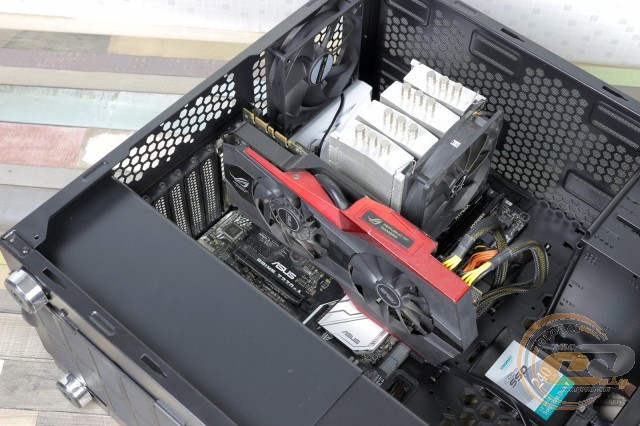
Without any tricks, the case can accommodate graphics cards up to 435 mm in length and CPU coolers up to 181 mm in height.
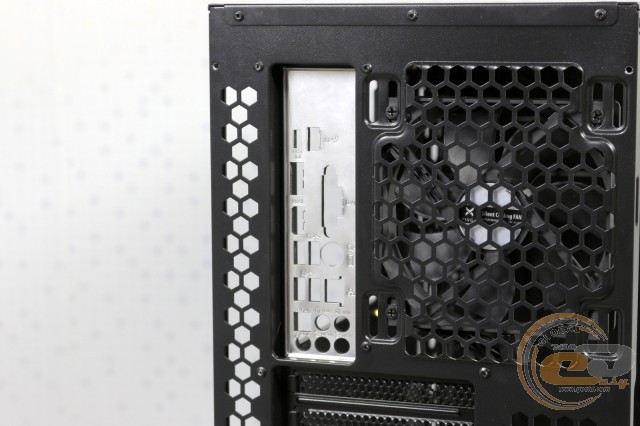
Inside the Vinga Vanguard, there is only one simple 120-mm exhaust fan, which operates at a speed of 1200 RPM. It can be connected using a 3-pin connector on the motherboard or a PATA connector on the power supply.
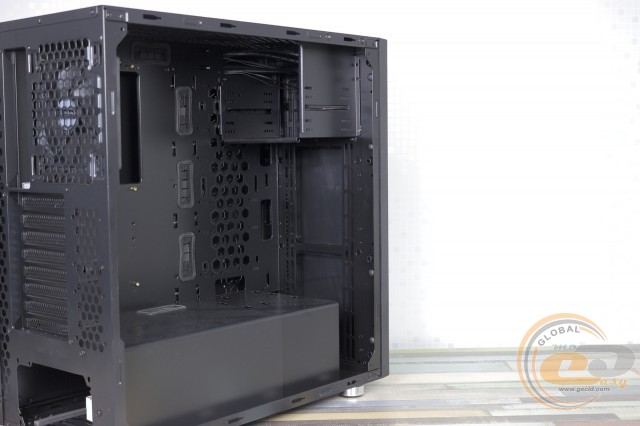
Rails in the form of guides at the front of the chassis allow for the installation of two 120-/140-mm fans or a liquid cooling radiator up to 280 mm in size.
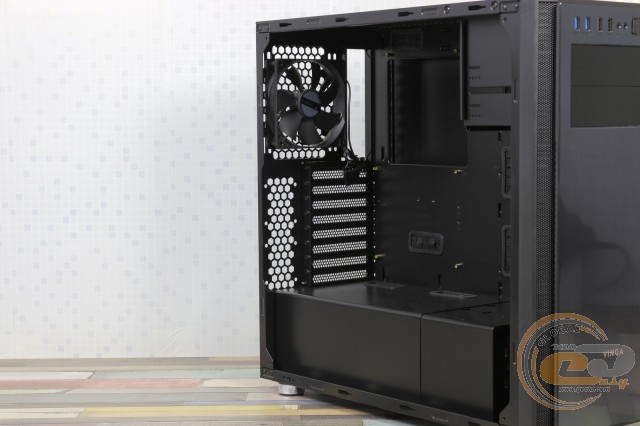
Under the ceiling, there are mounting locations for three 120-/140-mm fans. You can also place a liquid cooling radiator up to 360 mm in length here.
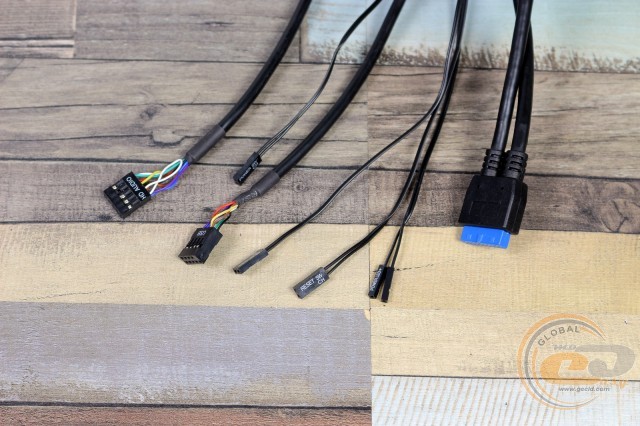
The cables coming from the front panel are long enough to be neatly routed to the motherboard.
|
Name |
Length, cm |
|
USB 3.0 |
75 |
|
USB 2.0 |
90 |
|
HD Audio |
90 |
|
Buttons and Indicators |
85 |
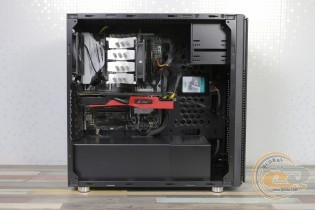
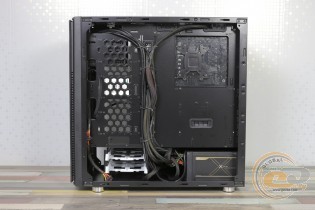
Thanks to the thoughtful design and large internal space, assembly inside the Vinga Vanguard is smooth and hassle-free. As for the build quality and rigidity of the structure, we did not have even the slightest remarks.
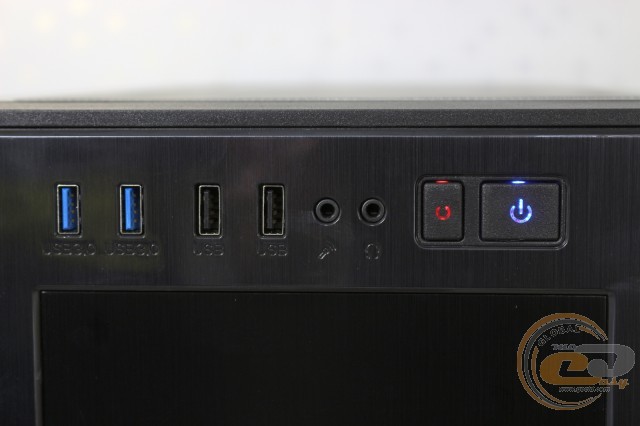
The light indicators have moderate brightness and are not irritating during dark hours.
Testing
|
Processor |
Intel Core i7-7700K (Socket LGA1151, 4.2 GHz, L3 8 MB) |
|
Cooler |
Scythe Mugen 3 |
|
Motherboard |
ASUS PRIME Z270-A (ATX, Socket LGA1151) |
|
RAM |
2 x 4 GB DDR4-2400 HyperX Fury (HX424C15FBK2/16) |
|
Graphics Card |
ASUS GeForce GTX 980 MATRIX PLATINUM 4GB GDDR5 |
|
SSD |
KINGMAX SME35 HYPERLINK |
|
Power Supply |
Seasonic X-560 Gold (SS-560KM Active PFC, ATX, 560W) Chieftec SFX-250VS, 250W |
|
Thermal Paste |
Noctua NT-H1 |
The Vinga Vanguard case was tested in a standard configuration, with one exhaust fan installed, operating at its rightful 1200 RPM.
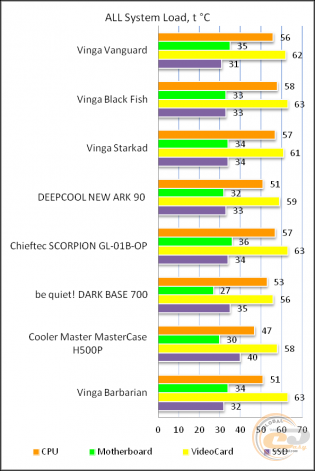
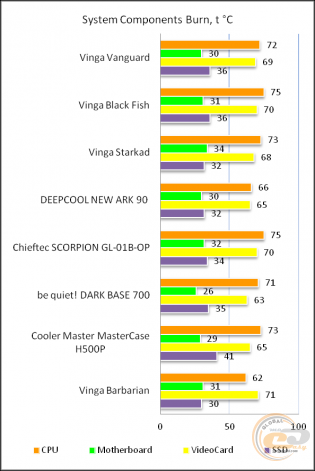
The "All System Load" chart shows component heating after 30 minutes of 3DMark Fire Strike in Ultra mode (4K resolution). The "System Component Burn" mode demonstrates temperatures under load with AIDA64 applications (Stress CPU and FPU) and MSI Kombustor for 15 minutes.
The large internal space ensures free air circulation inside, resulting in very comfortable temperature readings for the components. The results can be compared to the more expensive Vinga Starkad. So even in its stock state, the Vinga Vanguard can confidently be used to build a high-performance computer with one graphics card, and with the addition of a couple of fans - even more so.
Conclusions
Vinga Vanguard is another spacious Full Tower case with a strict exterior and thoughtful design. It uses a modern dual-section structure, has enough capacity for the largest components, and allows for massive air or water cooling. And all this can be admired through the side acrylic window. It is worth mentioning the good dust protection thanks to easily removable filters in key areas. Even with one exhaust fan, the novelty provides comfortable temperatures for a high-performance system with one graphics card.
Overall, the Vinga Vanguard case should appeal to a wide range of users. It is relatively affordable, looks nice, is well-made, and allows for easy assembly of a powerful gaming or work PC.
Advantages:
- strict exterior with a recessed acrylic window;
- good chassis build quality, edge panel processing, and case painting;
- good structural rigidity;
- availability of mounting places for two 5.25" devices;
- dual-section design with removable panels;
- support for 435-mm graphics cards and 181-mm coolers;
- possibility of installing two 3.5" and three/four (without a basket for 5.25" devices) 2.5" drives;
- support for up to six fans;
- support for 360 mm format liquid cooling radiators;
- eight expansion slots;
- good cable management capabilities;
- presence of dust filters in key areas;
- decent chassis airflow.
Author: Viktor Yefimenko
Translation: Liliya Masyuk
We express our gratitude to the companies ASUS, Intel, Noctua, Sea Sonic Electronics and the brand HyperX for providing the equipment for the test stand.