

PC Case Vinga Wingman
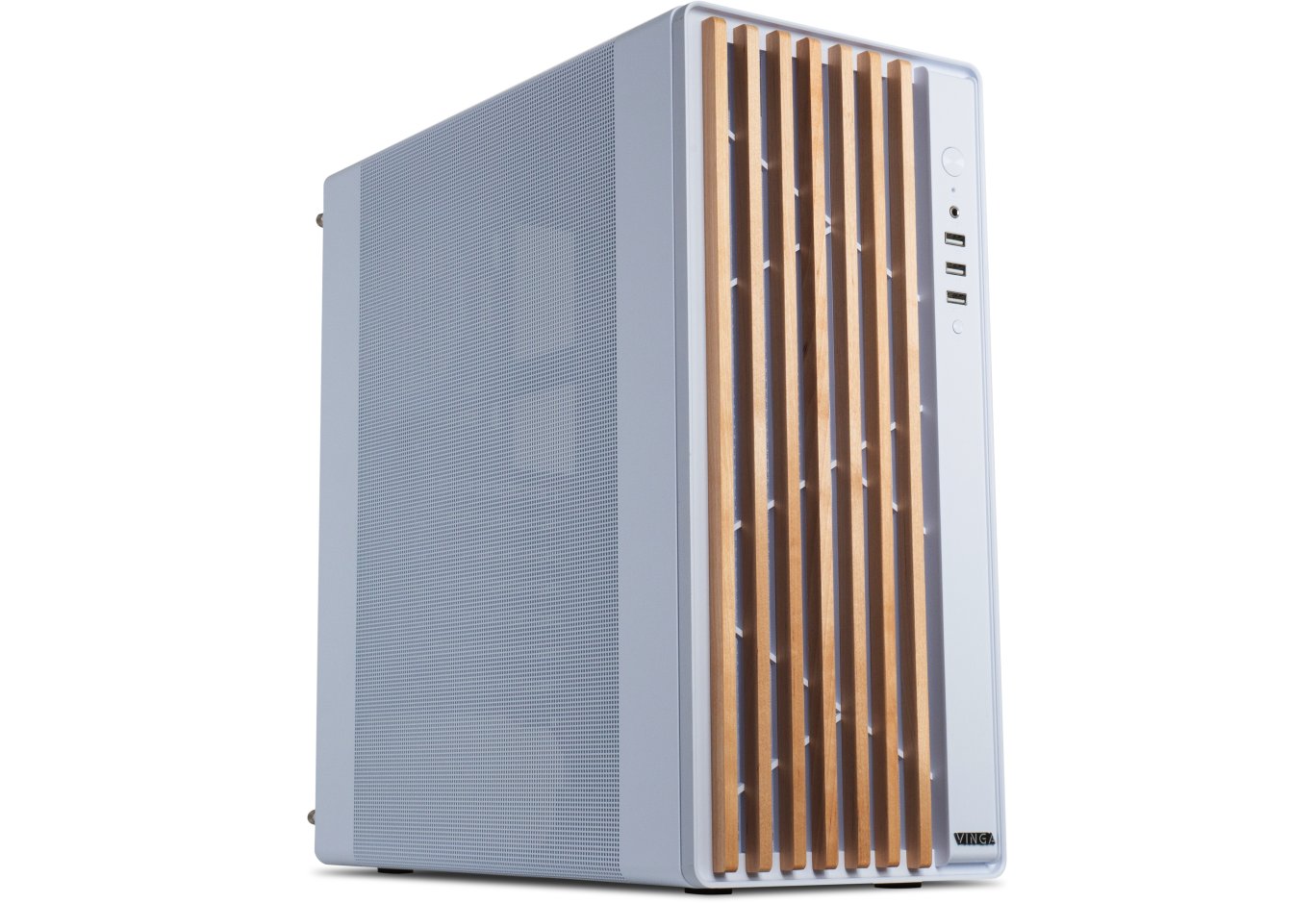
Vinga continues to delight with interesting, functional, and relatively inexpensive cases, allowing you to choose the optimal model based on a combination of design, capabilities, and price. For example, a few weeks ago, we got acquainted with the snow-white beauty Vinga Pillar White. It lacks LED lighting and included fans, which allowed the manufacturer to reduce its price to 1370 UAH ($48).
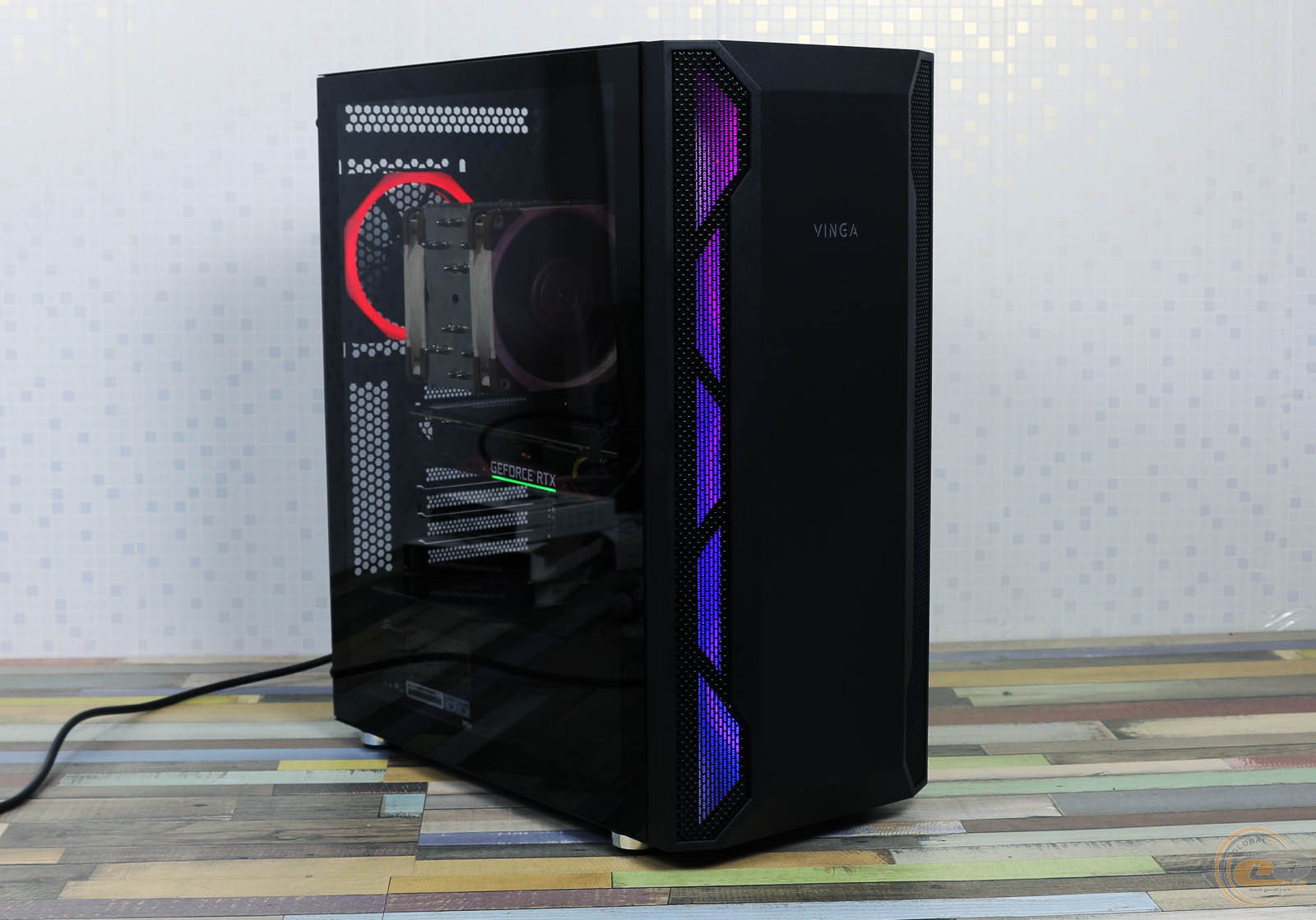
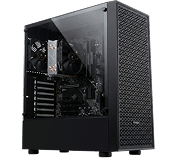
Today, we are reviewing a very similar model in terms of positioning, but with a slightly different approach. We are talking about Vinga Wingman. This case is in the same price category as Vinga Pillar White, but it is designed in black and offers front panel lighting. Let's take a closer look at its specifications.
Specification
|
Model |
Vinga Wingman |
|
Case Size |
Middle Tower |
|
Motherboard Form Factor Support |
ATX / E-ATX / microATX / Mini-ITX |
|
Color |
Black |
|
Internal Bays |
3 x 3.5” |
|
Expansion Slots |
7 |
|
Maximum GPU Length (own measurements) |
350 mm (350 mm) |
|
Maximum CPU Cooler Height (own measurements) |
165 mm (165 mm) |
|
Maximum PSU Length (in brackets - own measurements) |
200 mm (210 mm) |
|
Pre-installed Power Supply |
None |
|
Ports |
1 x USB Type-C |
|
Pre-installed Fans |
- |
|
Fan Installation Options |
3 x 120-mm / 2 x 140-mm (front panel) |
|
Liquid Cooling Installation Options |
1 x 120 mm / 240 mm / 280 mm / 360 mm (front panel) |
|
Materials |
|
|
Front Panel |
Plastic |
|
Chassis |
Steel thickness 0.60 – 0.62 mm |
|
Right Side Panel |
Steel thickness 0.80 mm |
|
Left Side Panel |
Tempered glass thickness 3.87 mm |
|
Case Dimensions (own measurements) |
480 x 215 x 425 mm |
|
Weight (own measurements) |
6.395 kg |
|
Manufacturer's Website |
|
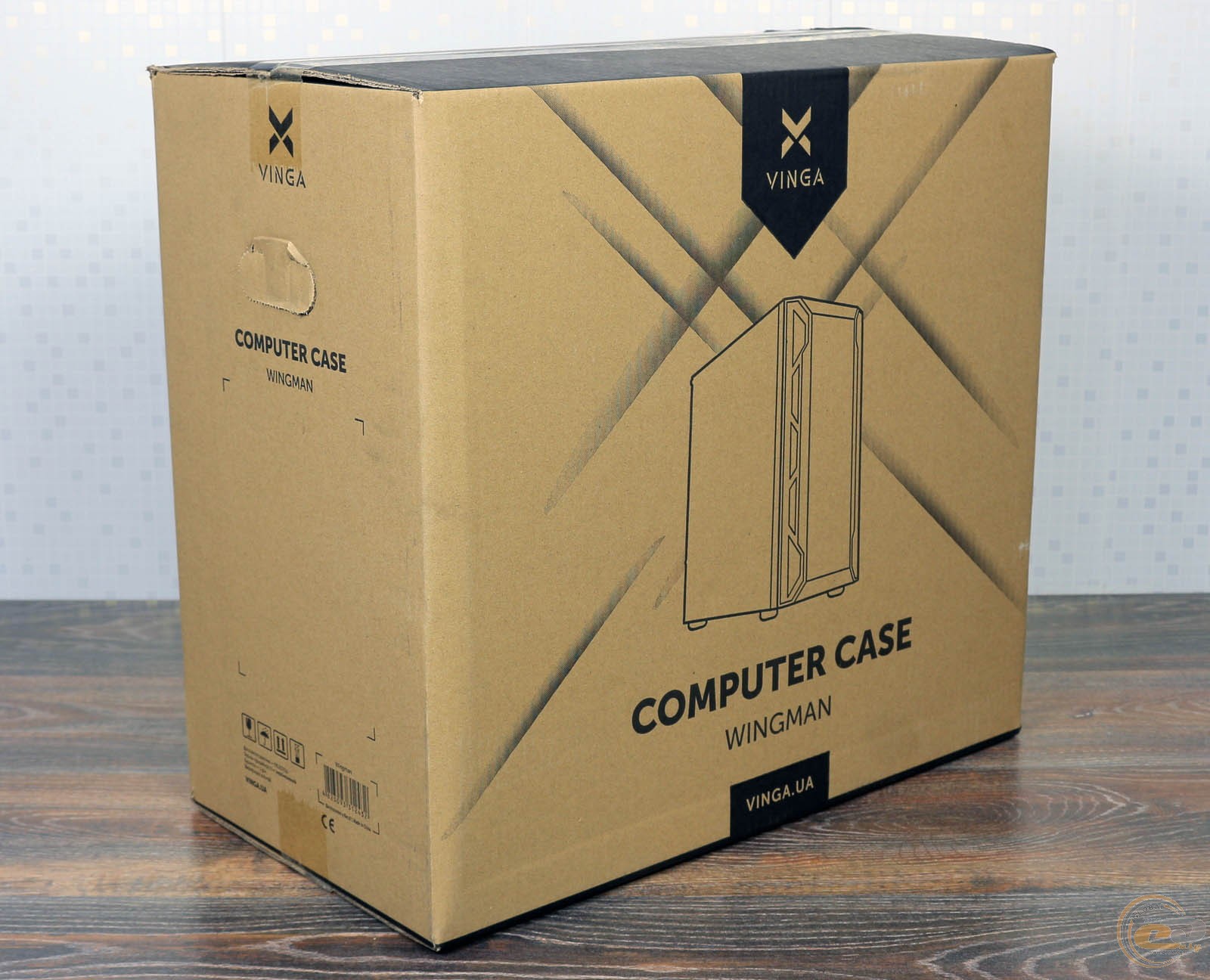
Vinga Wingman is sealed in a standard cardboard box with simple design. On its sides, you can find a schematic image of the case, its name, and specifications in English and Ukrainian. There are cutouts on the sides for easy transportation.
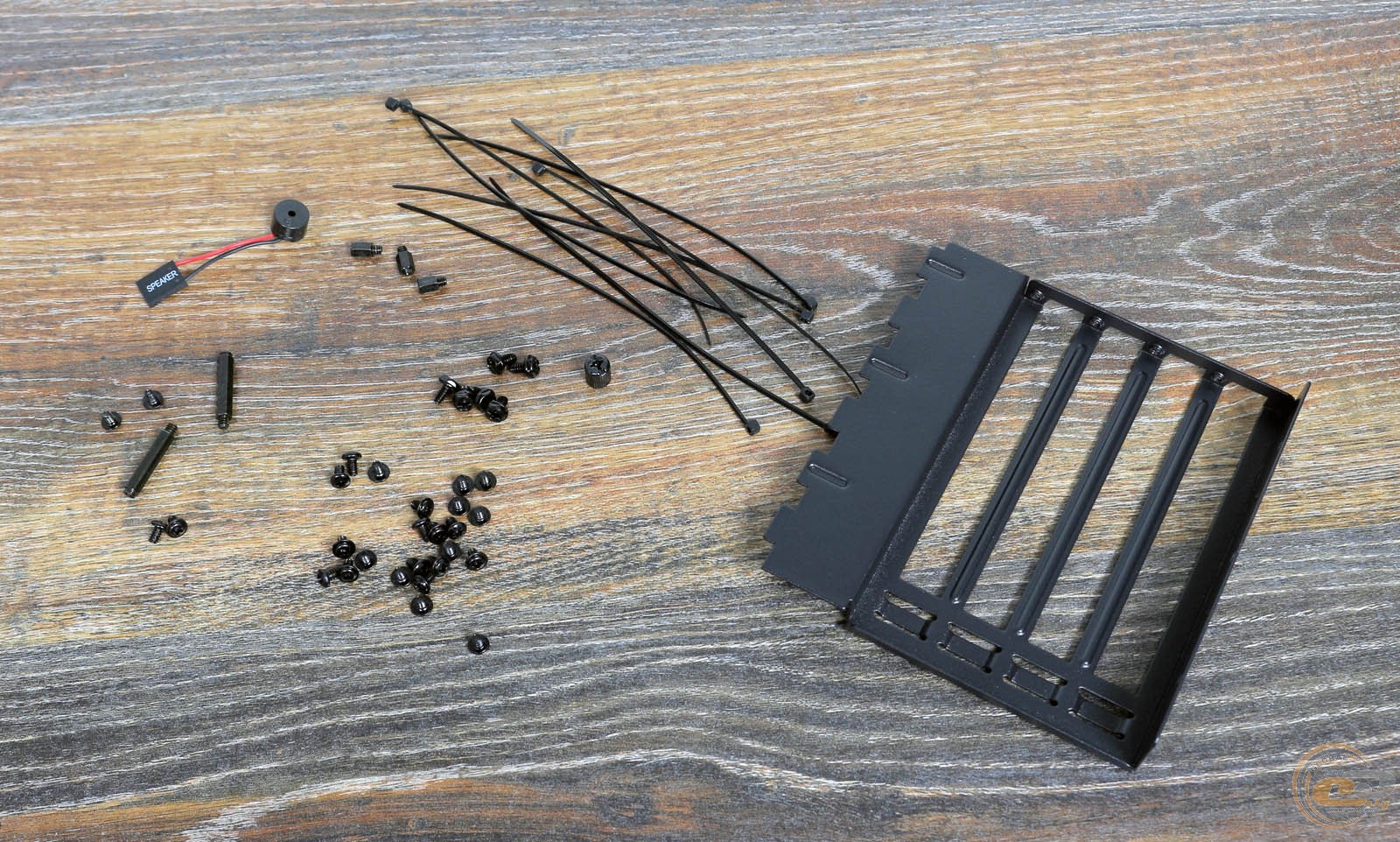
The delivery set includes the following accessories:
- a set of screws for mounting the motherboard, power supply, and drives
- cable ties
- system speaker
- stand for vertical GPU installation
Appearance
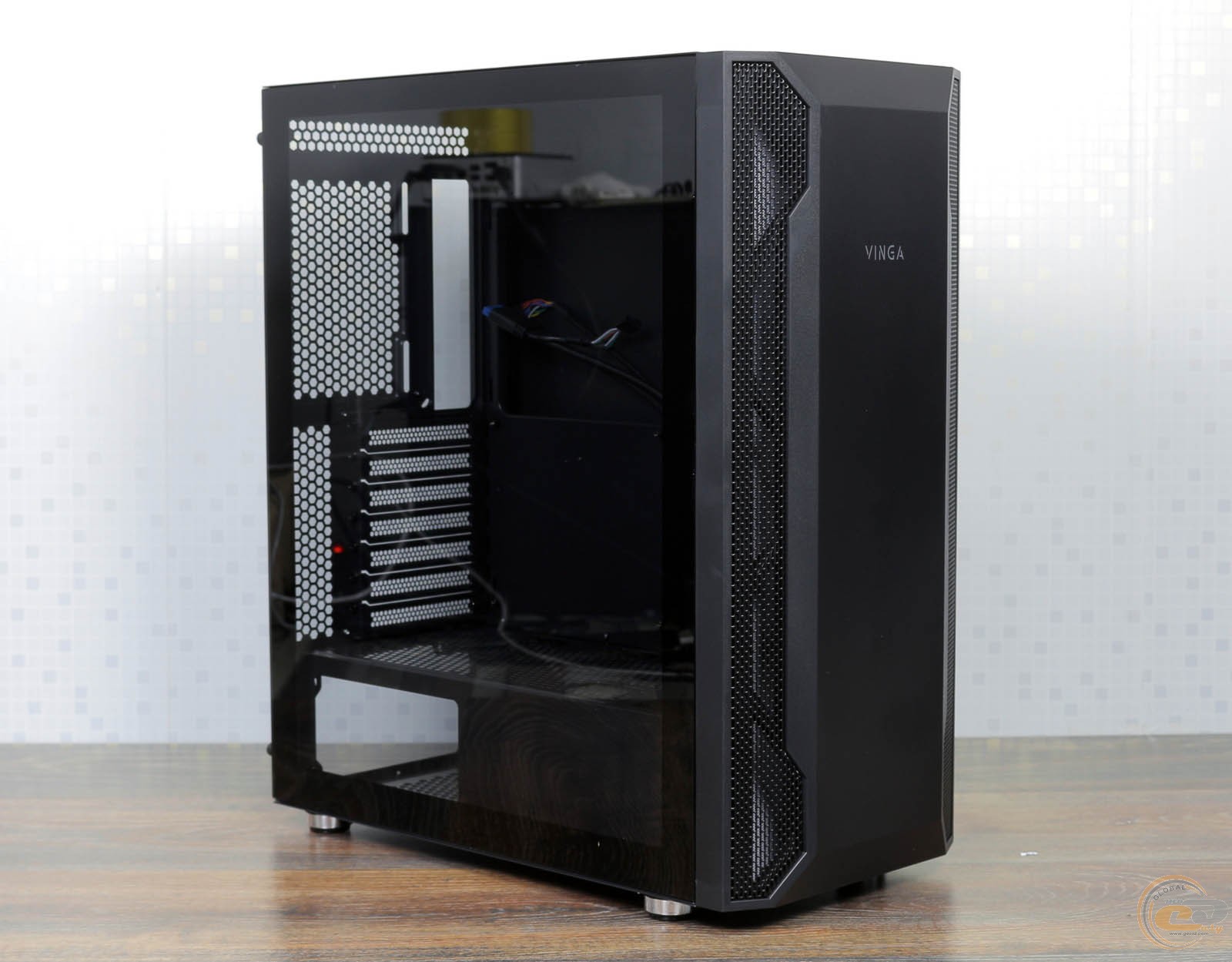
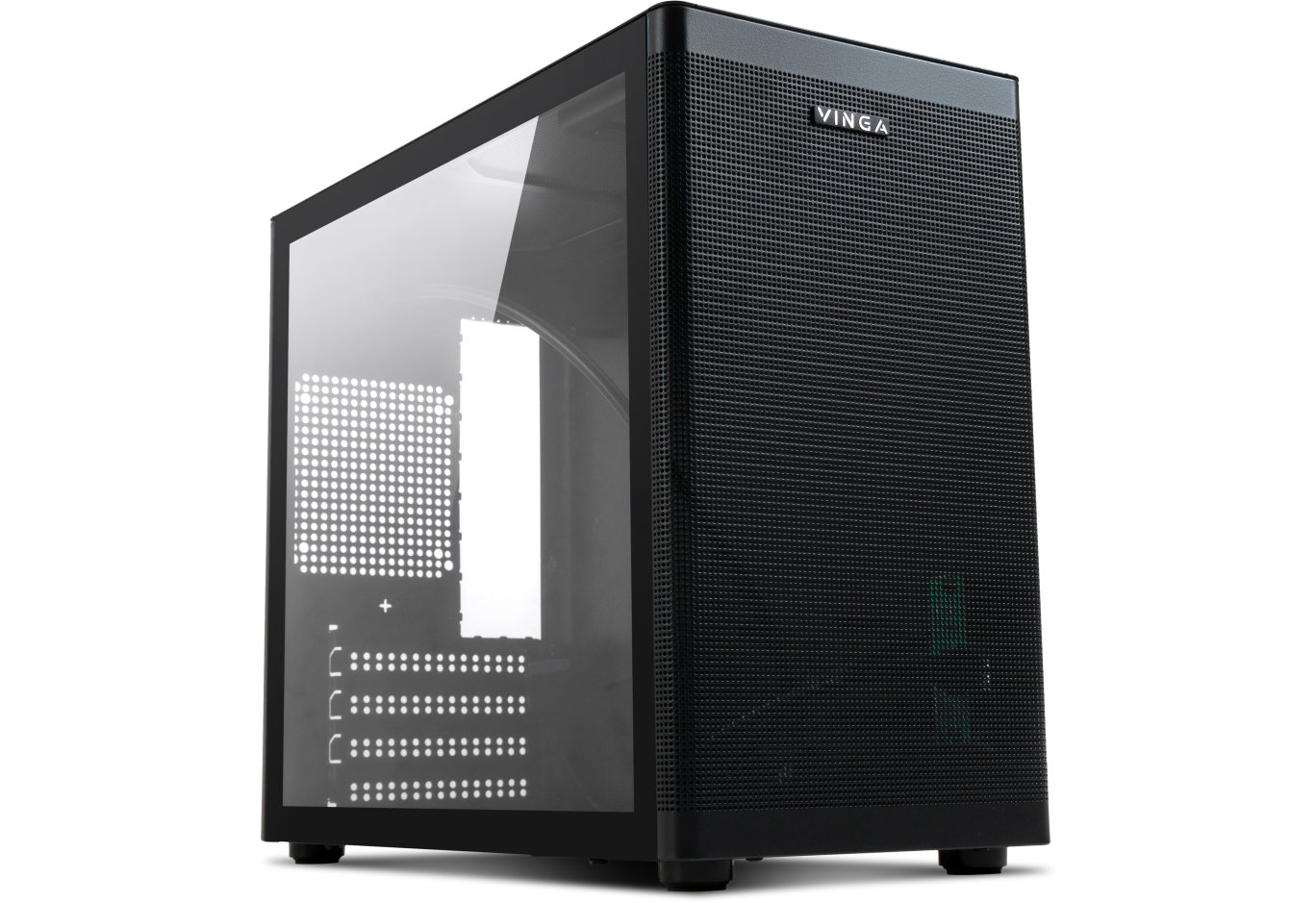
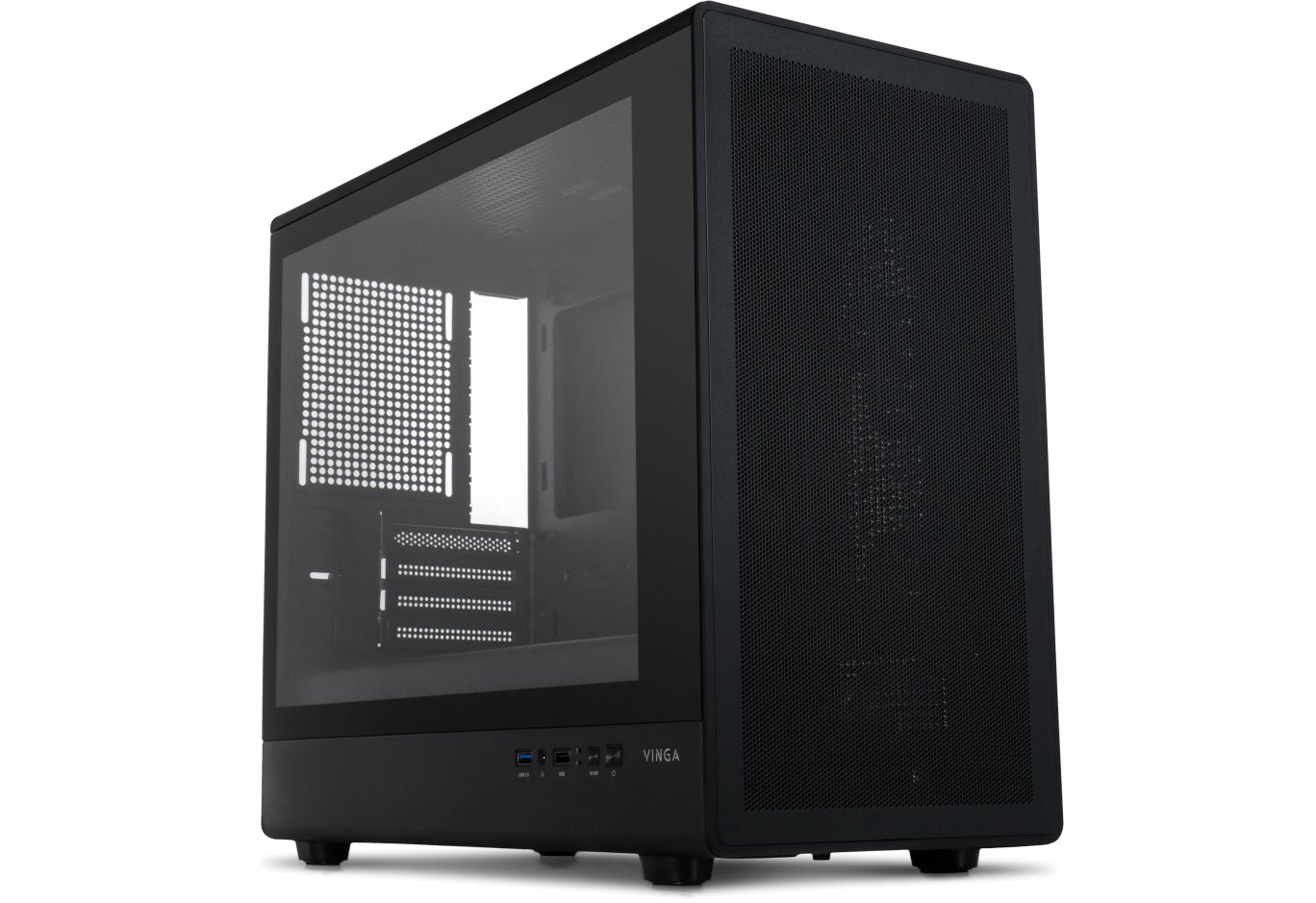
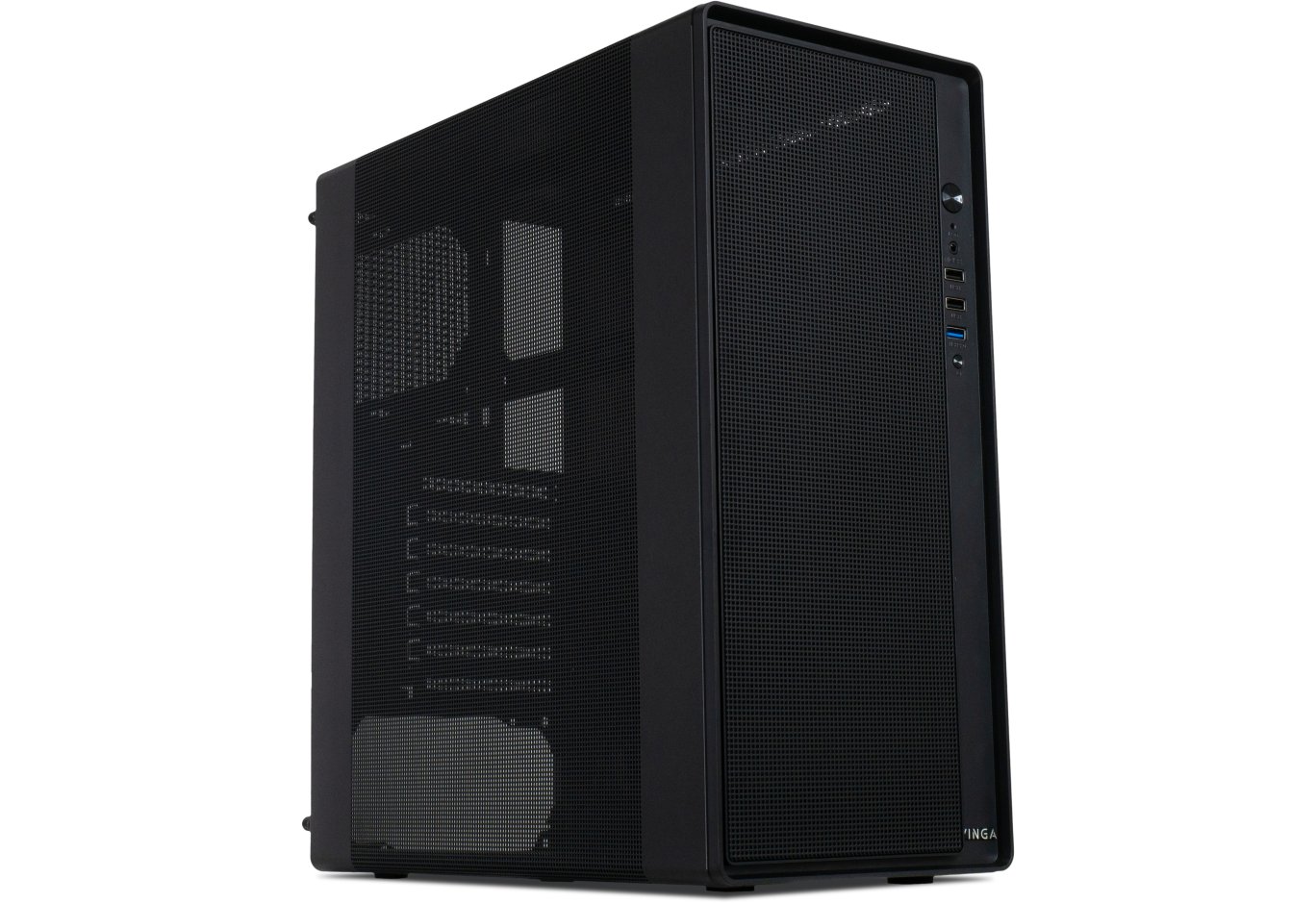
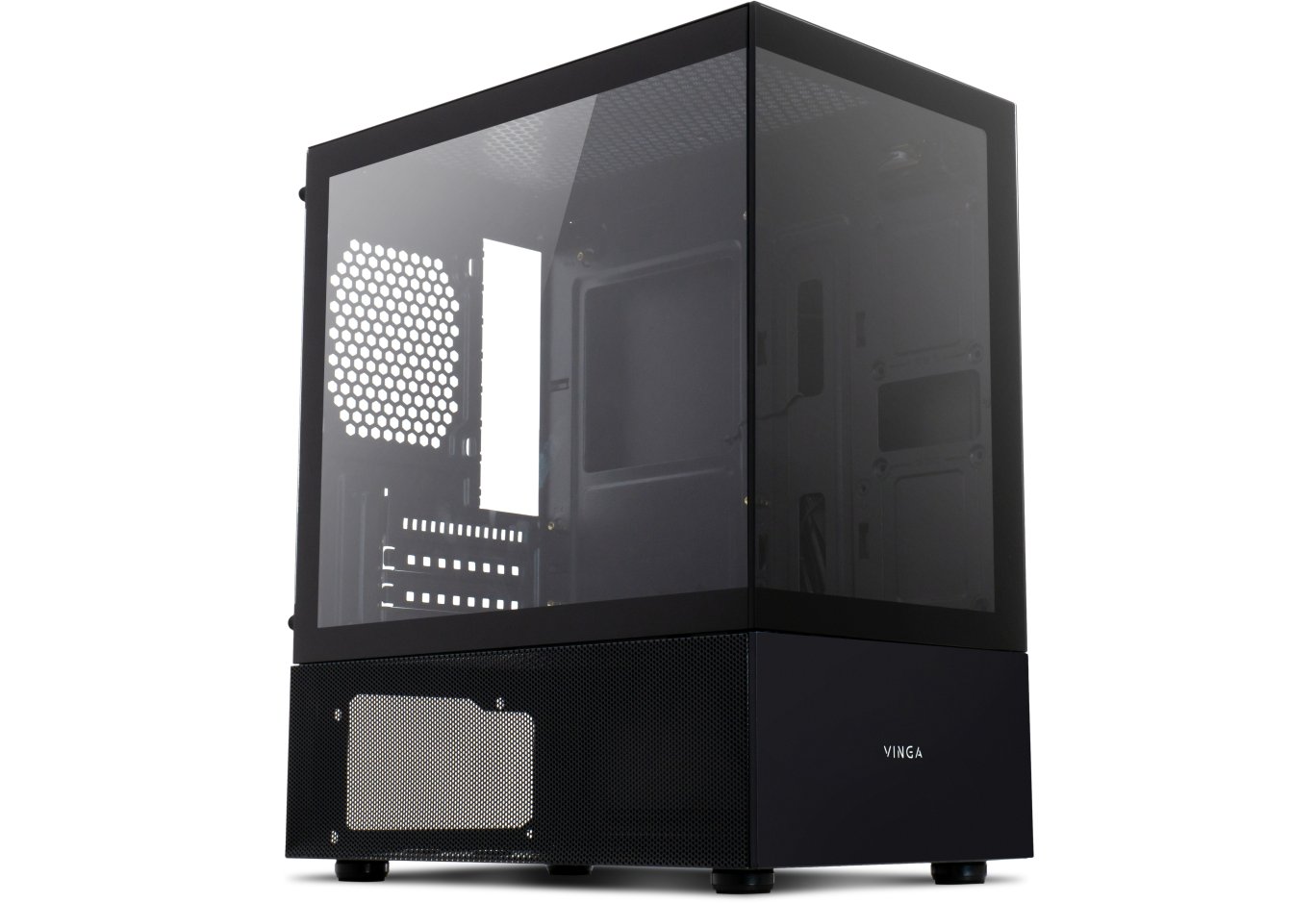
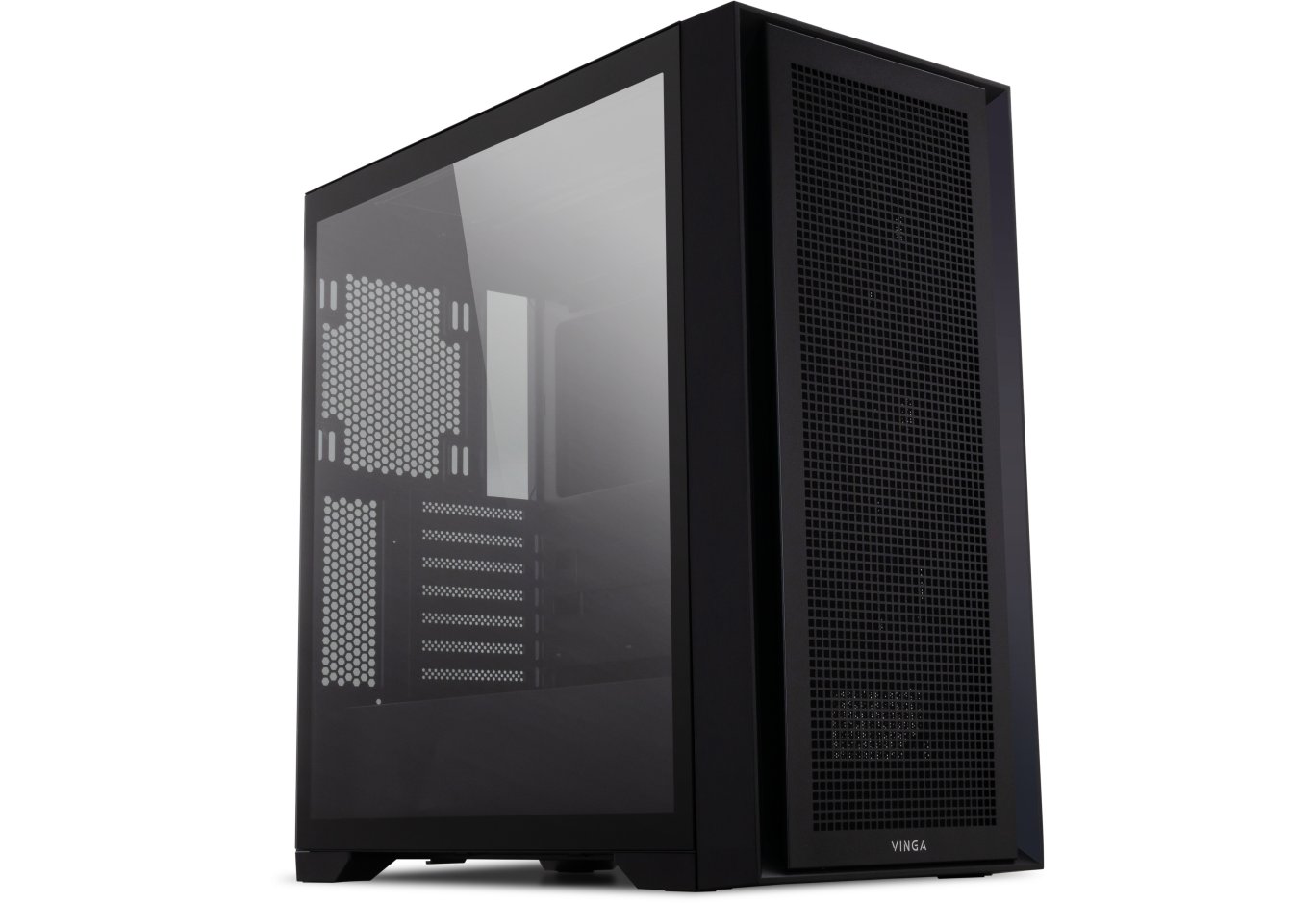
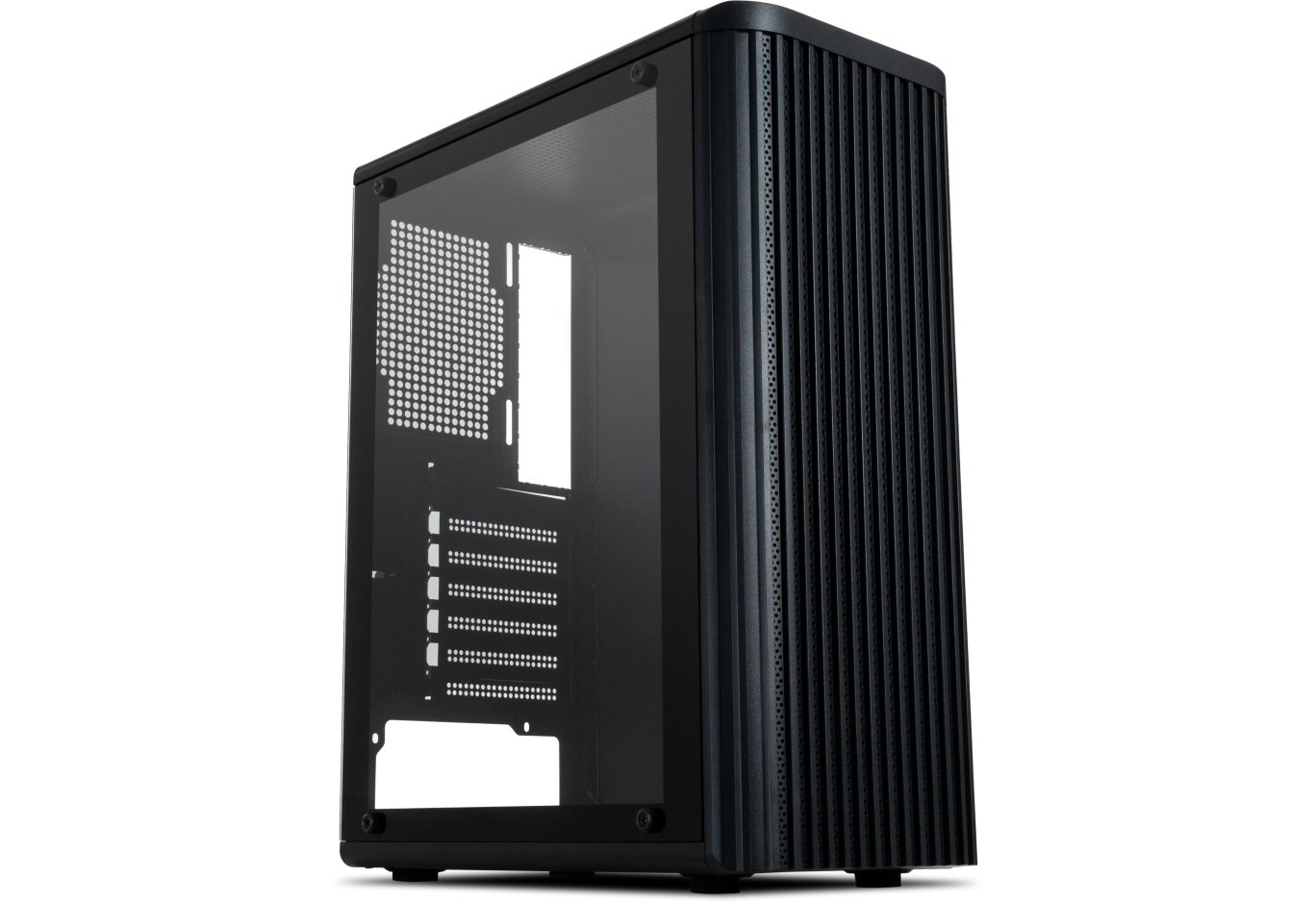
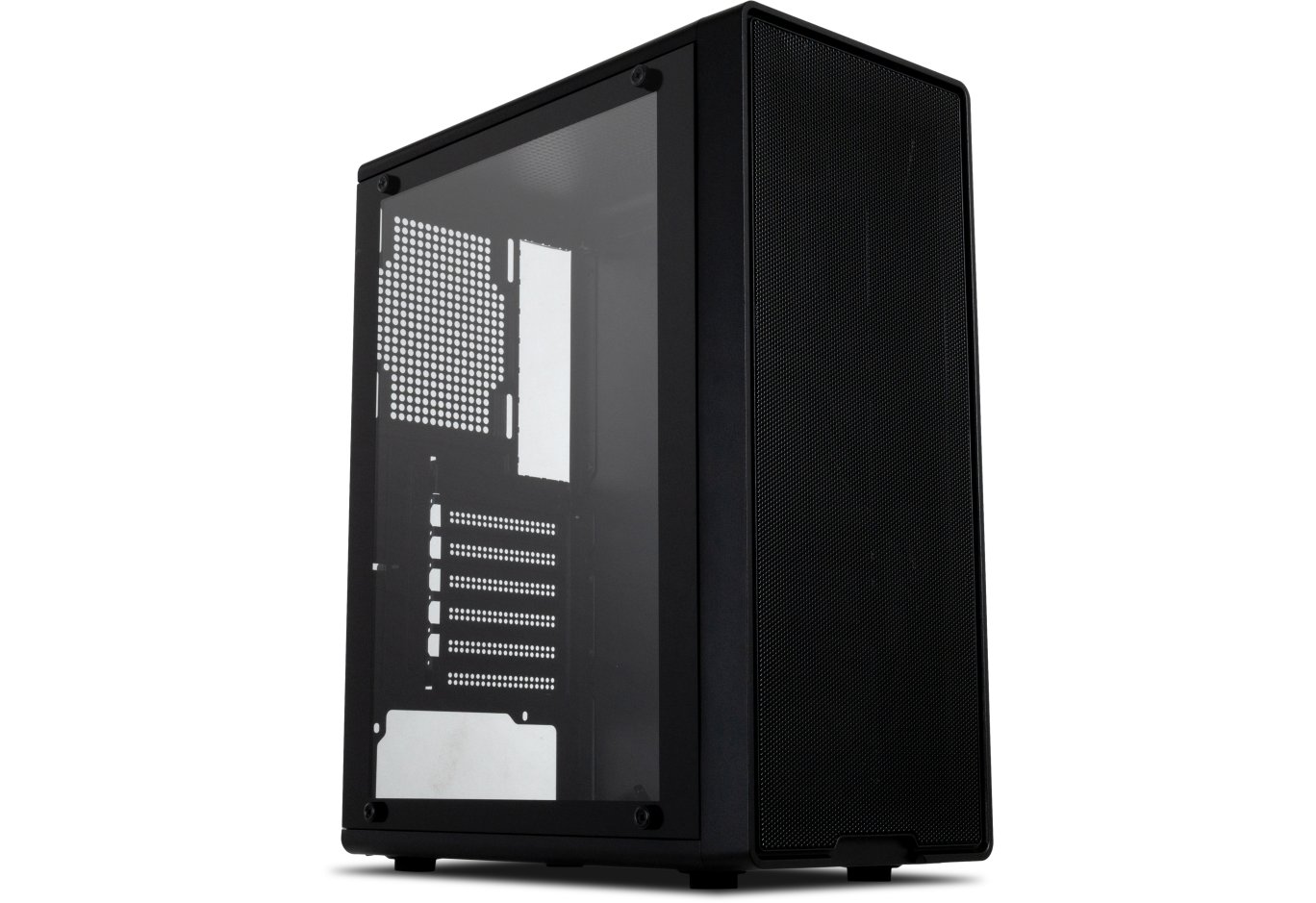
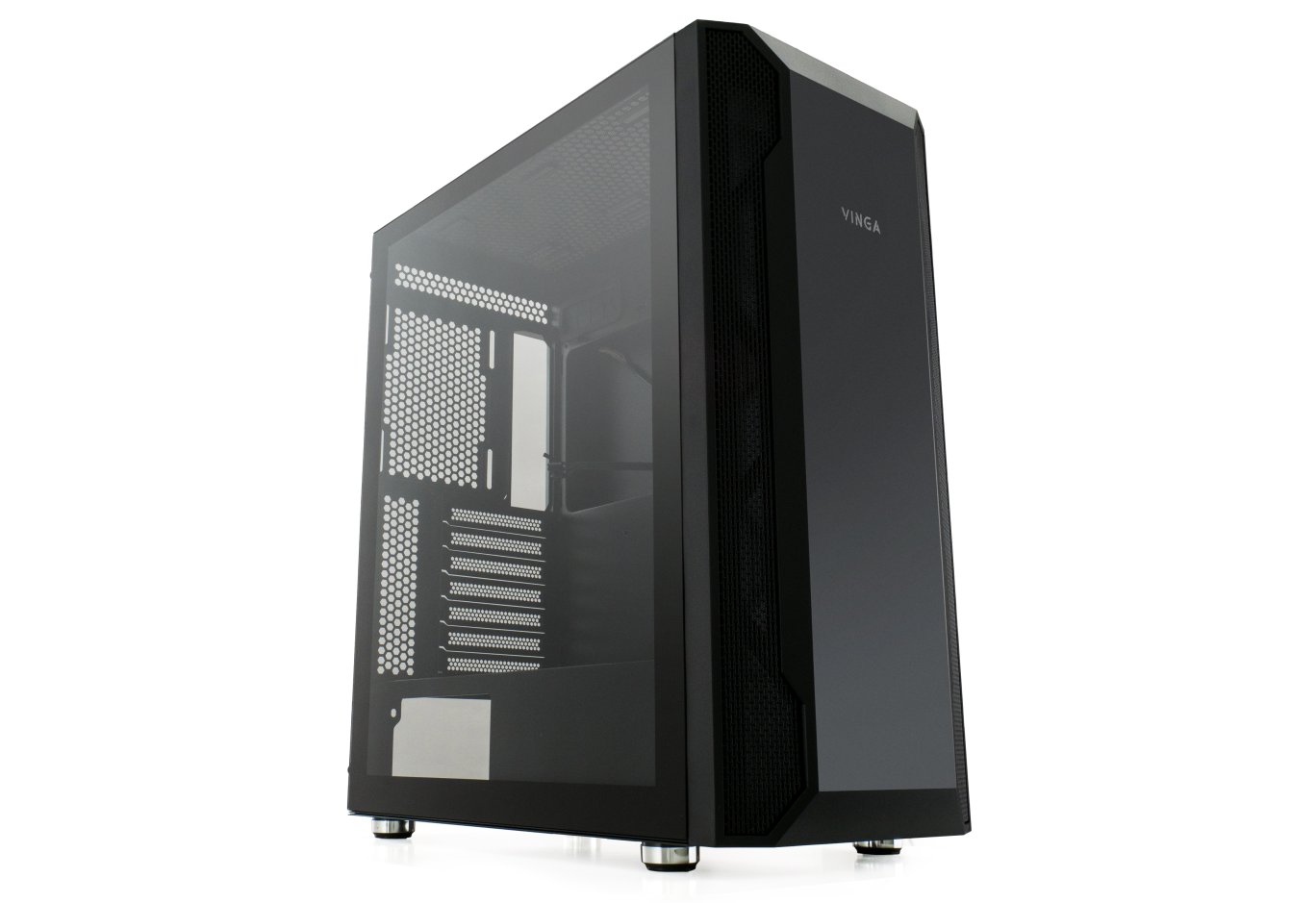
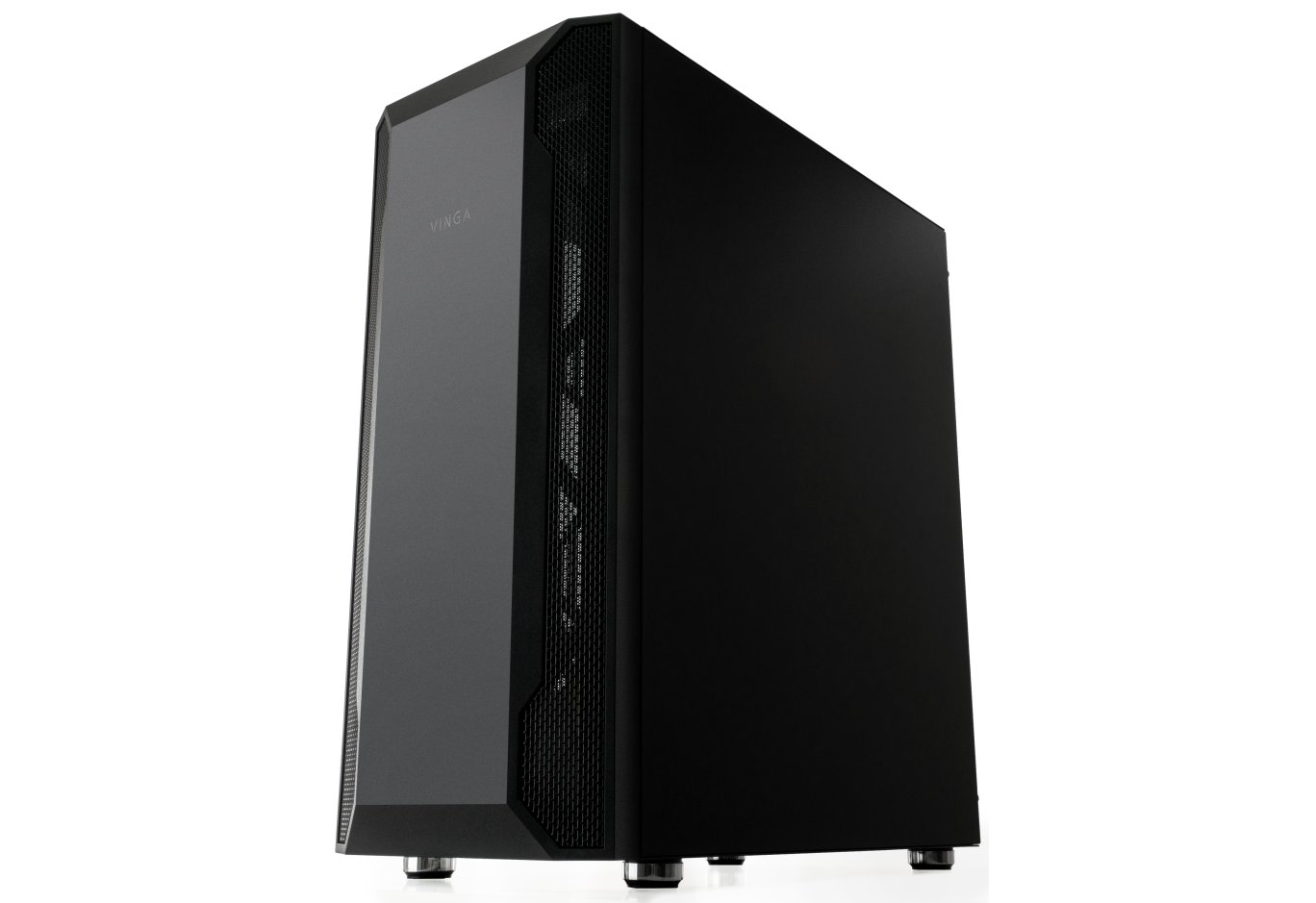
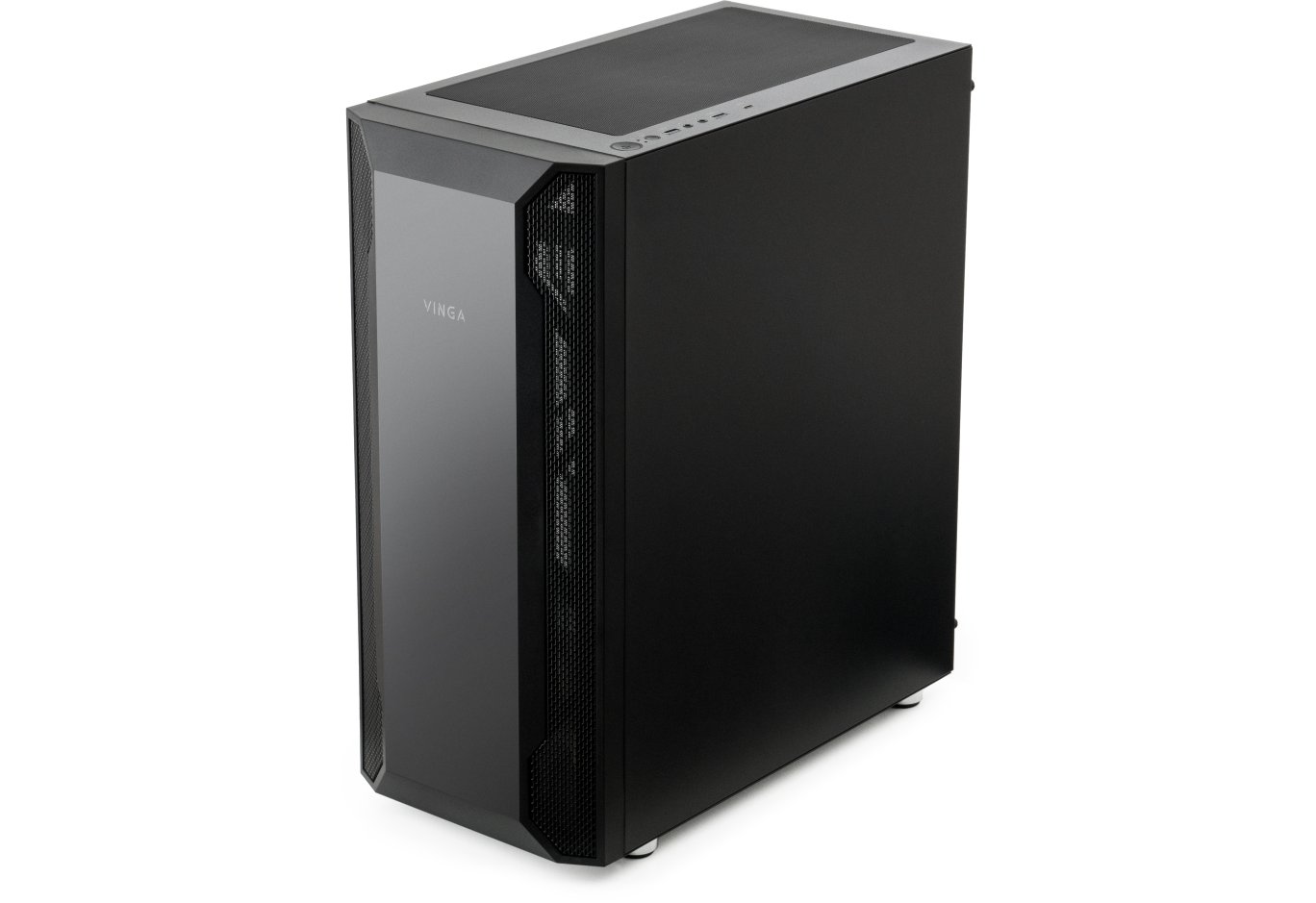
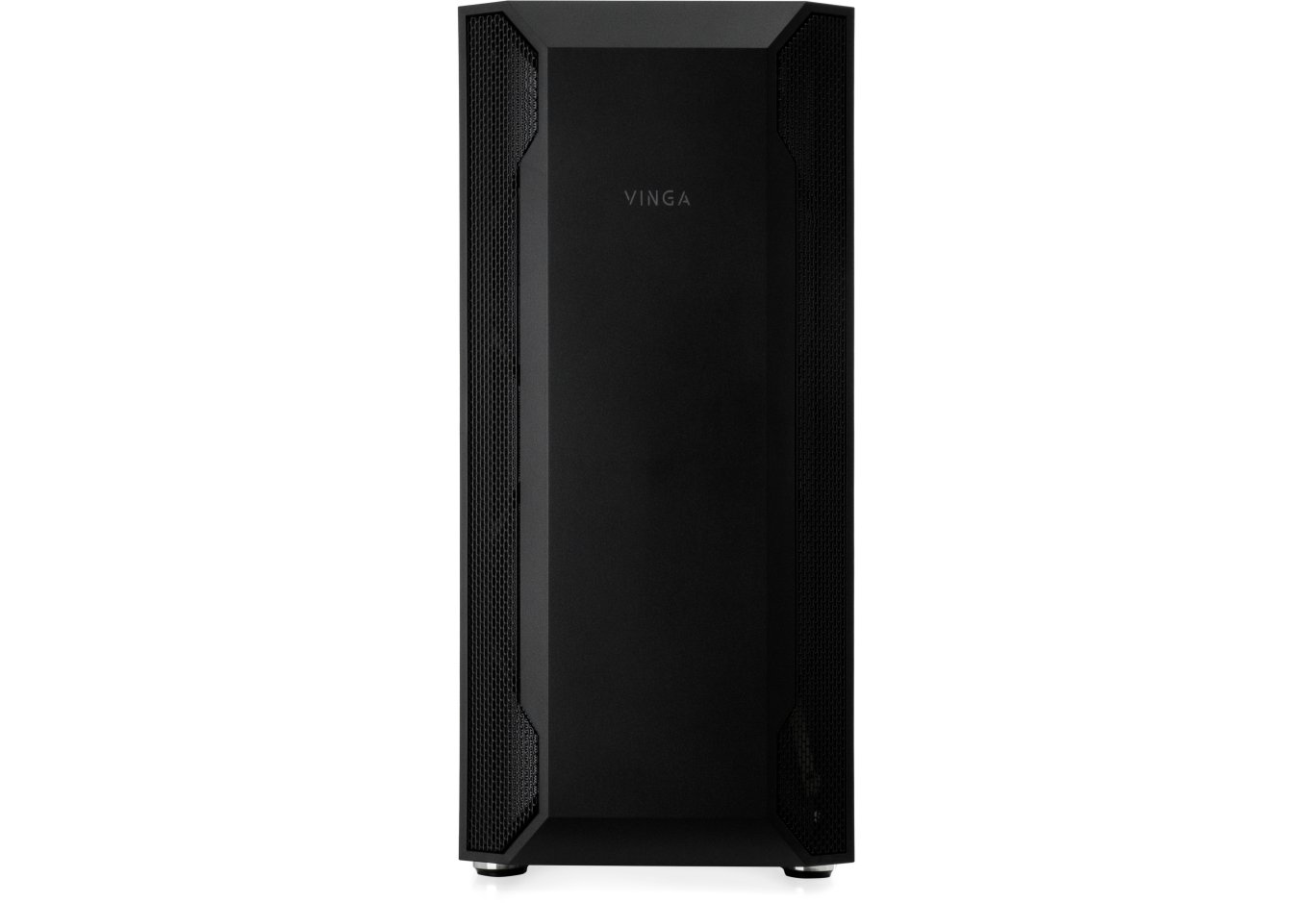
If you have read the review of Vinga Pillar White, the design of Vinga Wingman will seem very familiar to you. It is almost a complete analog, but in black and with a different plastic front panel. Overall, the case design is quite standard and highly versatile.
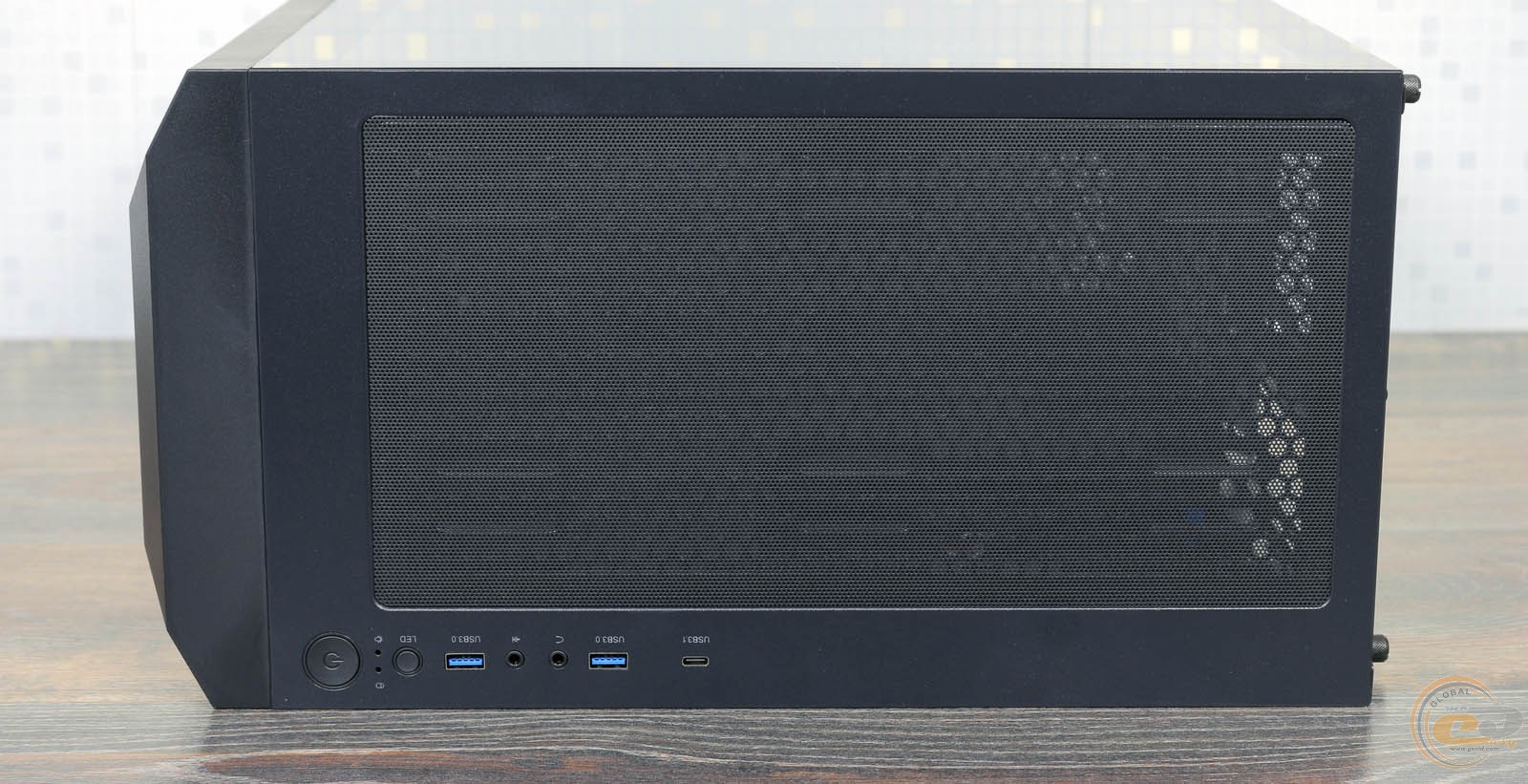
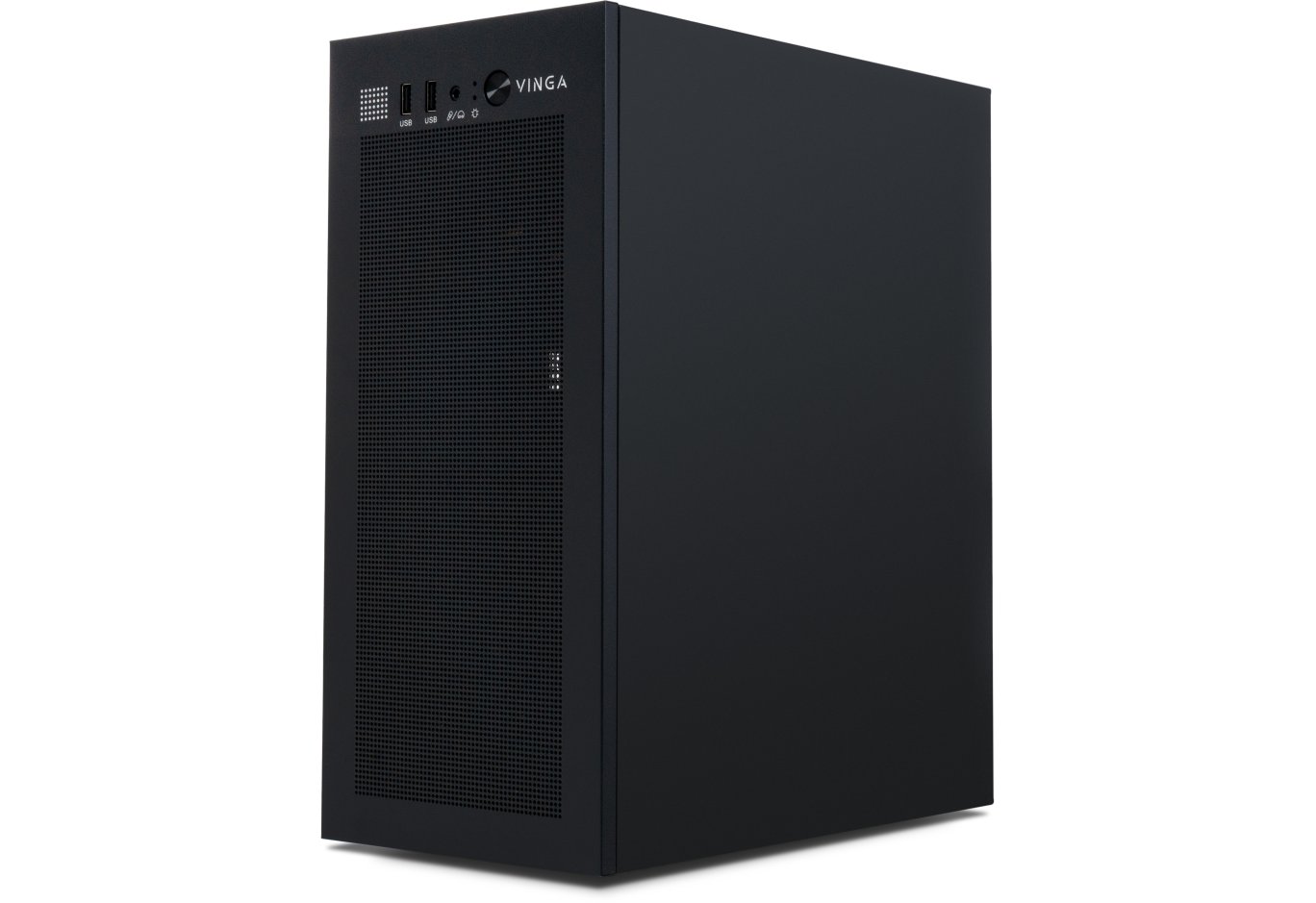
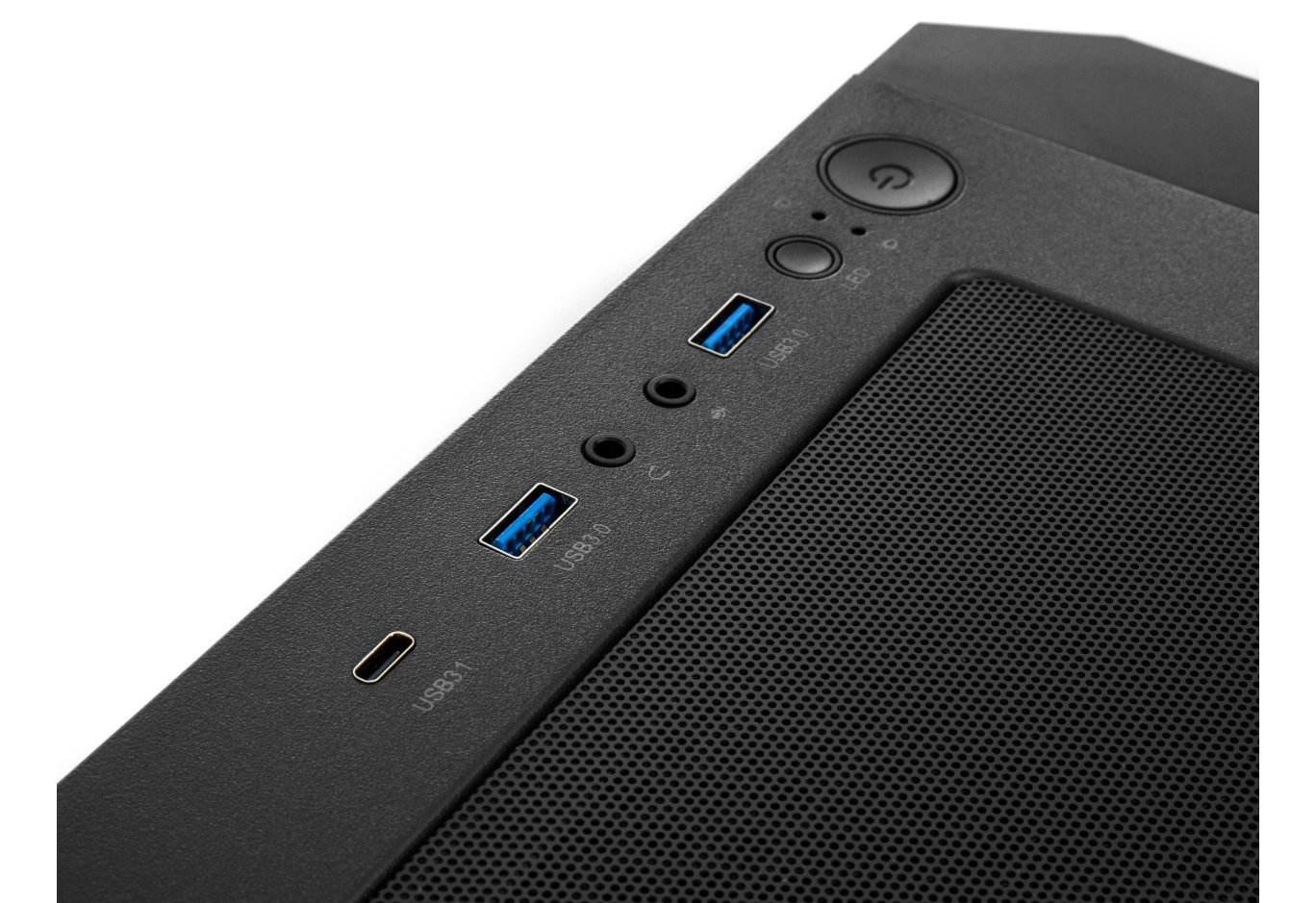
The external ports are located on the right side of the top panel. Here you will find two USB 3.0, one USB 3.1 Type-C, and a pair of 3.5-mm audio jacks for a microphone and headphones. Closer to the front panel are the power and lighting control buttons. You definitely won't confuse them thanks to their different sizes and the tactilely noticeable pattern on the power button. Between them are two small light indicators with quite comfortable brightness.
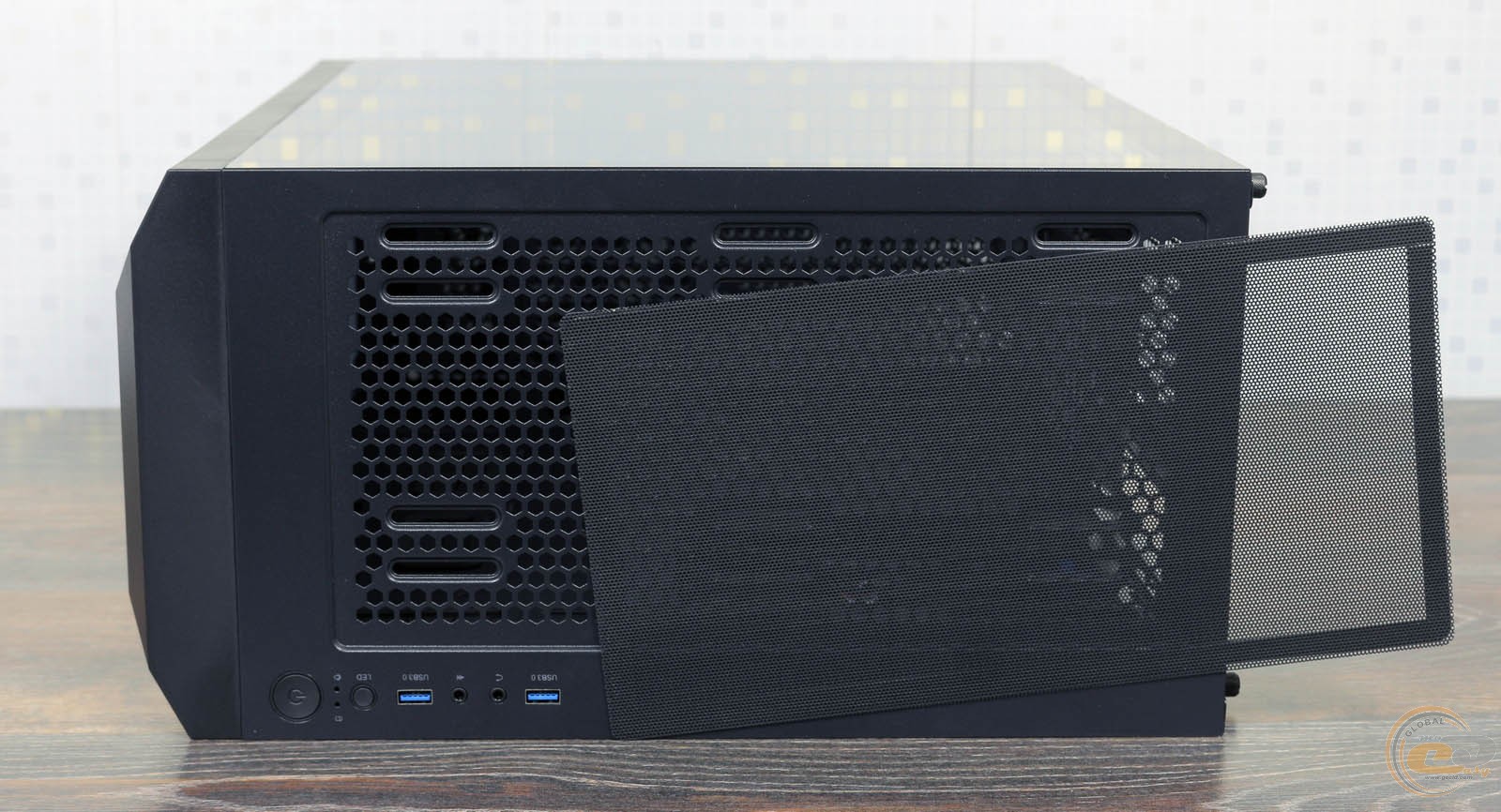
Another important element of the top panel is the perforation, covered with a magnetic dust filter. Under it, you can mount a pair of 120-mm or 140-mm fans or a liquid cooling radiator sized 240 or 280 mm.
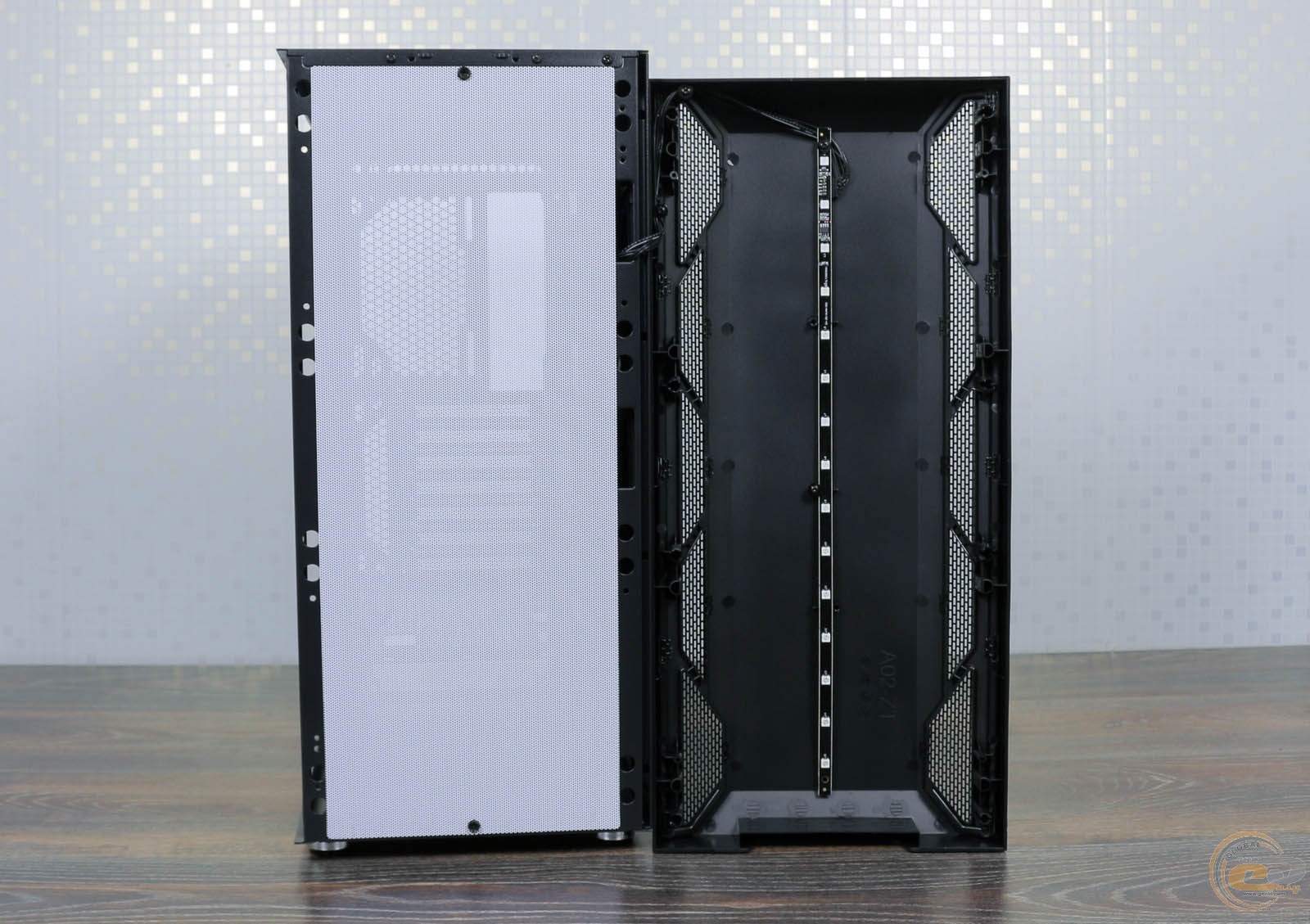
The front panel is made of plastic. On its reverse side, it carries an LED strip, which can be controlled using the aforementioned LED button. Under it, a white dust filter is fixed. Additionally, it serves to reflect the strip's glow.
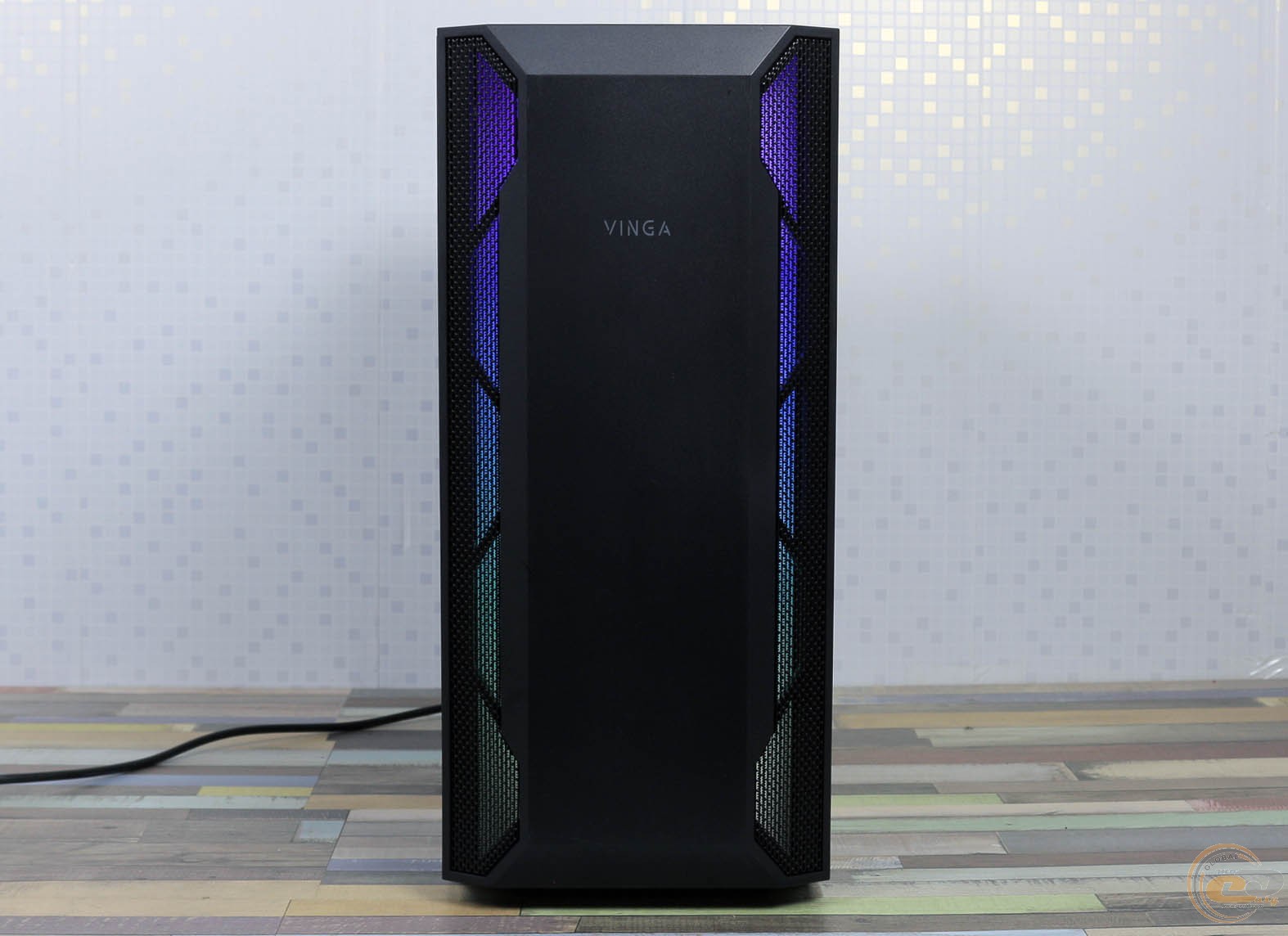
The illumination supports several operating modes: a rainbow transition between all colors, sequential color change, or constant glow of a specific color.
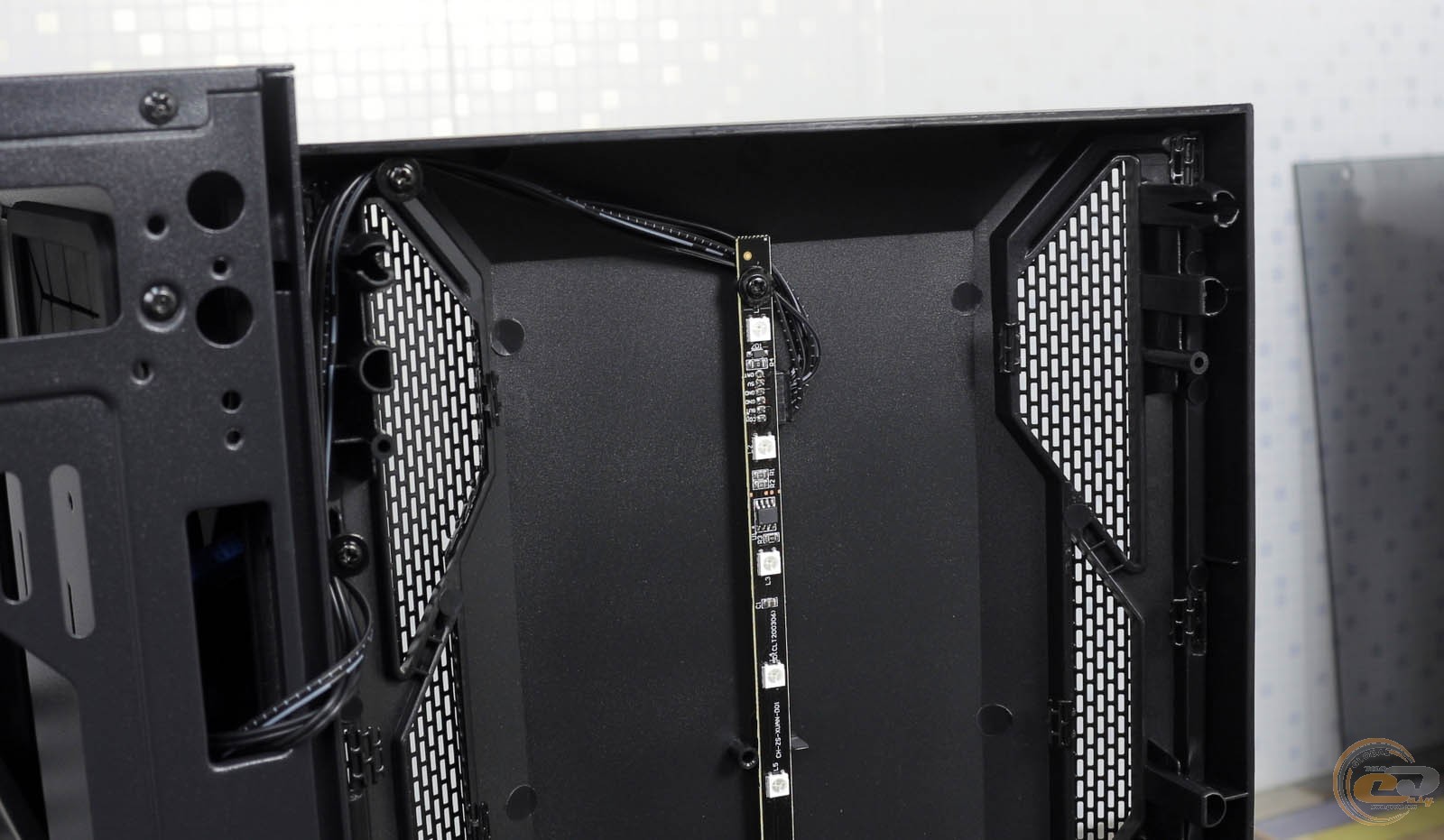
The front panel is secured with plastic clips and can be removed without much effort.
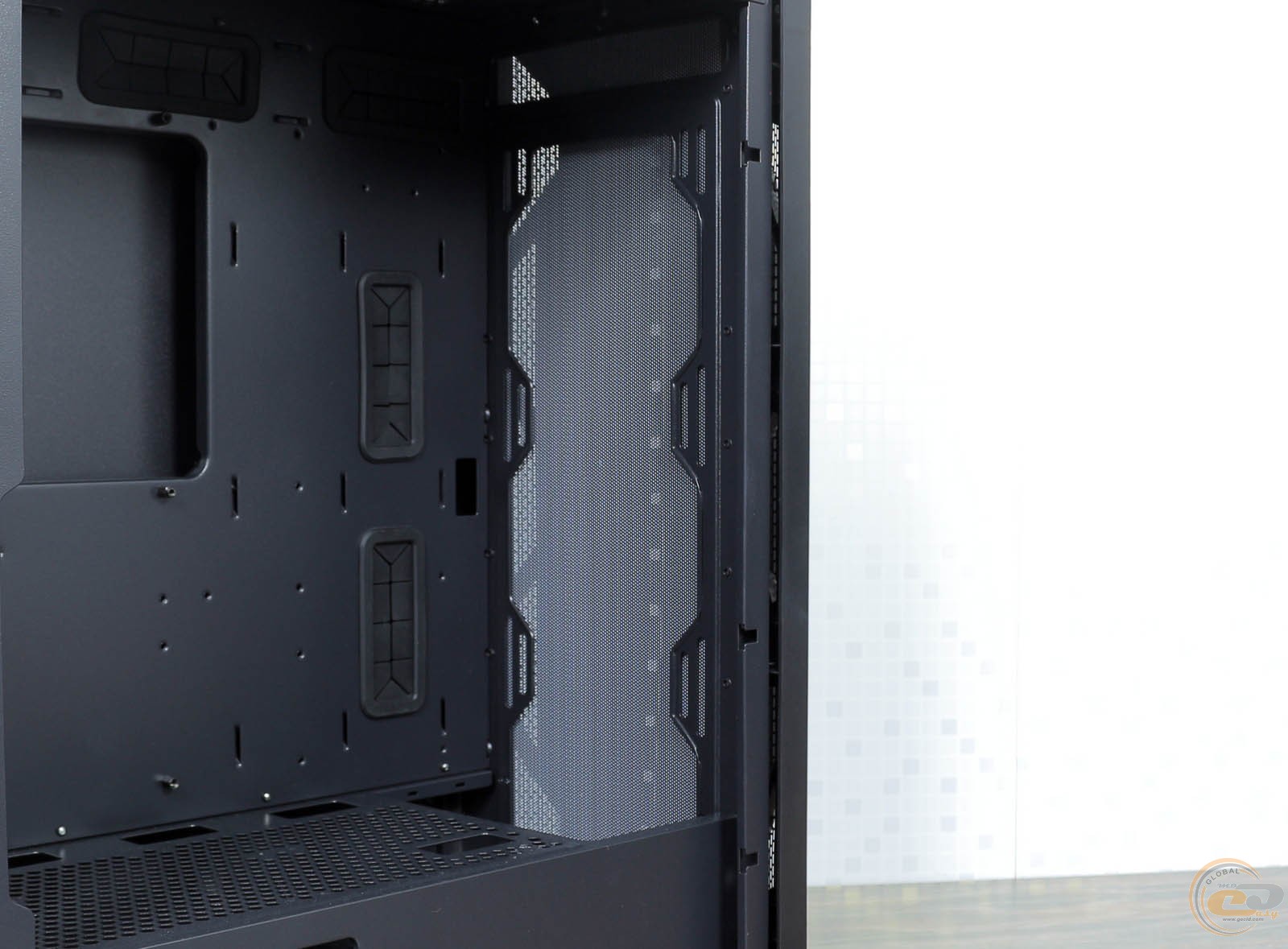
Behind it are mounting locations for three 120-mm or two 140-mm fans. Instead, you can attach a radiator for liquid cooling sized from 120 to 360 mm.
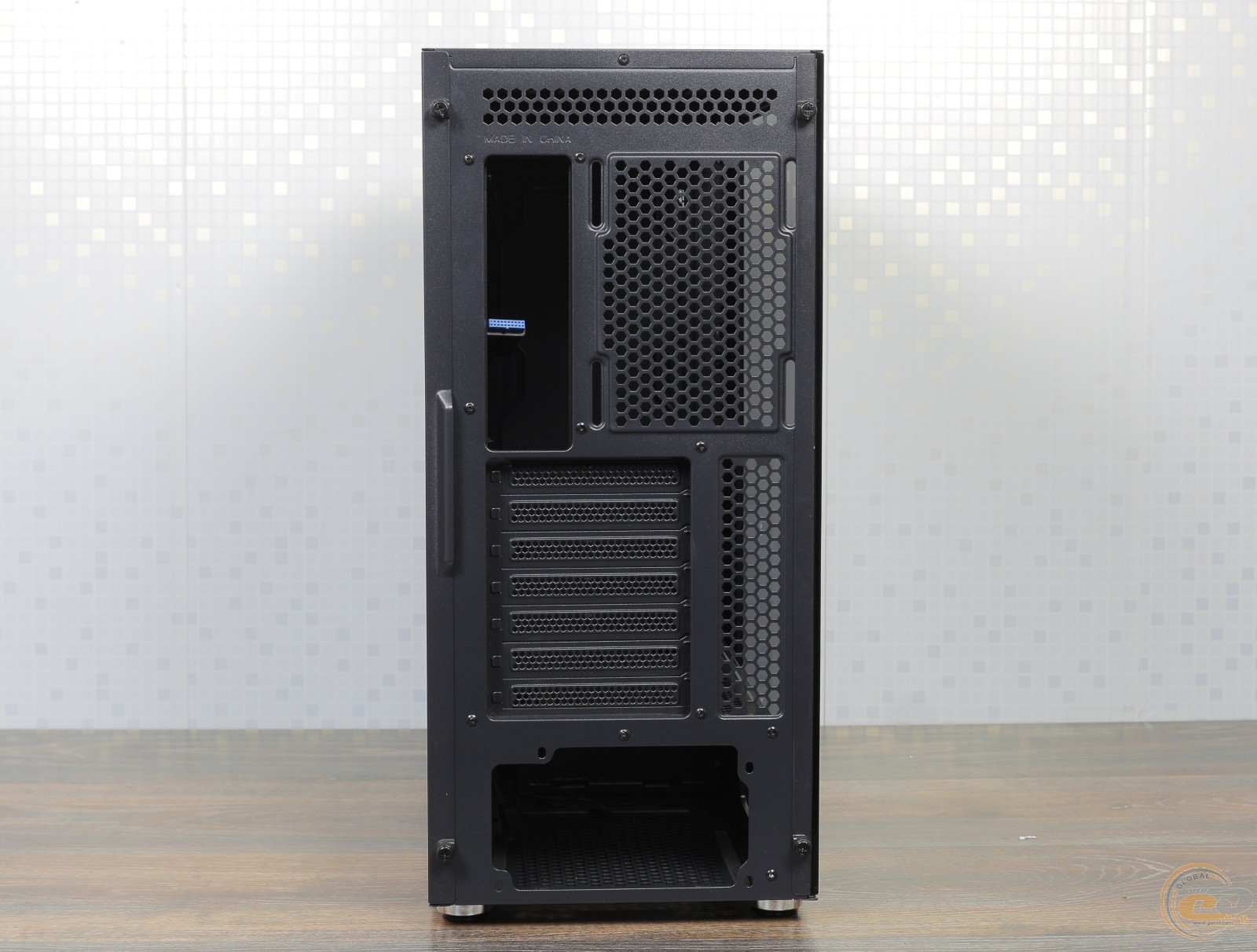
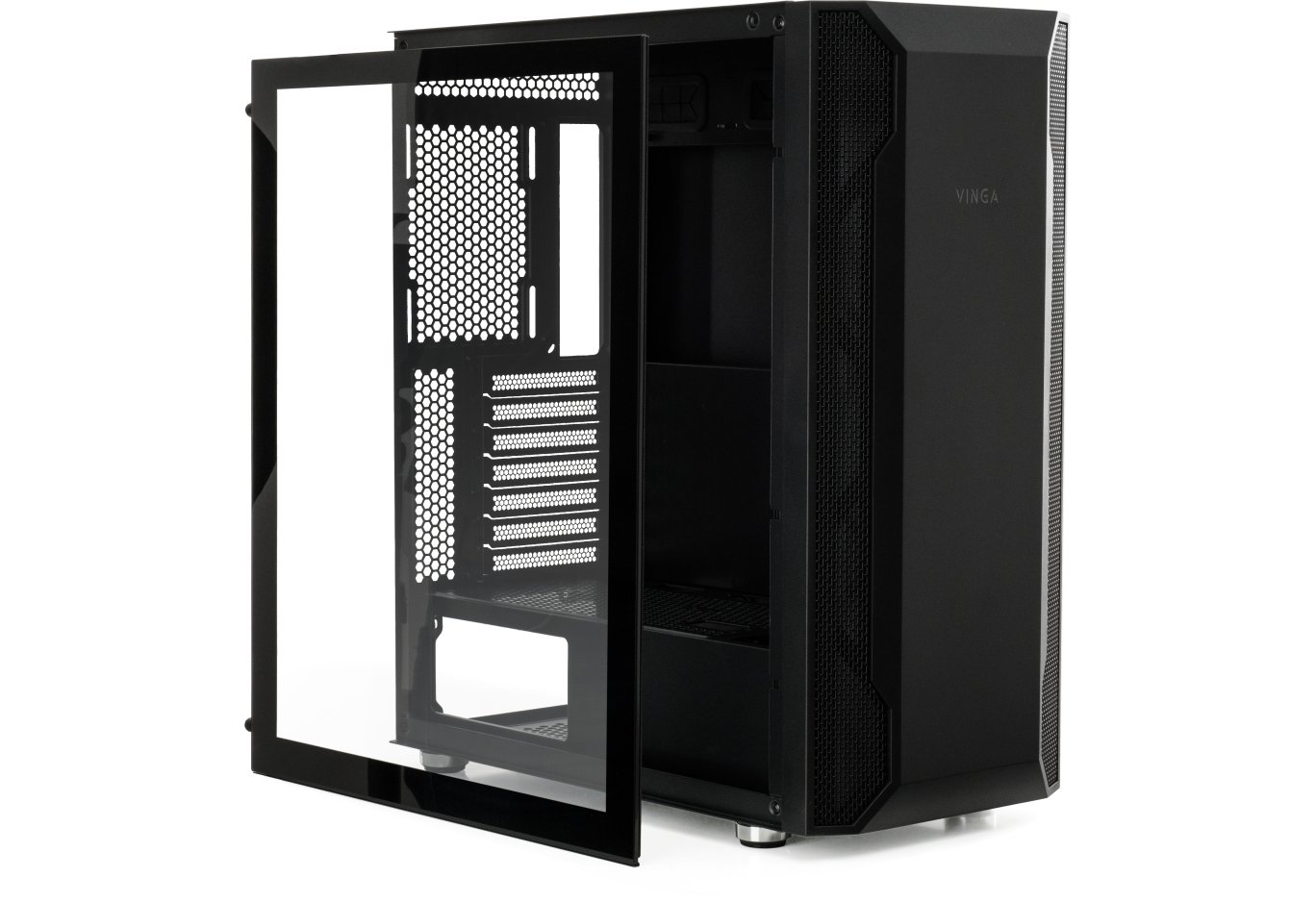
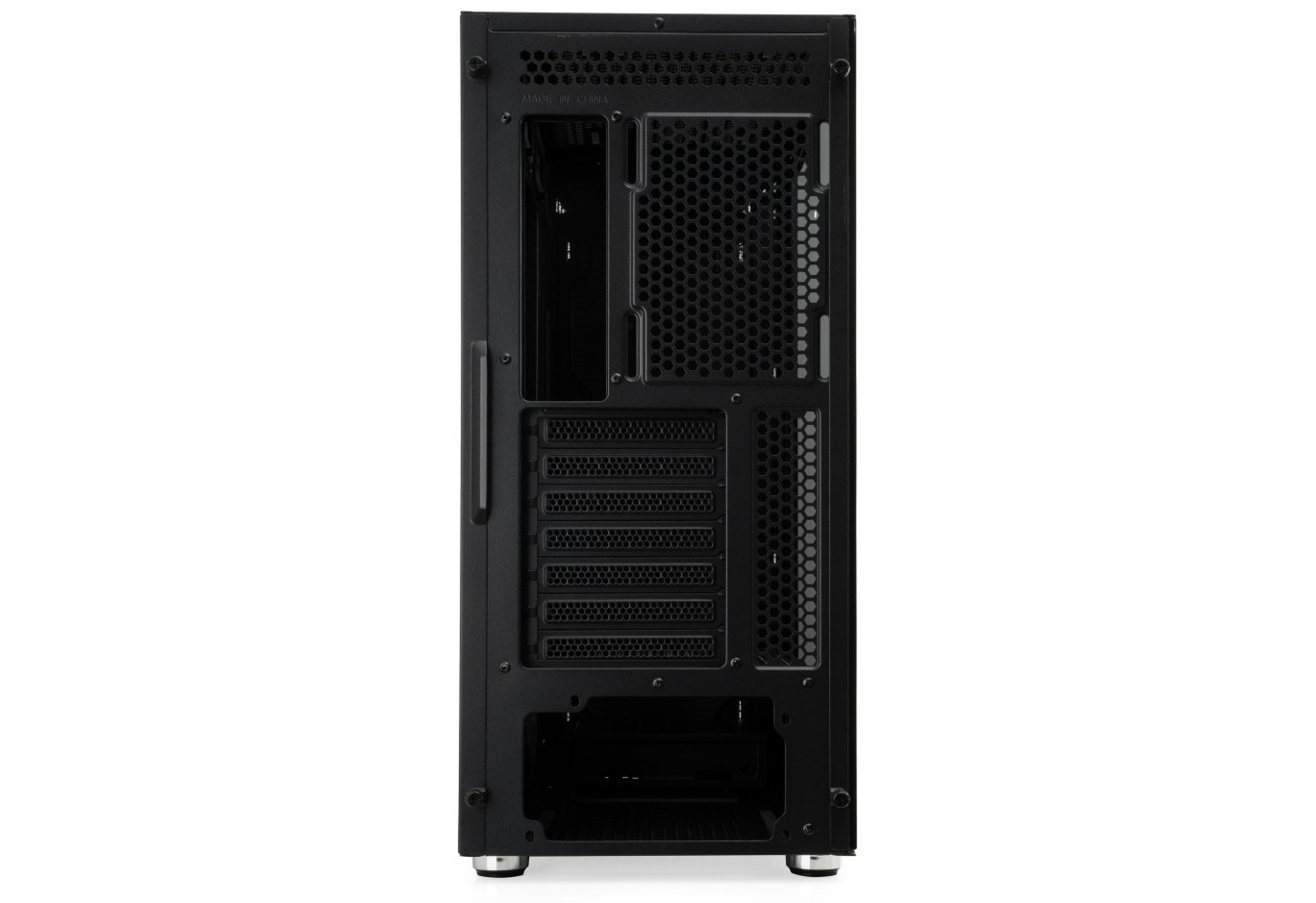
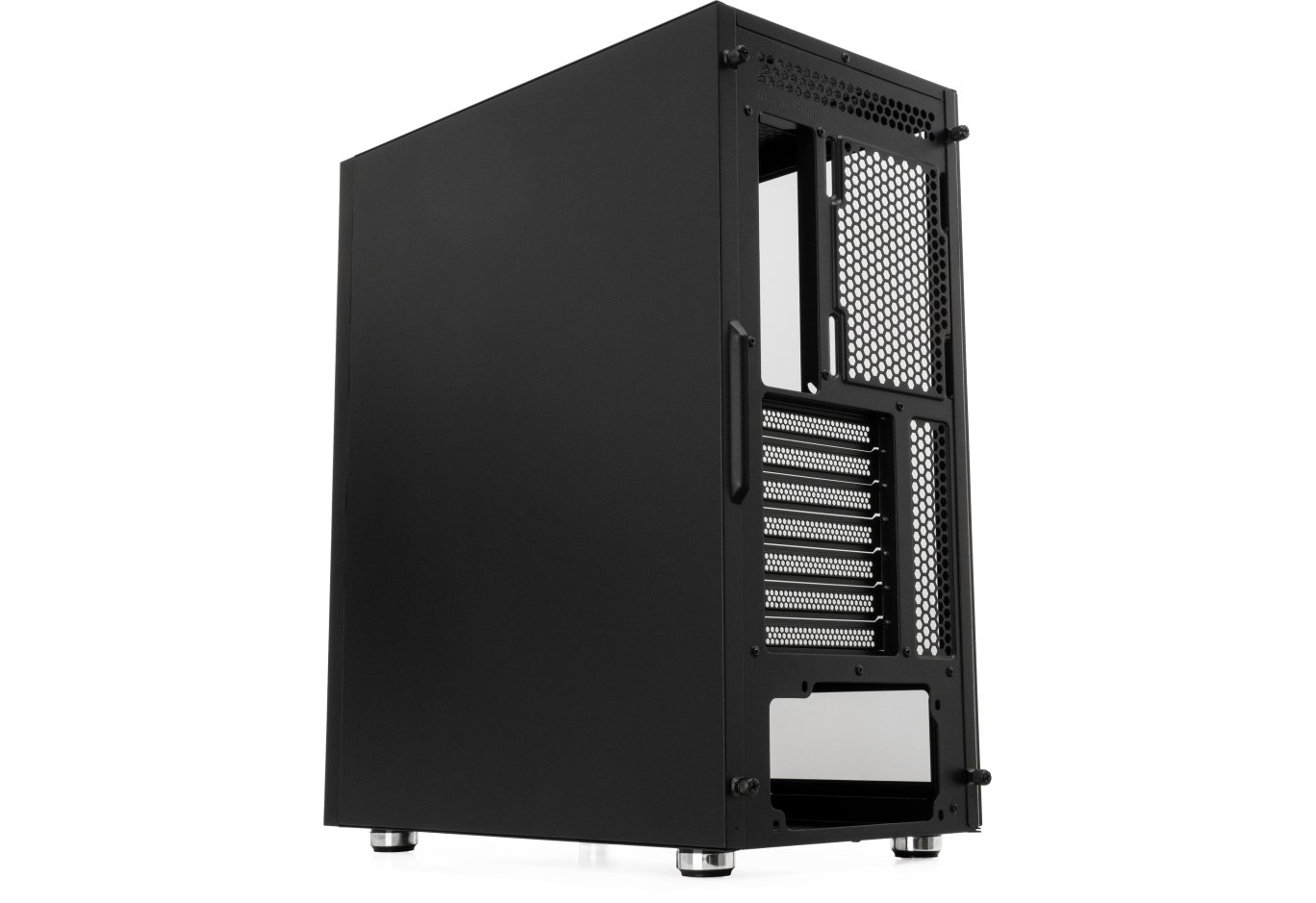
The rear part of the case features seven horizontal expansion slots, covered with reusable blanks. Next to it is a cutout for the motherboard's interface panel and a mounting location for a 120-mm fan with adjustable height.
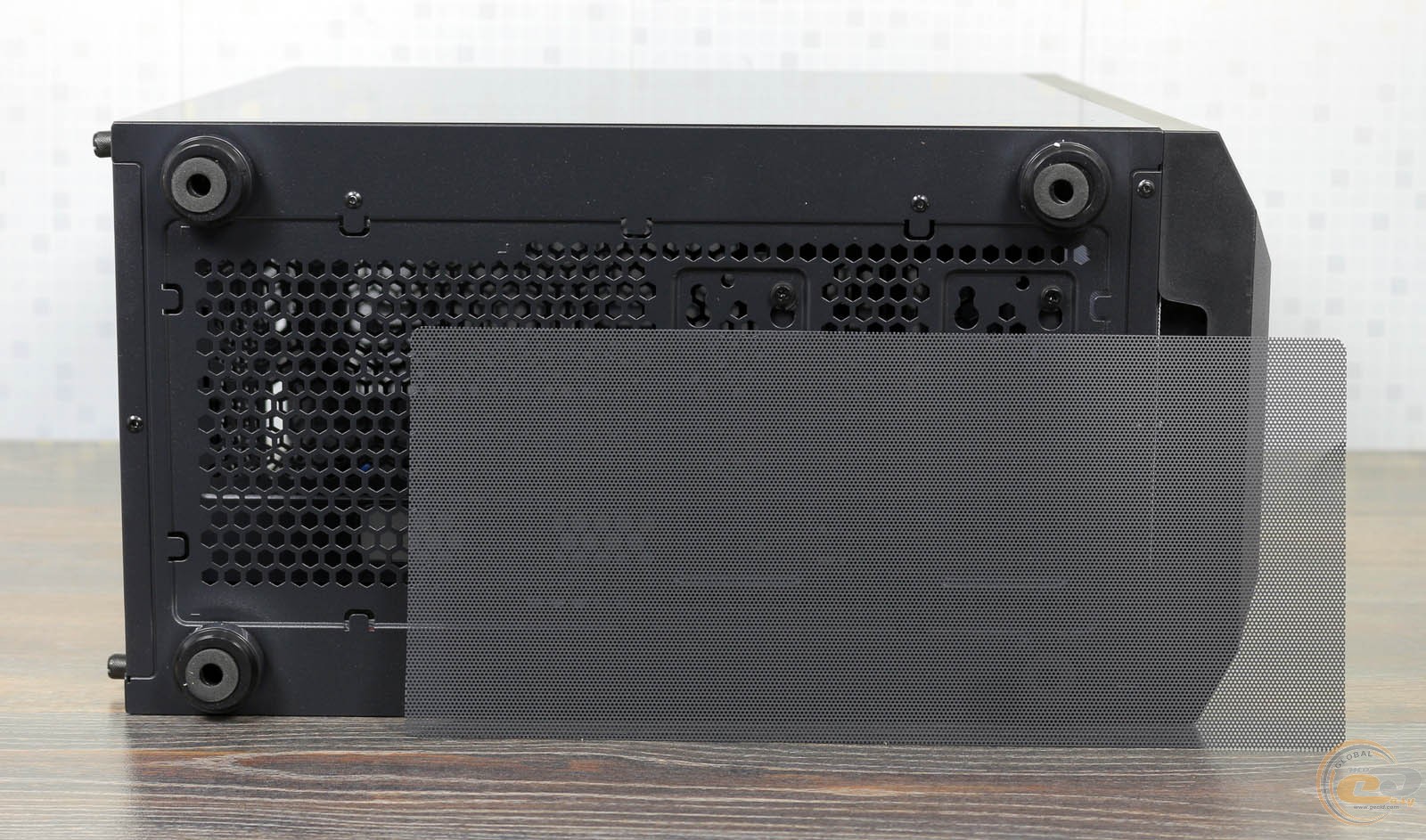
At the bottom of the case, there is a mounting bracket for the drive cage and a ventilation hole for cold air access to the PSU. All of them are covered with a large dust filter. It is easy to remove, blow out, and wash.
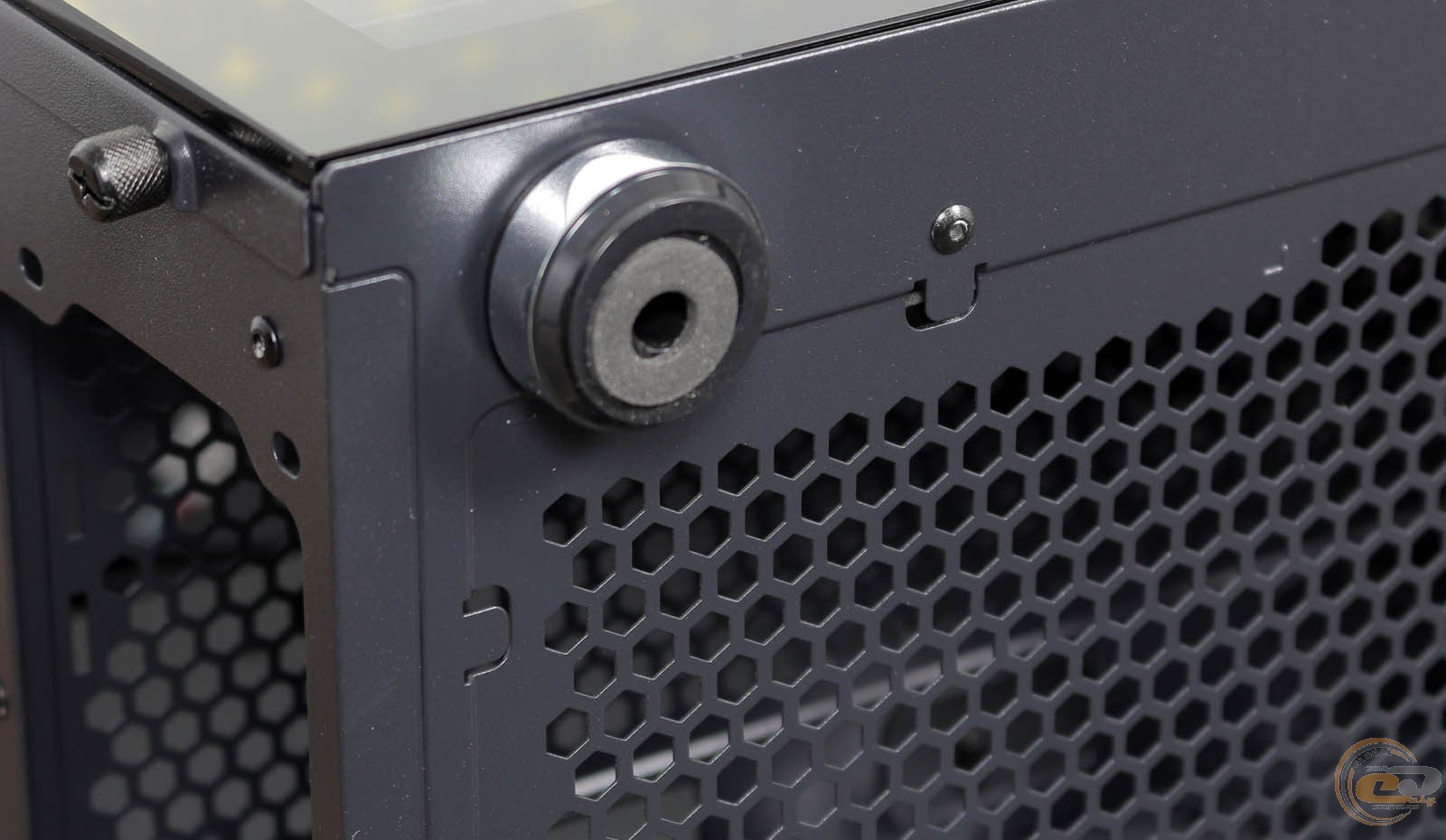
There are also two pairs of plastic feet 15 mm high with rubber pads. They provide good stability on different types of surfaces and sufficient airflow for the power supply.
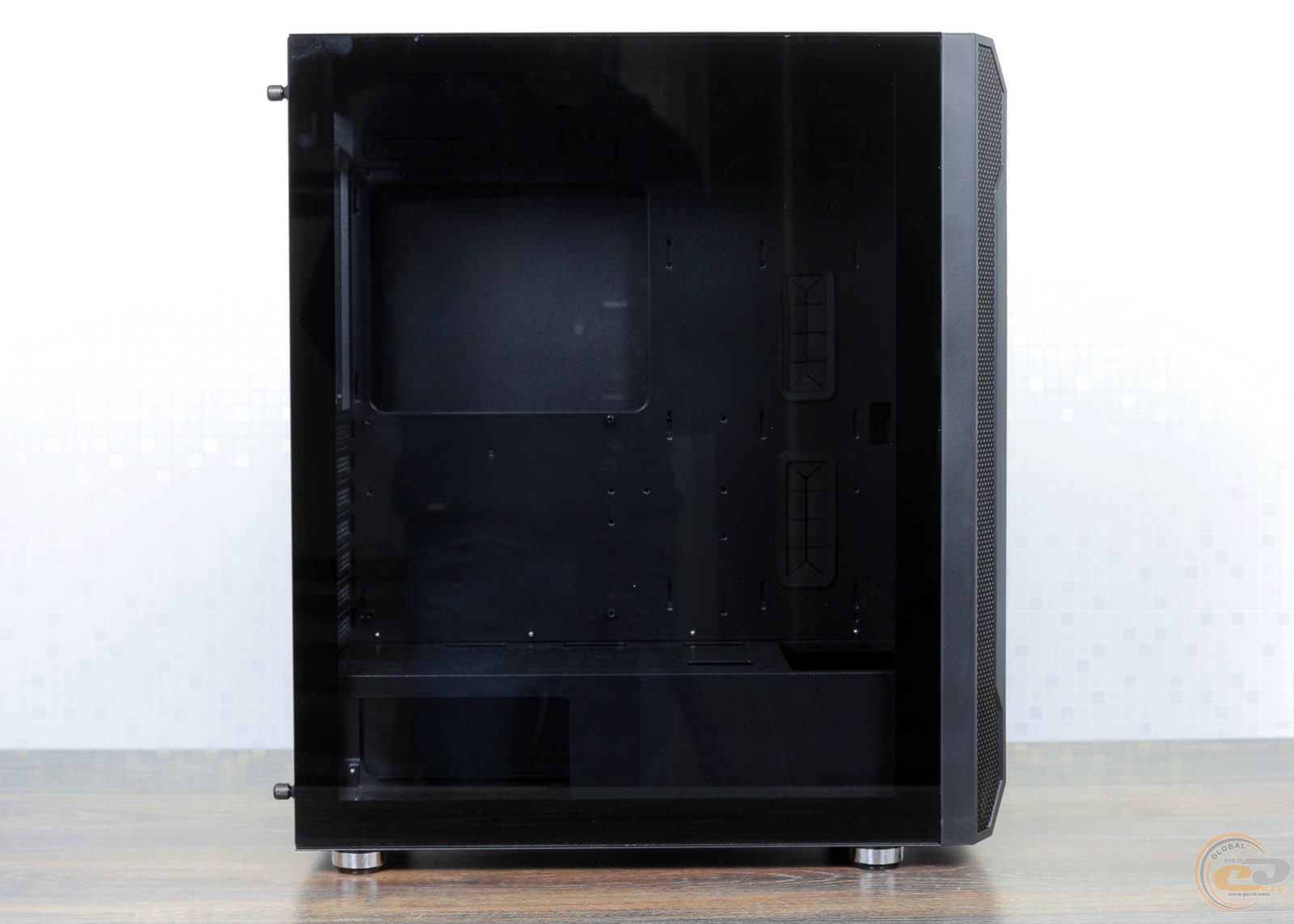
The left side is represented by a transparent glass panel (370 x 463 mm) with a thickness of 3.87 mm. It allows you to admire the internal components. It is held by two metal screws with knurled heads. By the way, the screws do not fall out after unscrewing, so you won't lose them.
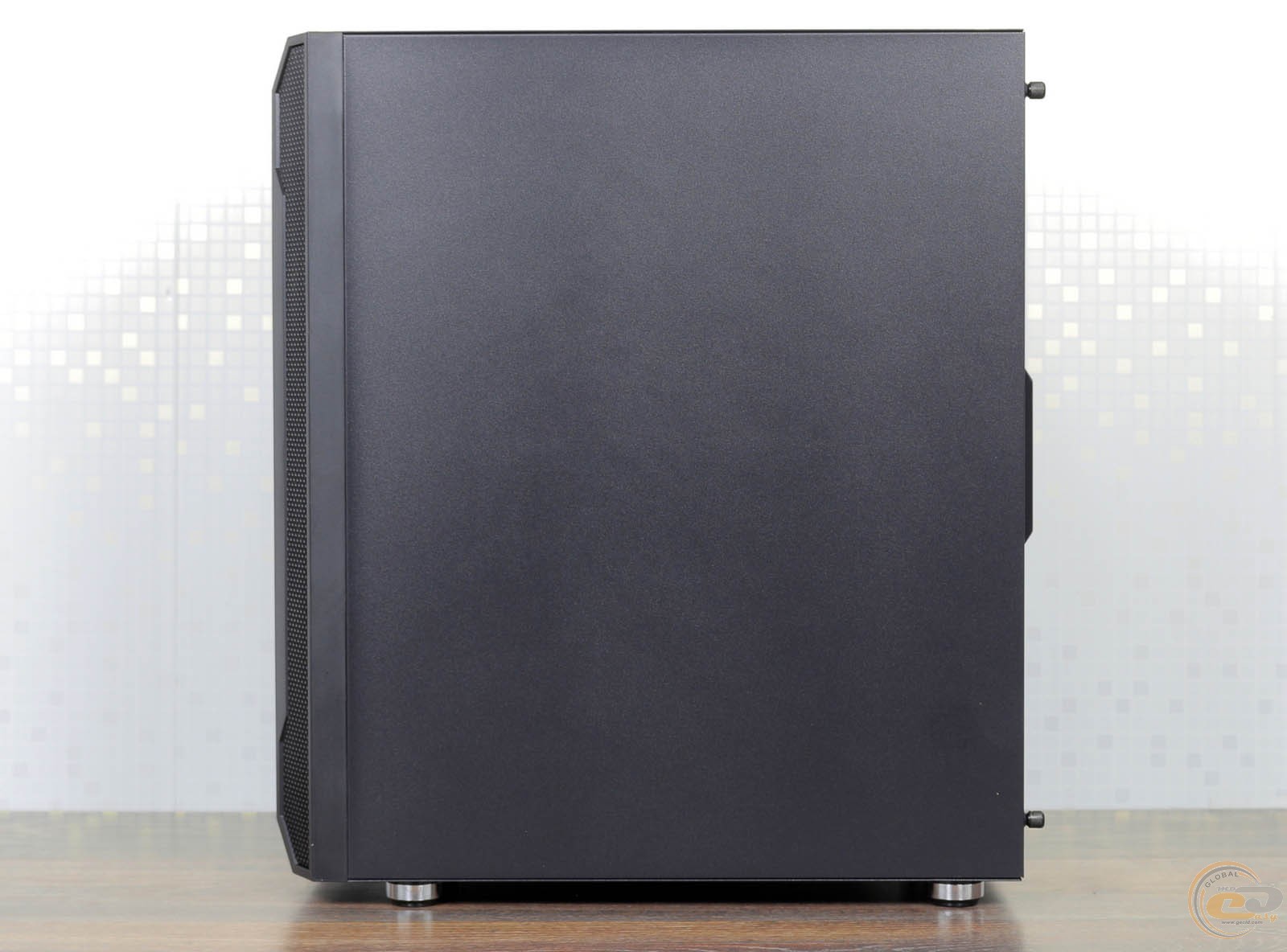
On the opposite side, there is a metal panel with a thickness of 0.84 mm. It is held by similar screws with knurled heads and equipped with a small handle for easy removal.
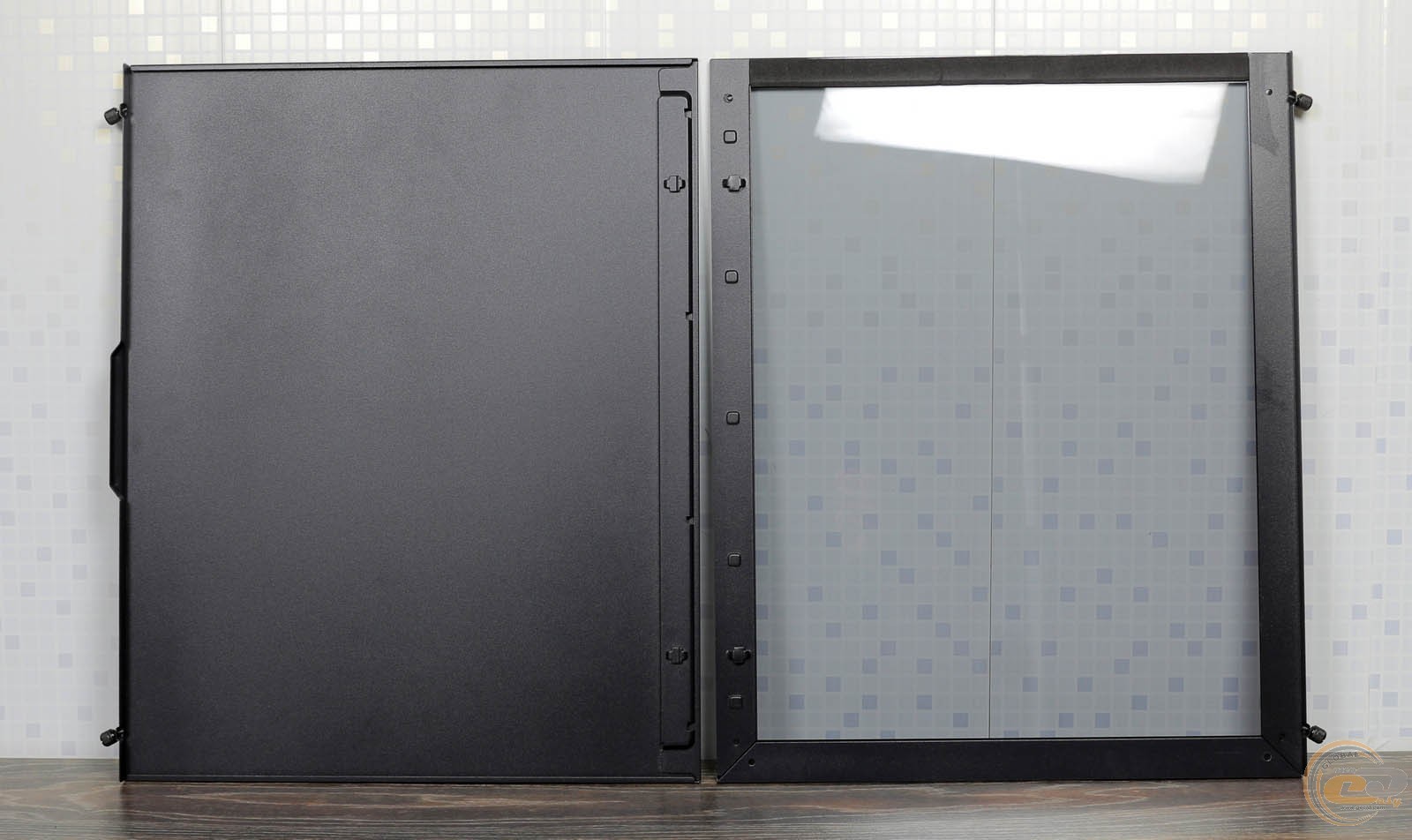
As for the practicality of the materials used, fingerprints are almost invisible on the matte paint, while the glass is more prone to smudges and requires appropriate care.
Internal Structure
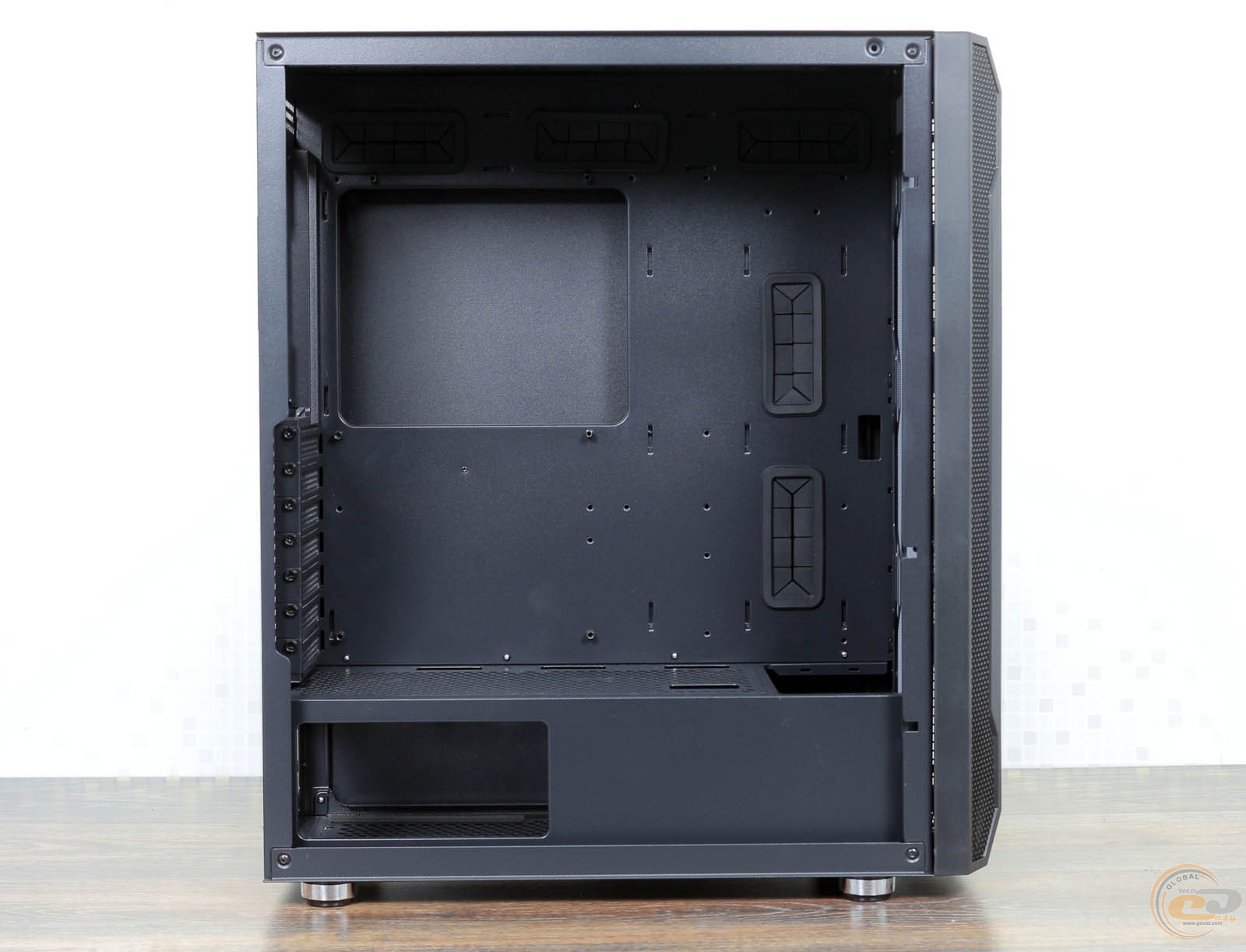
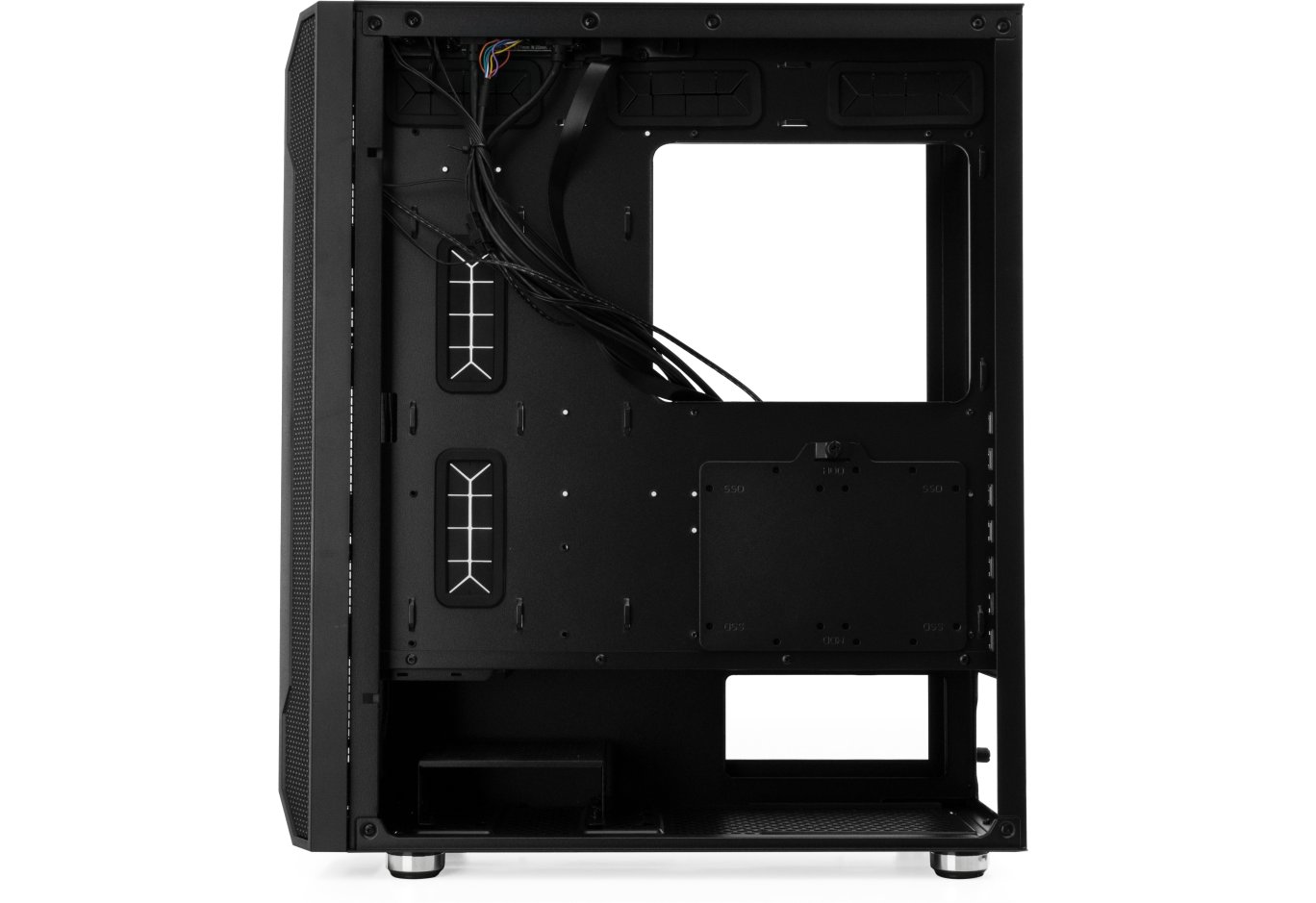
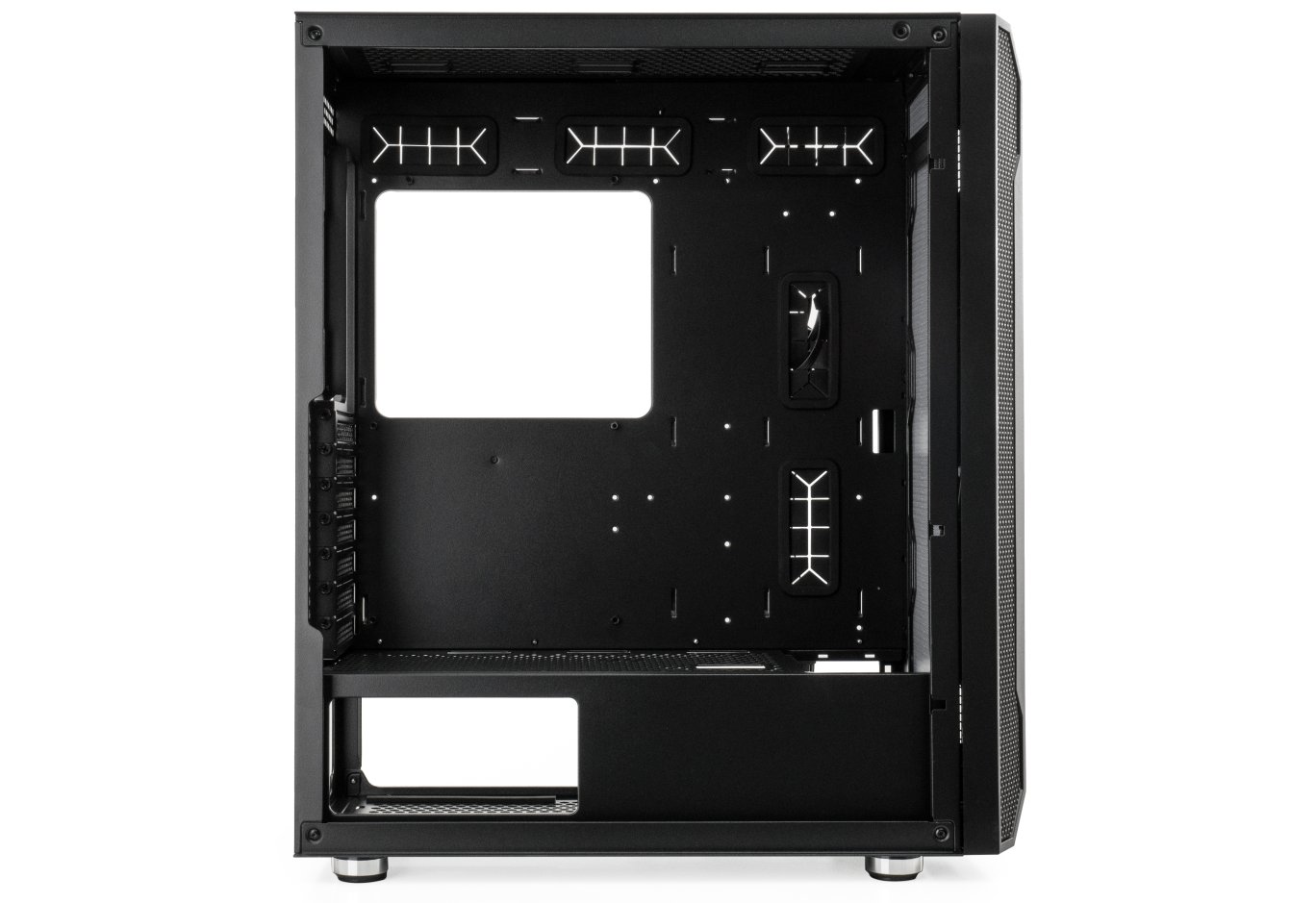
The Vinga Wingman case uses a layout with a bottom-mounted power supply. It, along with the drive cage, is separated from the main space by a metal shroud. The motherboard compartment is located at the top. The front part lacks any racks, allowing for the installation of large components and improving the system's airflow due to the free circulation of air streams.
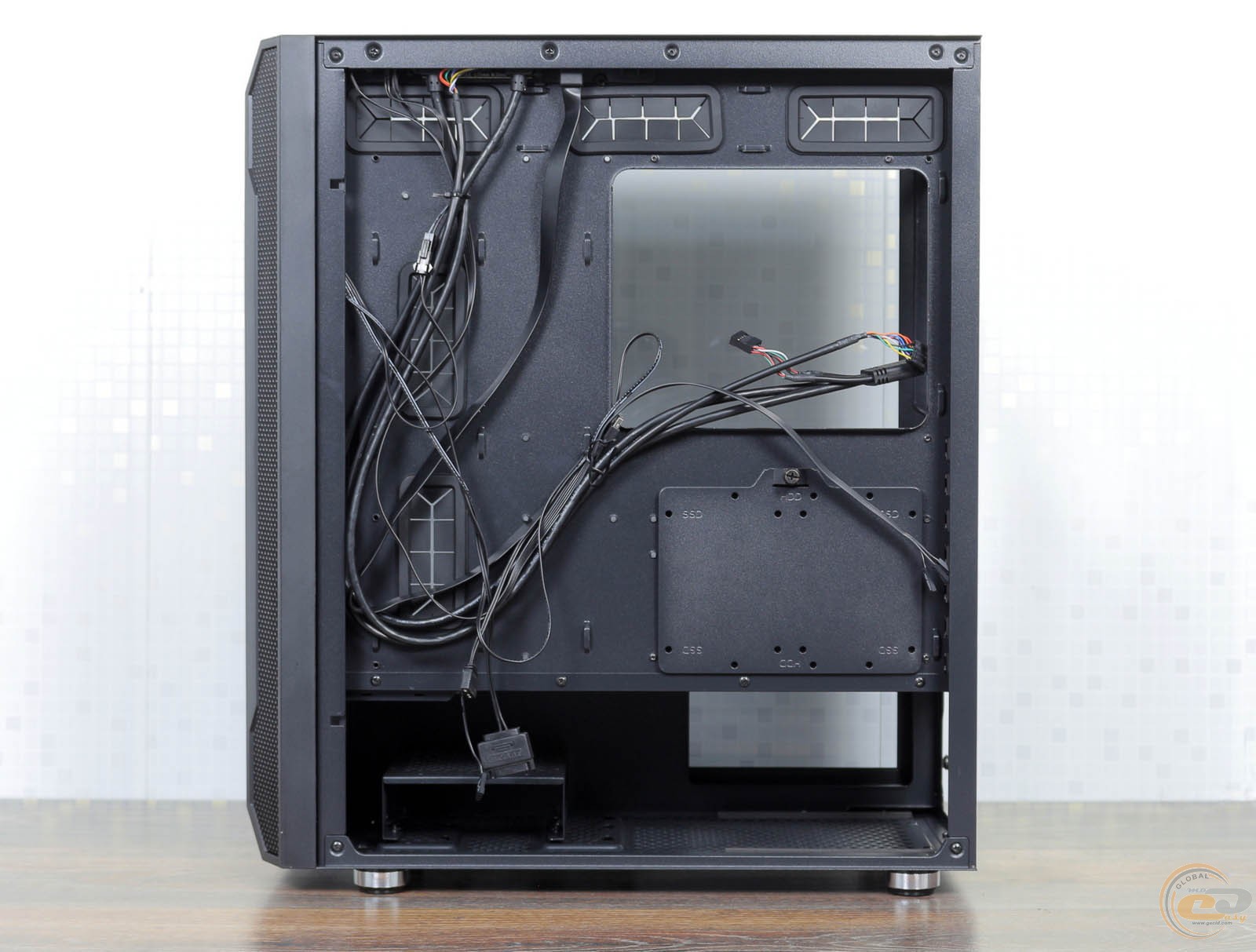
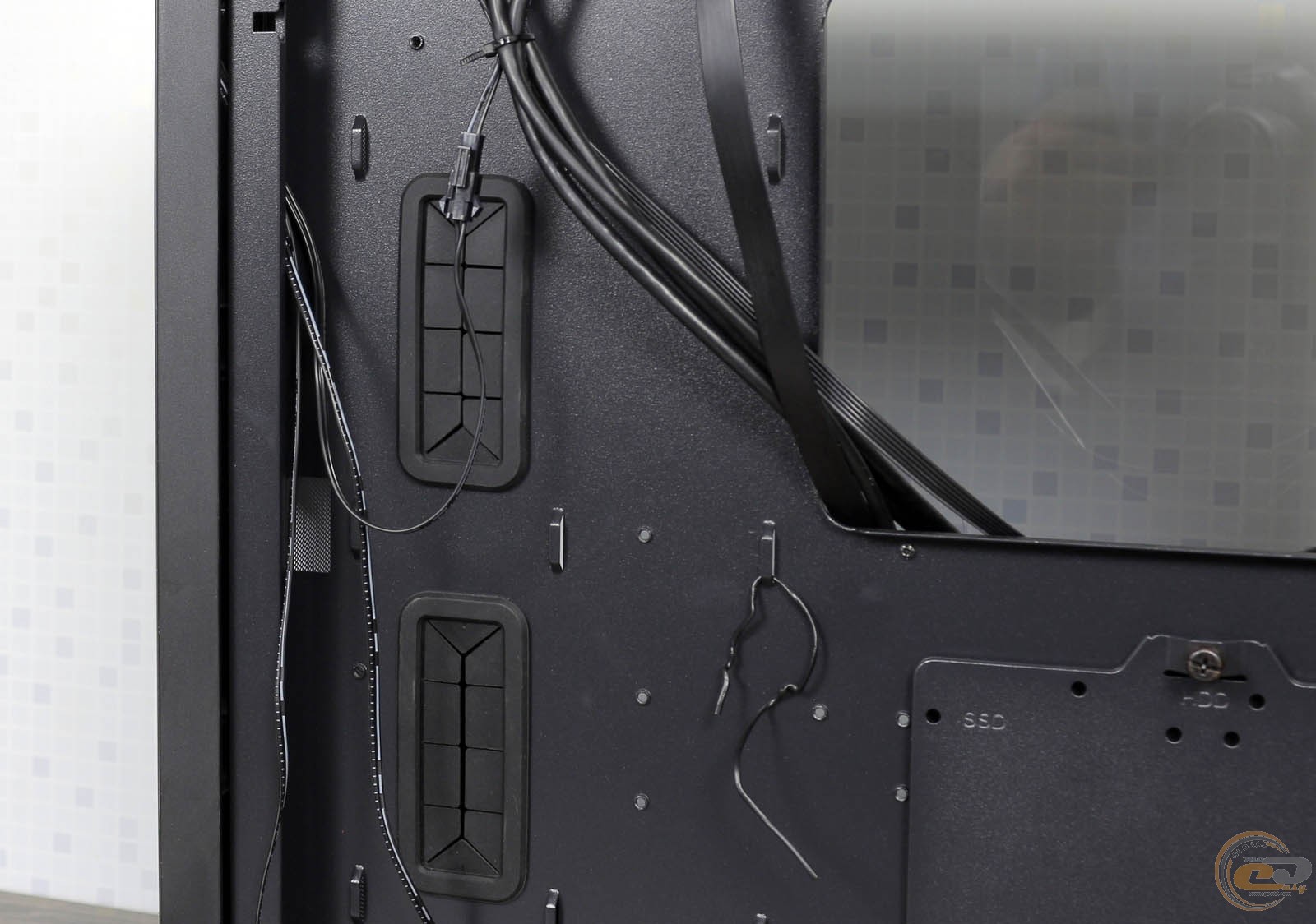
In the motherboard tray, there is a cutout for easy installation and removal of the CPU cooler with a backplate. For hidden cable management, there are five holes with rubber grommets and a whole array of mounts for included ties.
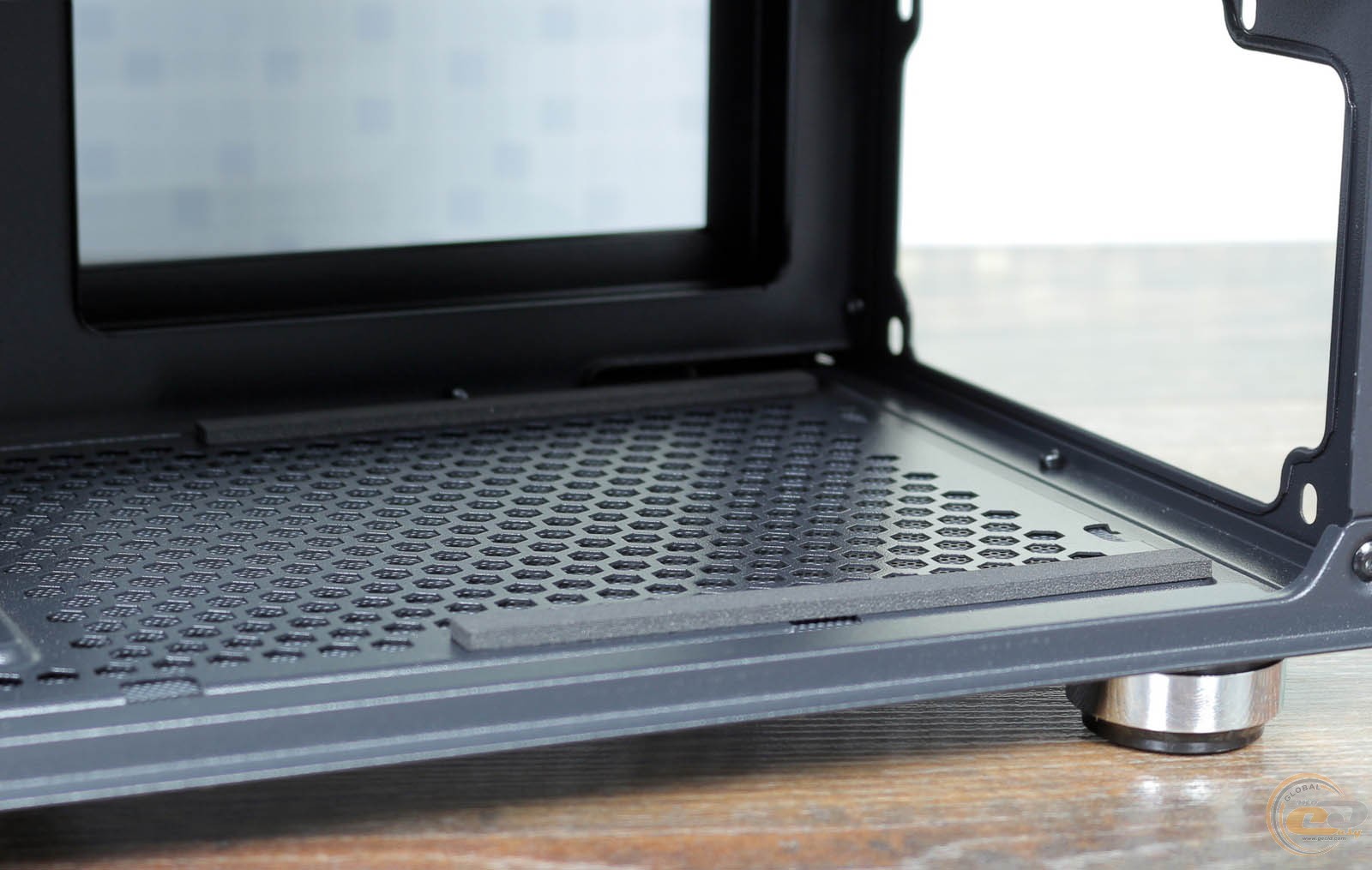
The power supply mounting location is equipped with anti-vibration pads, and the attachment is done with included screws. According to our measurements, the maximum PSU length is 210 mm.
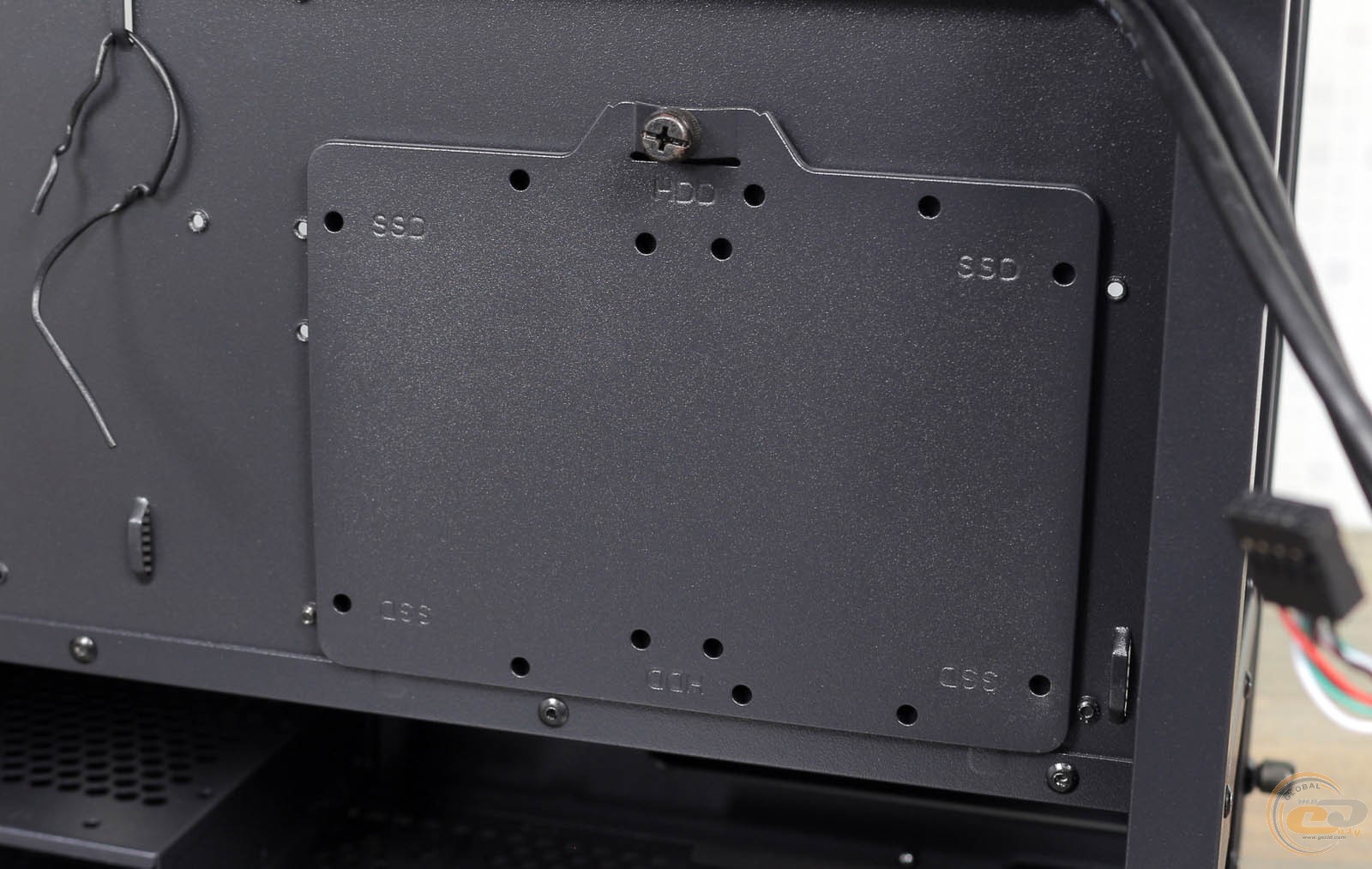
For installing drives, you have a couple of mounting locations for 2.5-inch models behind the tray, a cage for a 3.5-inch model next to the power supply, and another similar cage included in the supply.
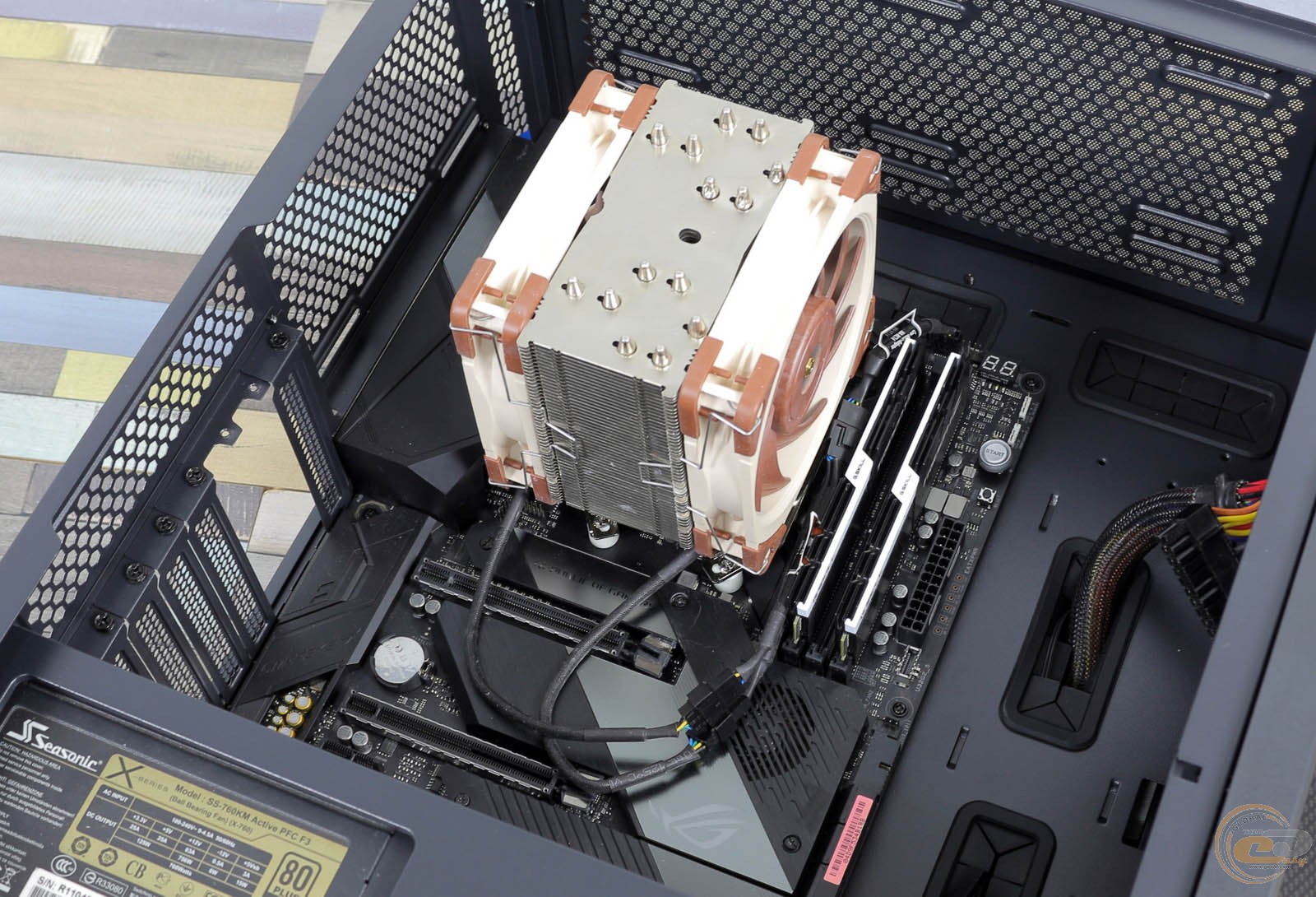
Let's move on to the assembly process. The case supports motherboards in E-ATX, ATX, microATX, and Mini-ITX formats. For testing, we used the ASUS ROG Crosshair VIII Hero (Wi-Fi) ATX model.
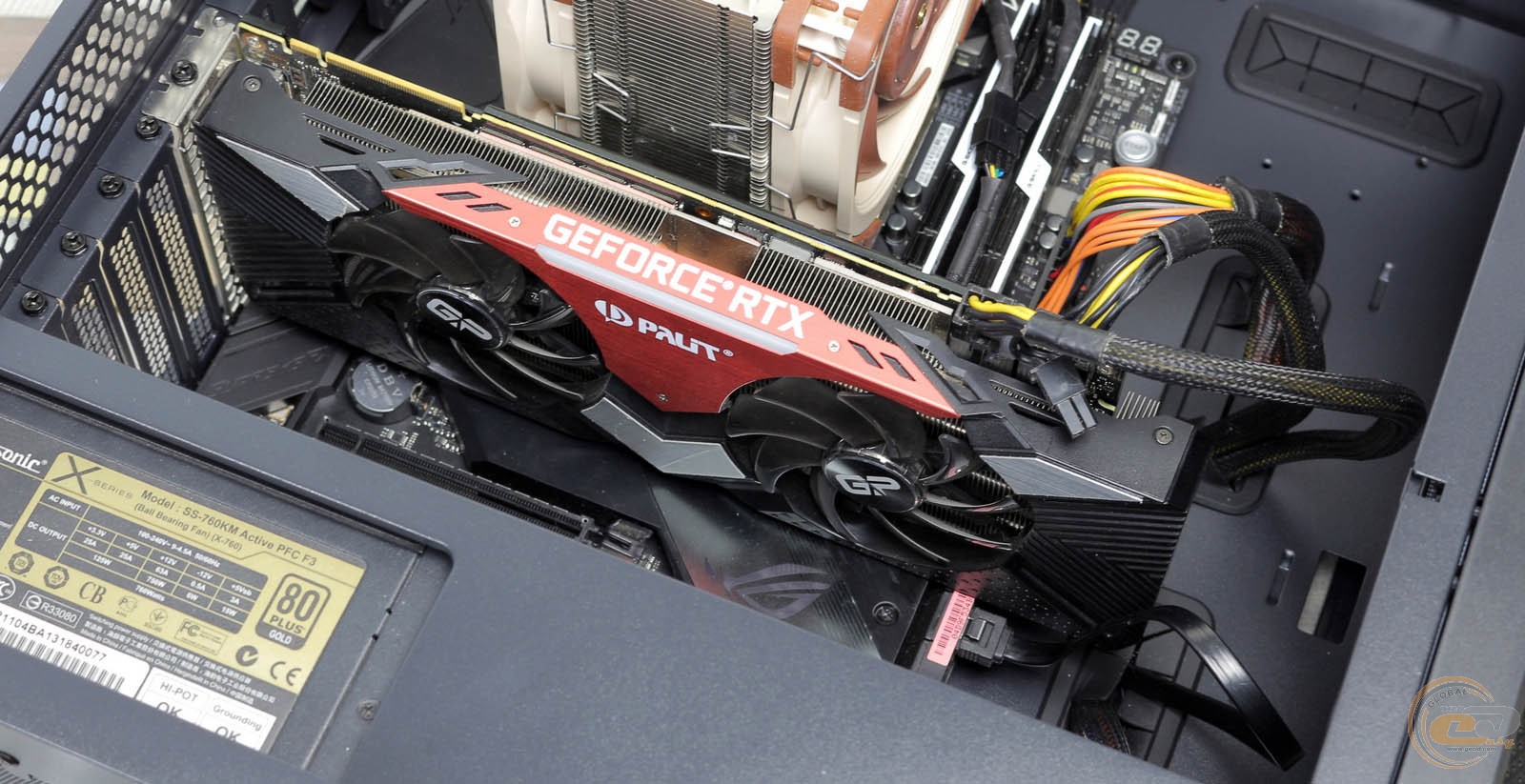
The length of the graphics cards should not exceed 350 mm, but if you install fans or a CBO on the front panel, there will be slightly less space left for the graphics card.
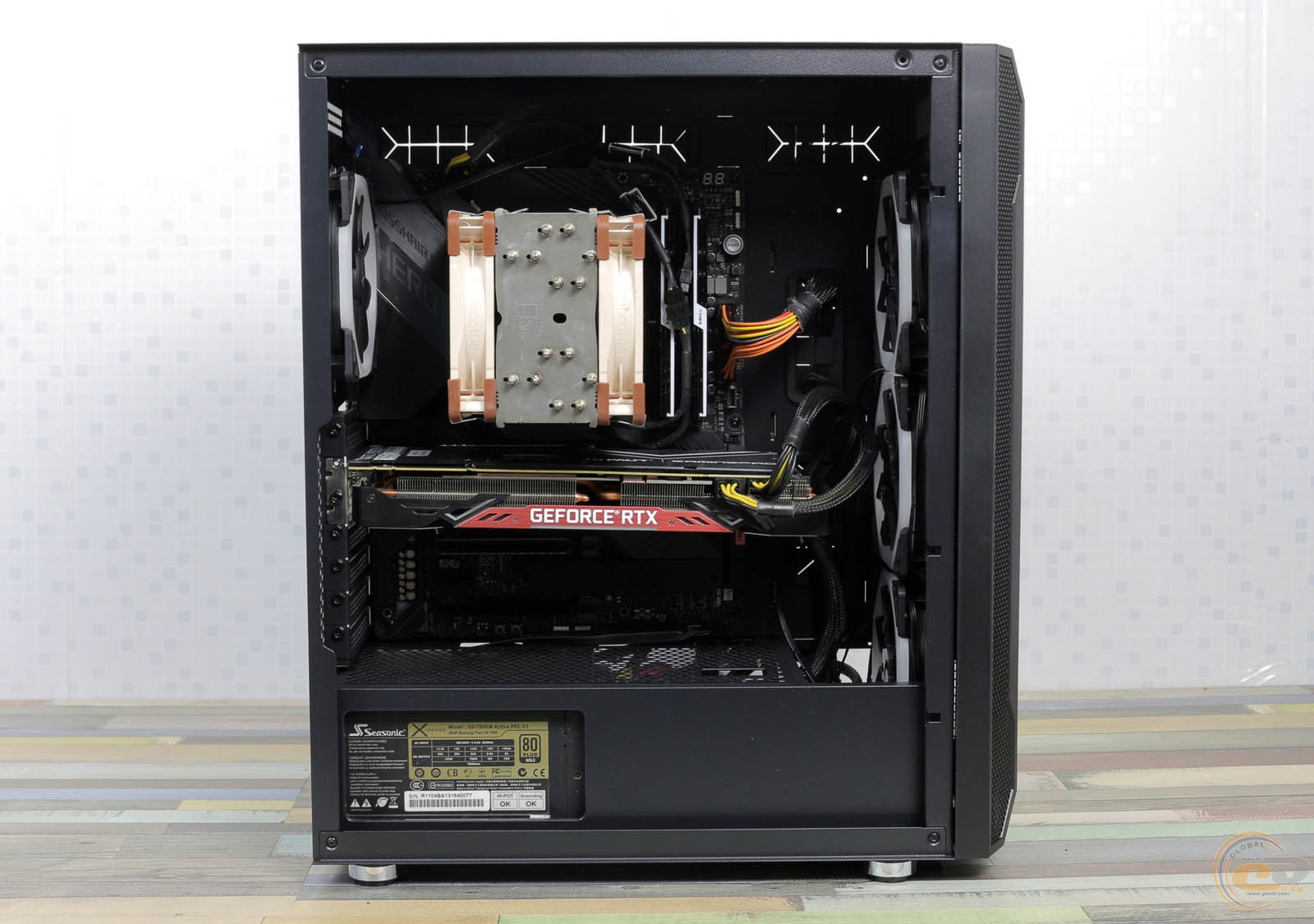
The height of the CPU cooler should not exceed 165 mm. This should be sufficient for installing even large air cooling systems, such as the Noctua NH-D14.
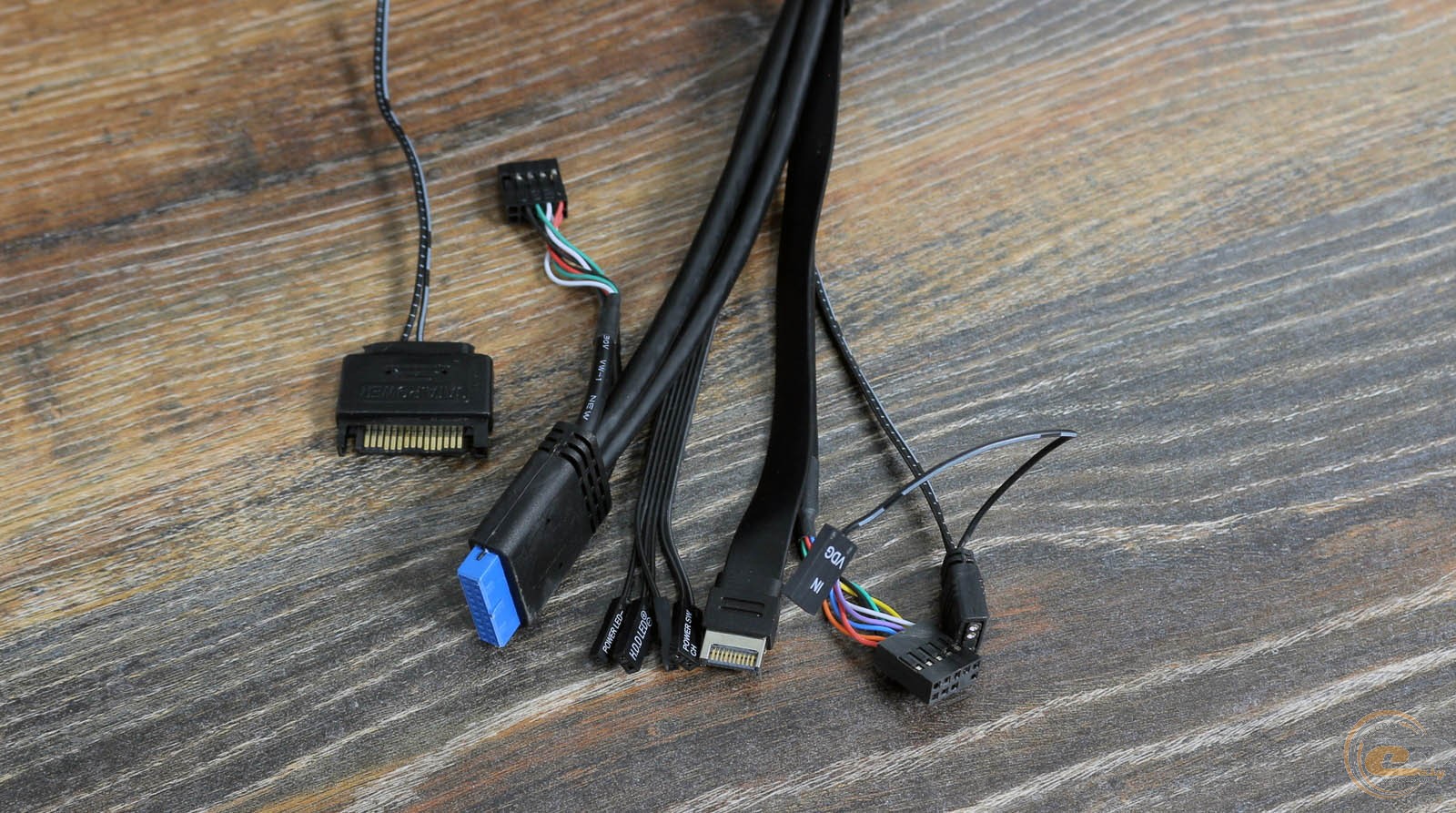
The cables coming from the front panel are long enough to be neatly routed to the motherboard.
|
Name |
Length |
|
USB 3.0 |
70 cm |
|
USB 3.1 |
50 cm |
|
USB 2.0 |
70 cm |
|
HD Audio |
70 cm |
|
RGB |
70 cm |
|
SATA |
40 cm |
|
Buttons and Indicators |
70 cm |
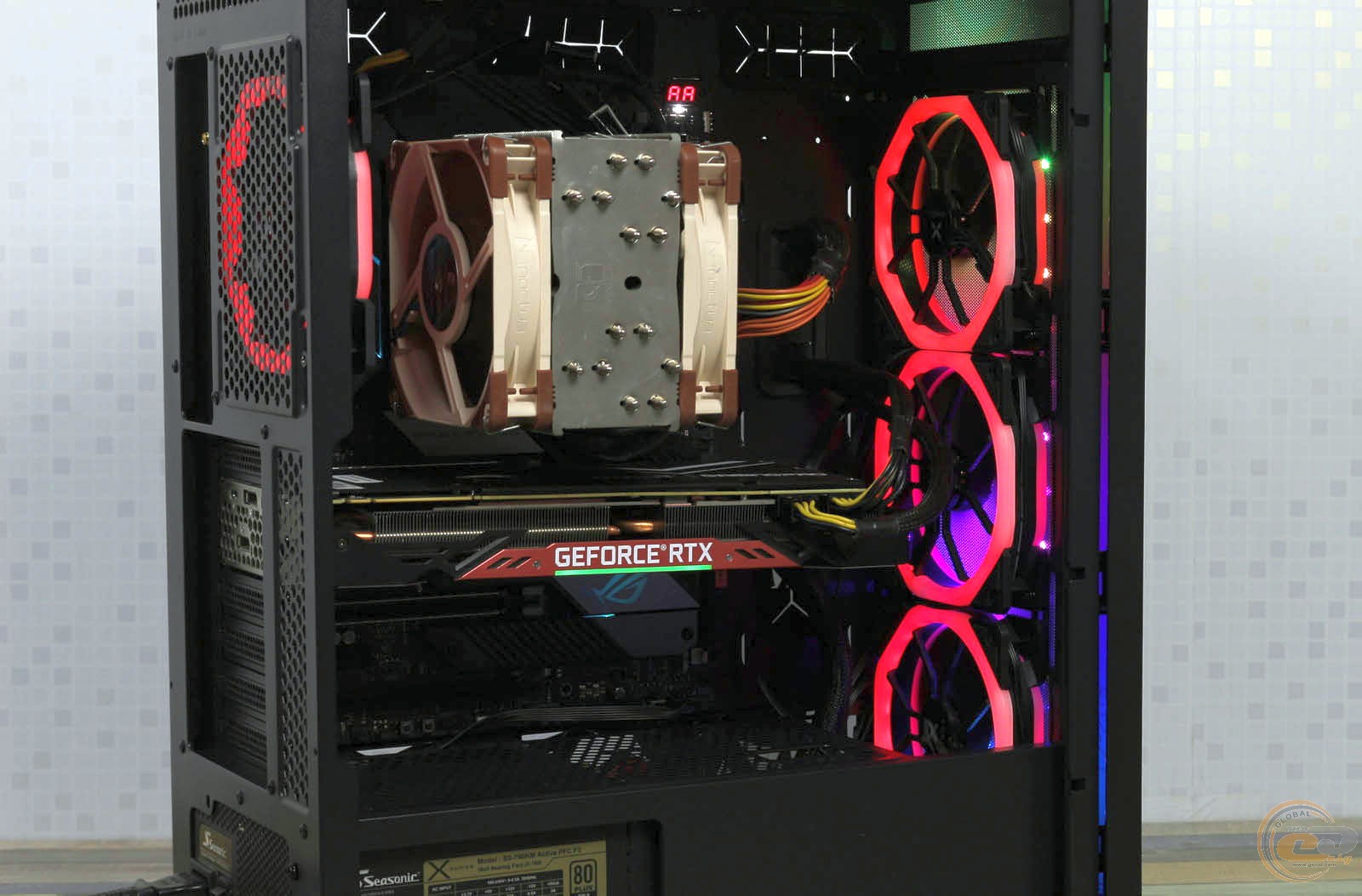
In the end, there were no problems with the assembly. There is enough space behind the motherboard tray for cable management, allowing you to assemble and arrange the internal layout of the case as neatly as possible.
Testing
|
Processor |
AMD Ryzen 9 3900X (Socket AM4, 12/24 x 3.8 – 4.6 GHz, 105 W TDP) |
|
Motherboard |
ASUS ROG Crosshair VIII Hero (Wi-Fi) (AMD X570, Socket AM4, DDR4, ATX) |
|
RAM |
2 x 8 GB DDR4-3200 G.SKILL Trident Z F4-3200C15D-16GTZKW |
|
Graphics Card |
Palit GeForce RTX 2080 GAMING PRO OC (fan speed- 70%) |
|
Drive |
GOODRAM CX400 (SSDPR-CX400-01T) |
|
Power Supply |
Seasonic X-760 |
|
Cooler |
Noctua NH-U12A (1500 rpm) |
|
Thermal Paste |
Noctua NT-H1 |
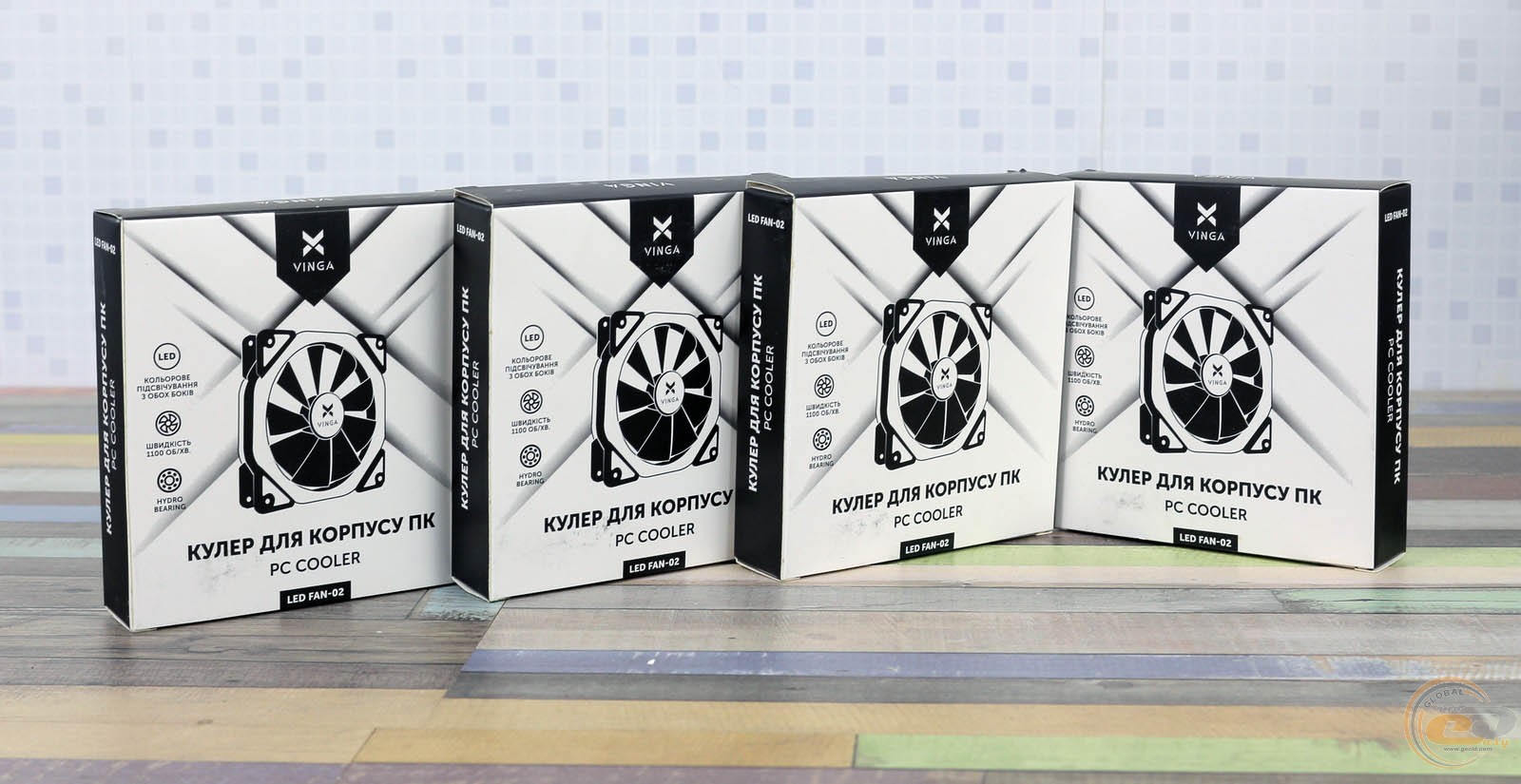
The Vinga Wingman case comes without fans. To test such a powerful gaming system, we decided to equip it with four Vinga LED Fan-02 propellers. They are based on a hydraulic bearing and have a fixed rotation speed of 1100 RPM. We installed three of them on the front panel and the fourth on the rear.
For greater clarity, we added temperature readings of an open stand, variations with one 120-mm Vinga LED Fan-02 fan on the rear panel, and a version with the mesh removed from the front panel to determine how much it affects air circulation. The room temperature at the time of testing was 23°C.
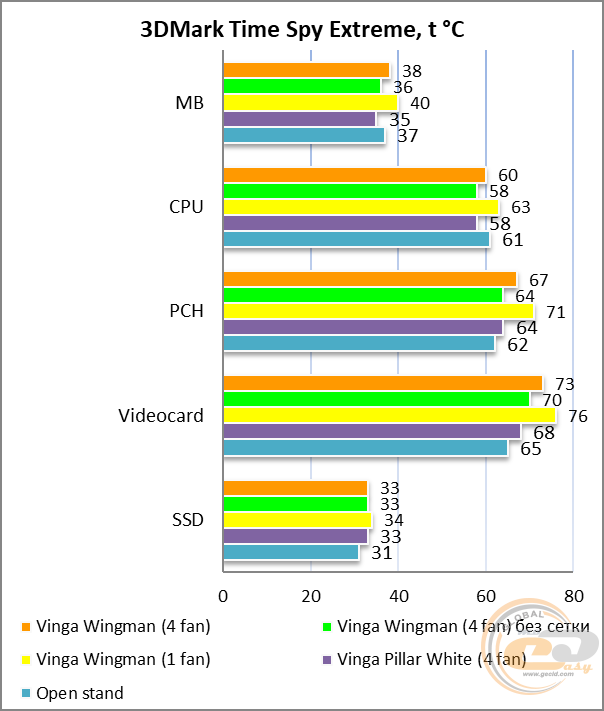
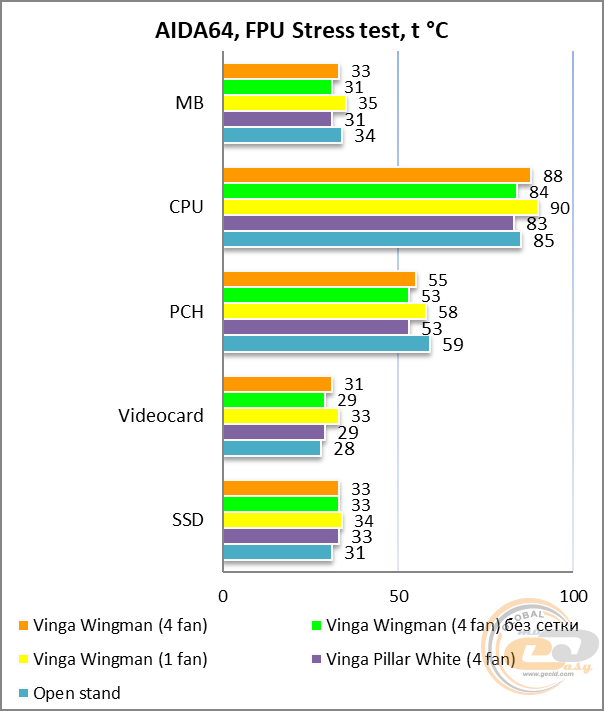
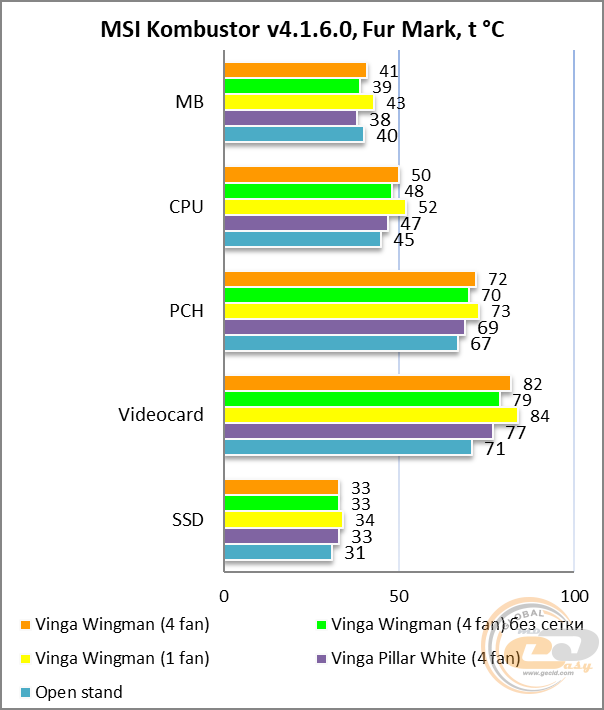
Under maximum load in MSI Kombustor, the largest difference between the open stand and the case with one fan reached 13°C for the graphics card, 7°C for the processor, and 6°C for the chipset. Thus, one fan is clearly not enough for such a powerful gaming system.
The situation drastically improves with the use of four fans inside. It gets even better if you remove the white mesh installed behind the front panel. In this mode, the Vinga Wingman’s performance closely approaches the results of the Vinga Pillar White, whose front panel has better airflow due to the absence of an additional mesh.
And, of course, the heating indicators will be even lower when using more energy-efficient components.
Conclusion
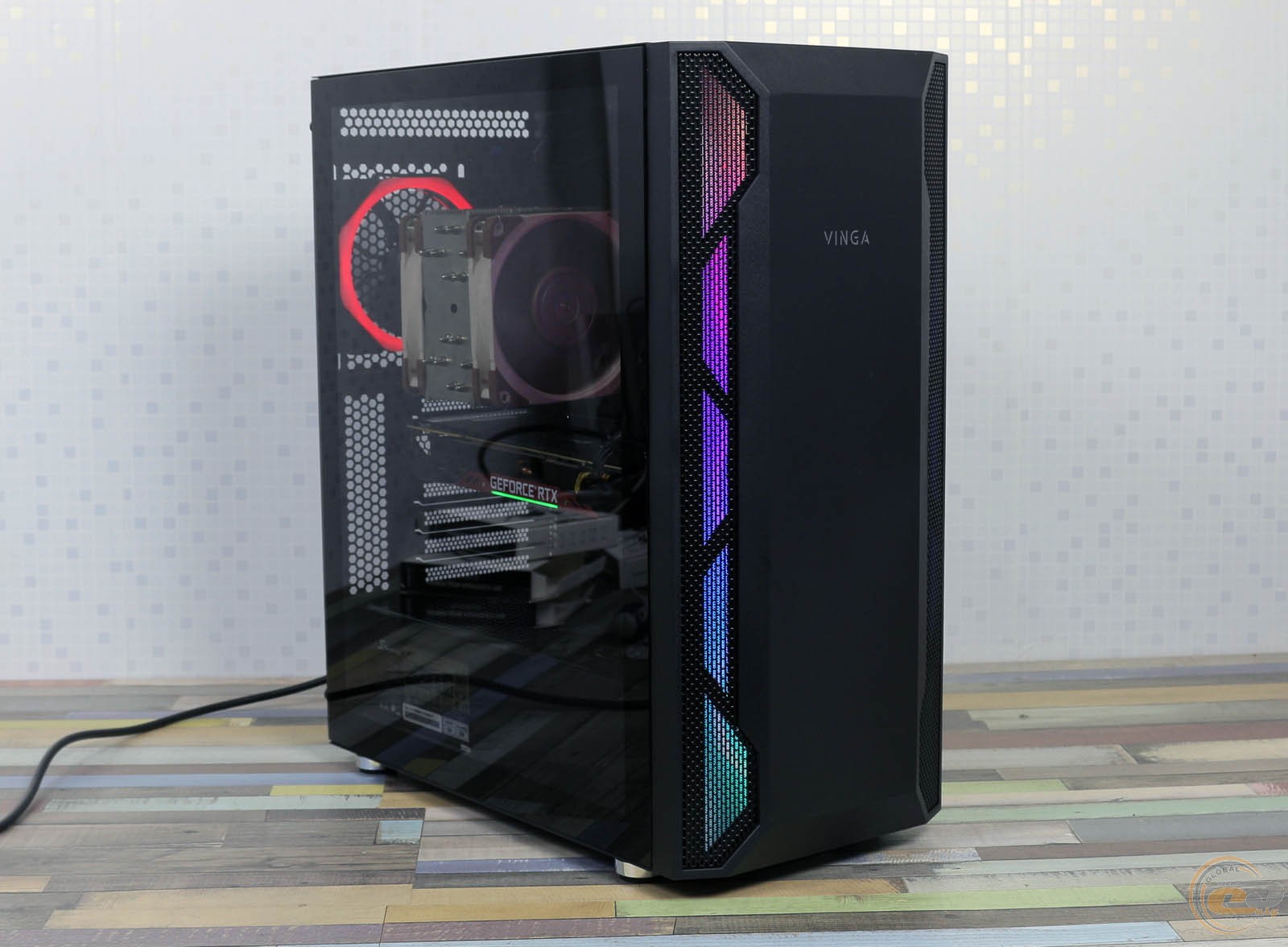
Overall, the Vinga Wingman case, like the previously reviewed Vinga Pillar White, made a very good impression. It combines decent build quality, a strict design, and quite reasonable cost. Both are built on the same chassis and differ only in color and the front plastic panel, which in the Vinga Wingman is equipped with an LED strip.
All other advantages are identical. These include a glass side panel, good build quality, reliable construction, and attention to quality. Despite the relatively low cost, all panels are well-fitted, and their edges are excellently finished. We also note the presence of rubber pads on the cutouts for cable management and at the power supply installation site.
As a result, the Vinga Wingman will likely appeal to you if you want to get a quality and affordable case with a window on the side panel and LED lighting on the front.
Advantages:
- attractive design;
- front panel with LED lighting;
- transparent side wall made of tempered glass;
- magnetic attachment of the top filter;
- high build quality of the chassis, edge finishing of the panels, and case painting;
- good compatibility with large graphics cards and coolers;
- good options for installing additional fans and liquid cooling radiators;
- presence of dust filters and anti-vibration pads in key areas;
- good options for hidden cable management.
Features:
- absence of fans in the package.
Author: Kostyantyn Shorokhov
Translation: Liliya Masyuk
Link to the review on gecid.com
Related products