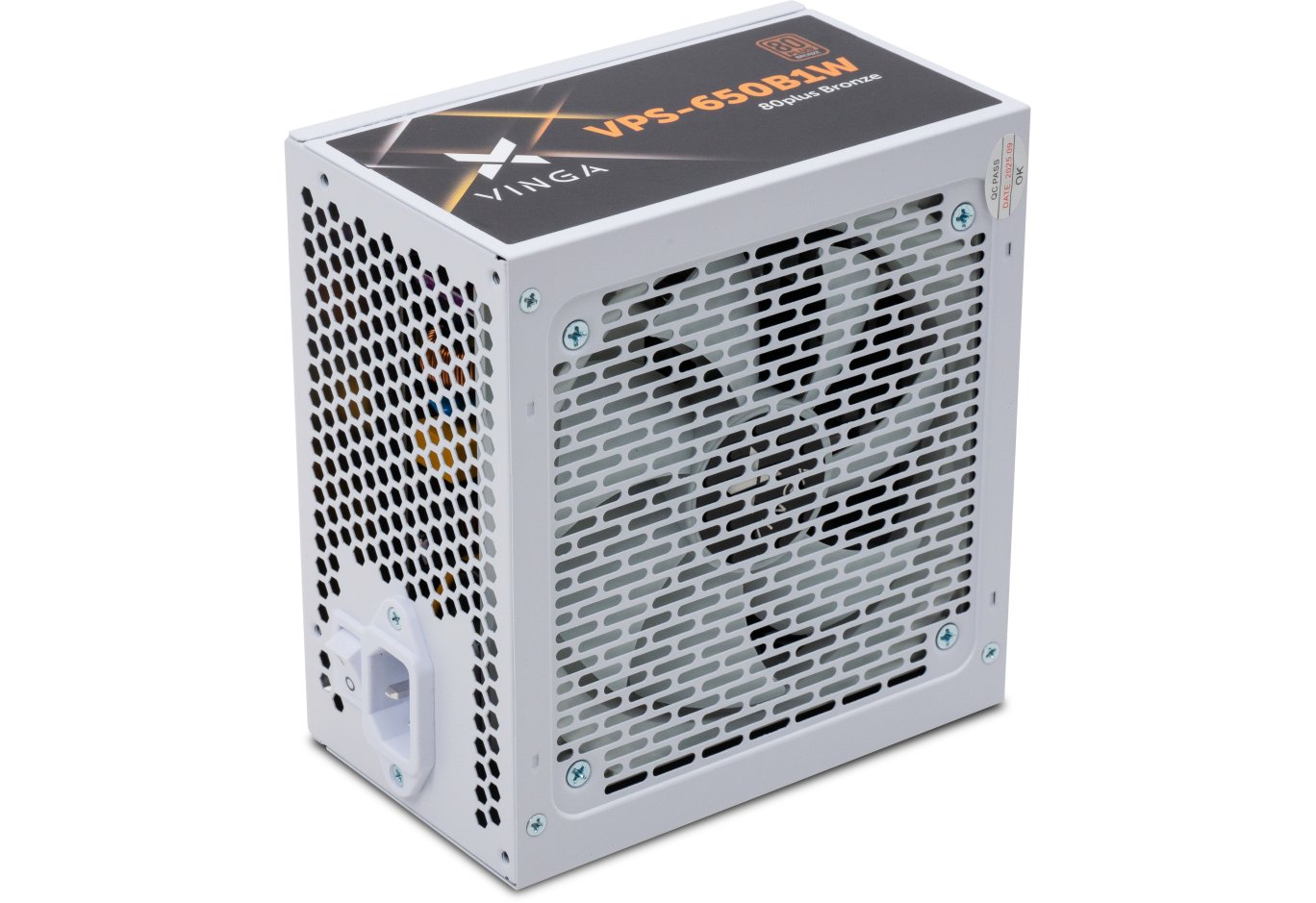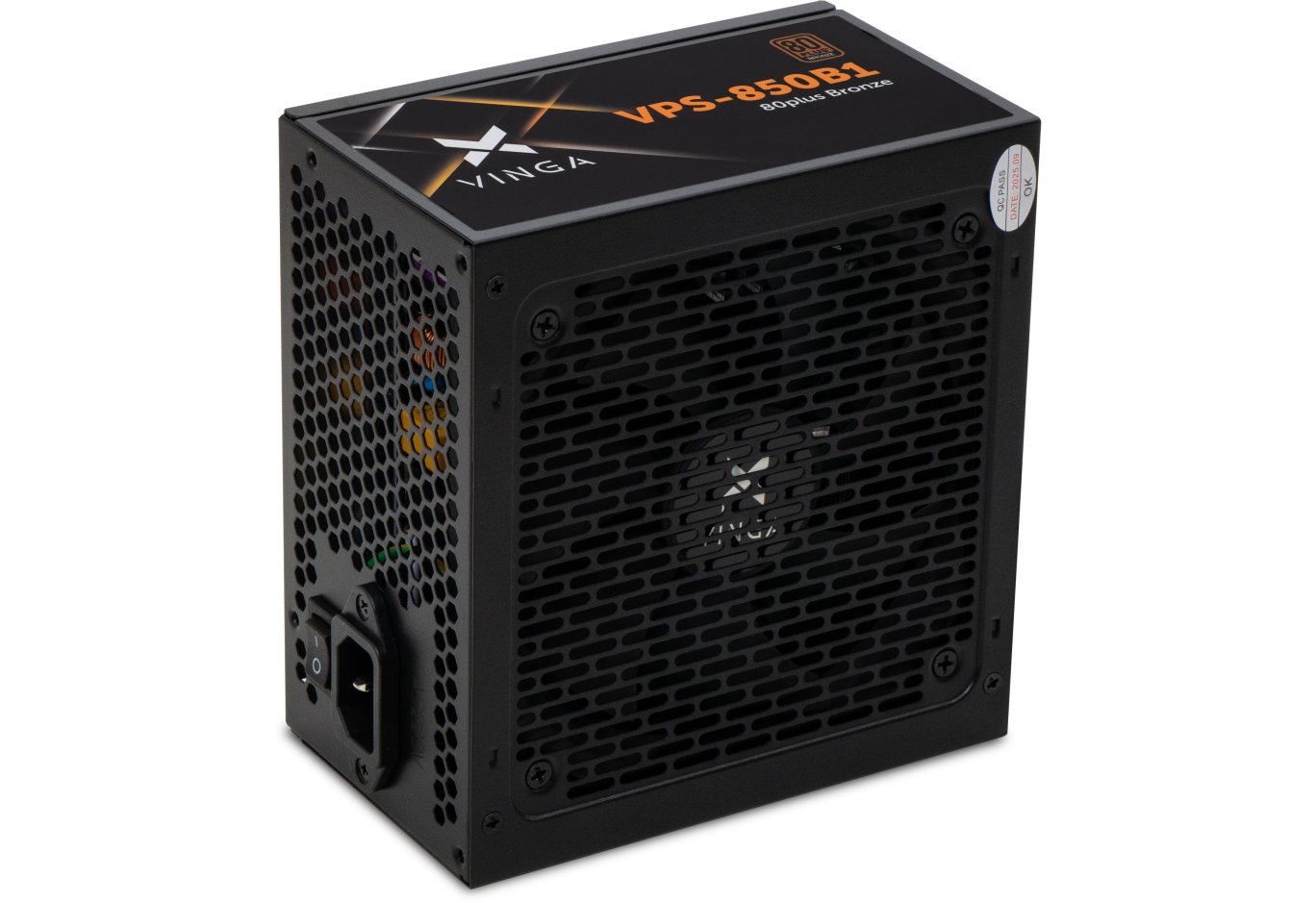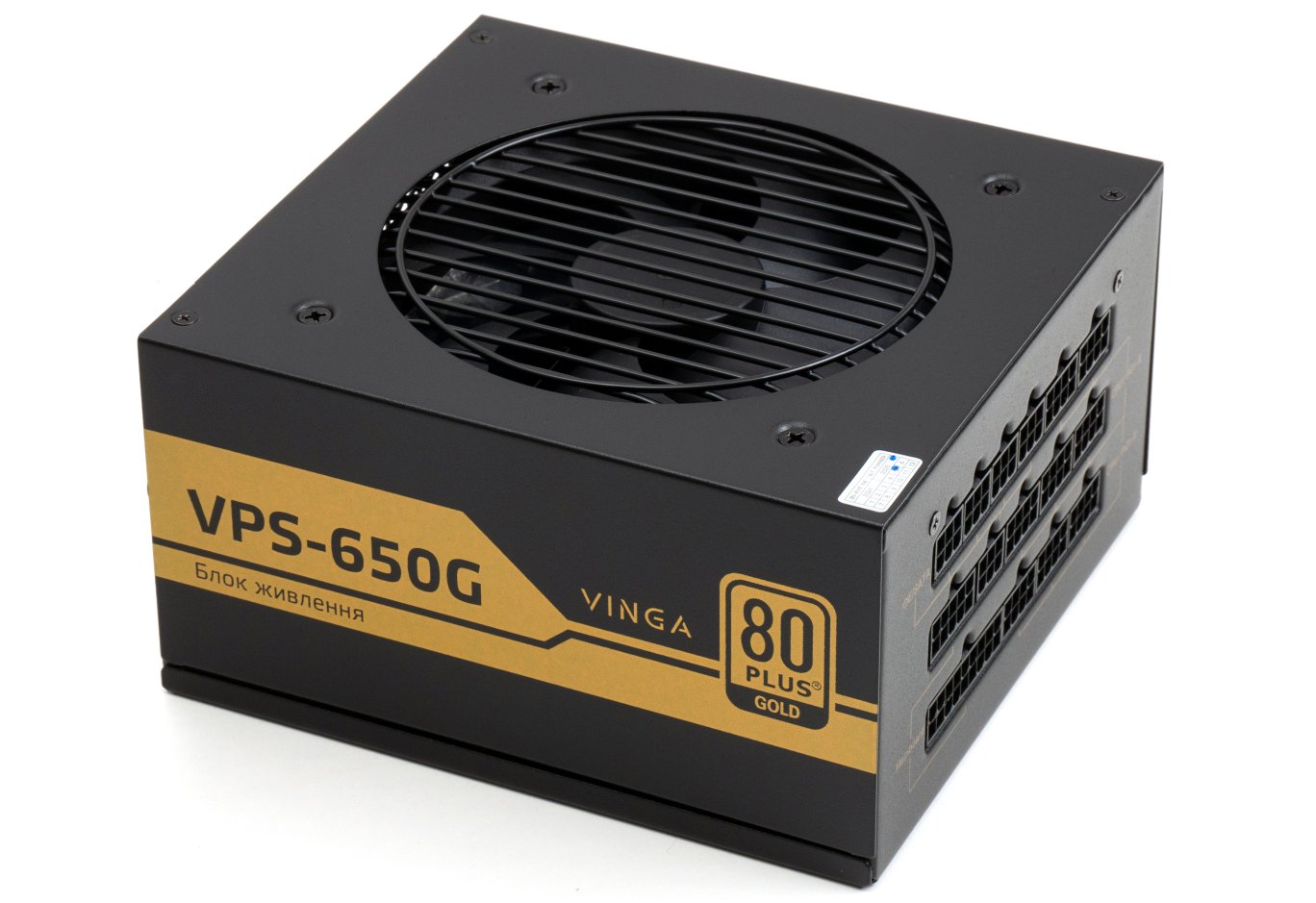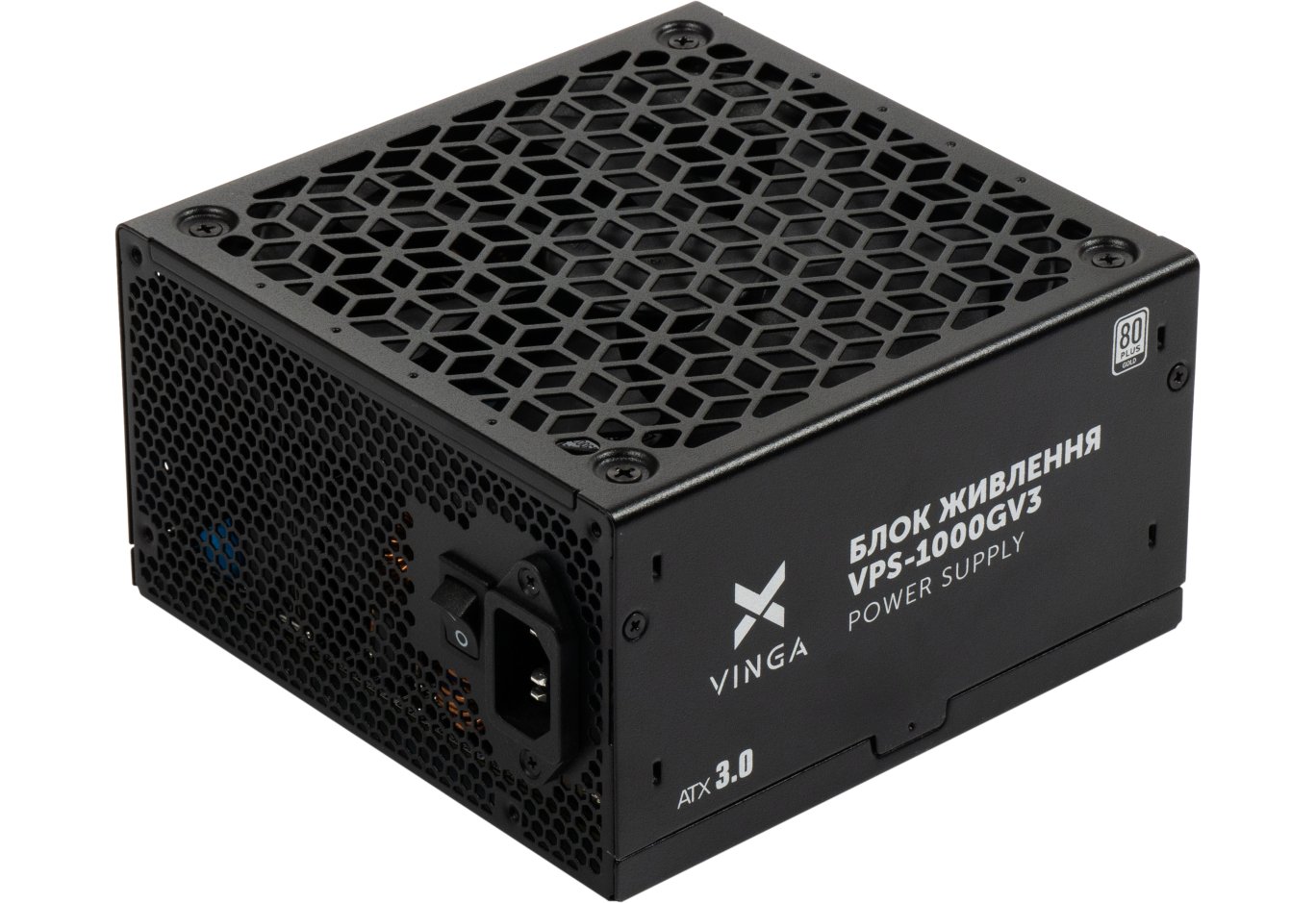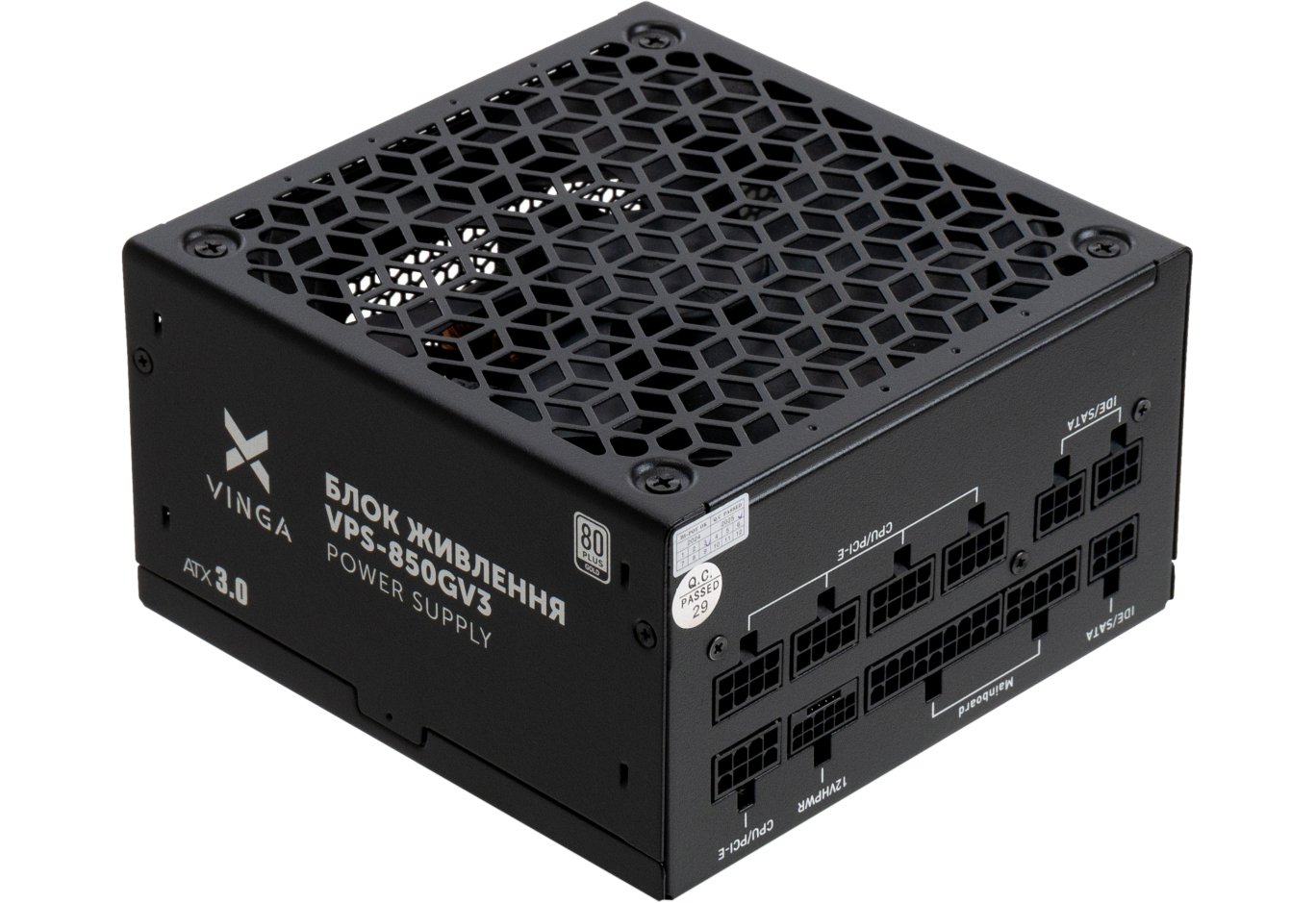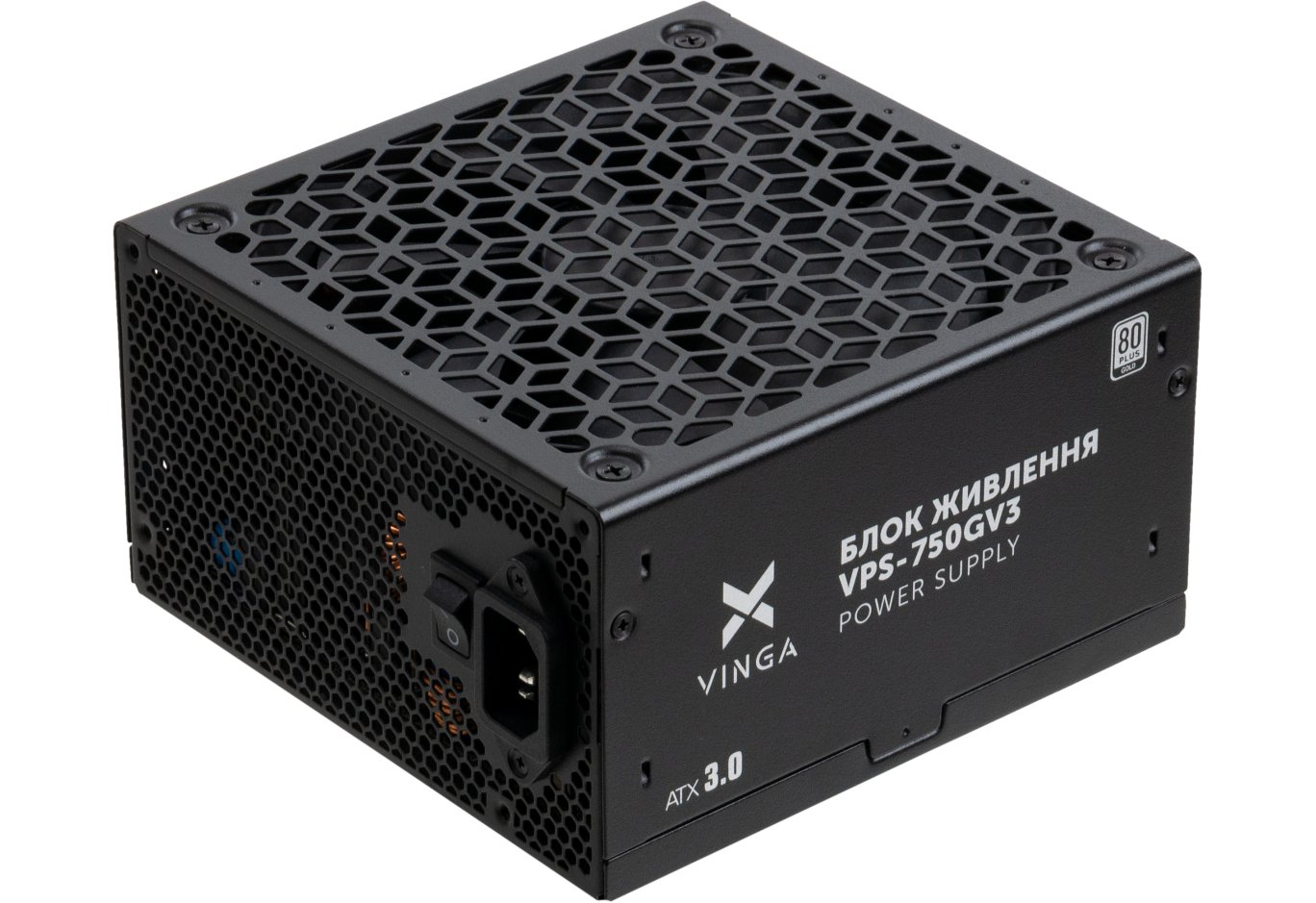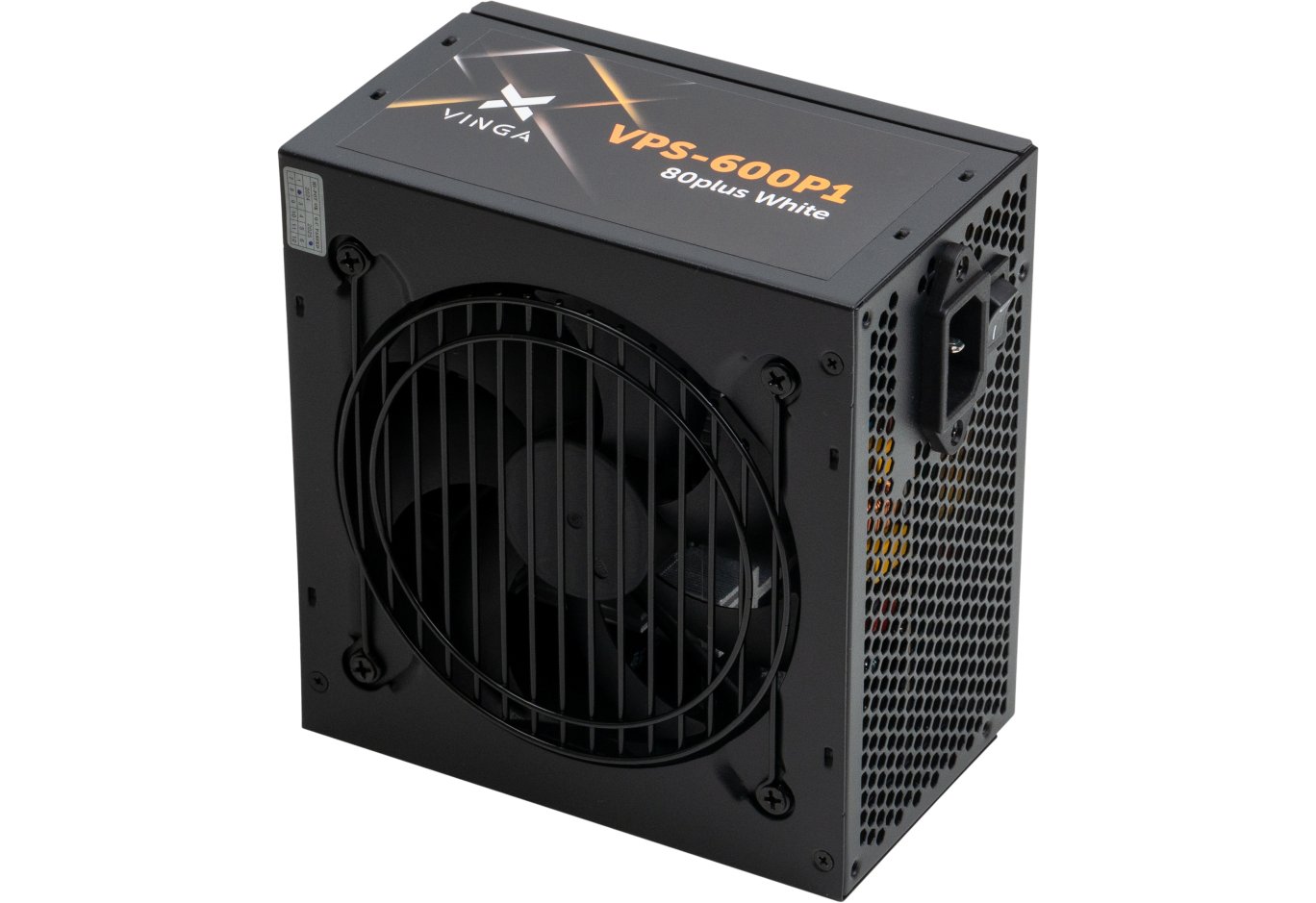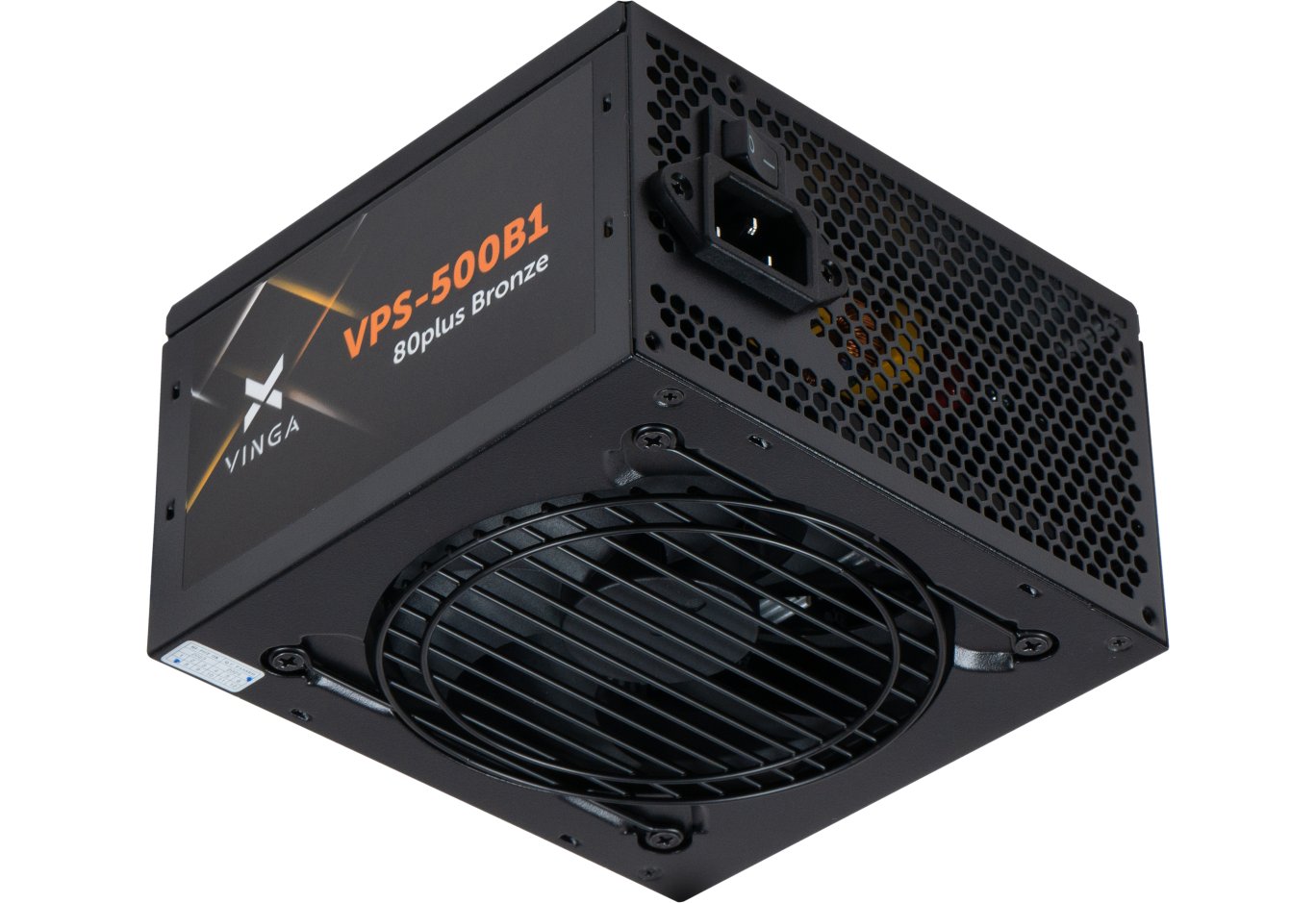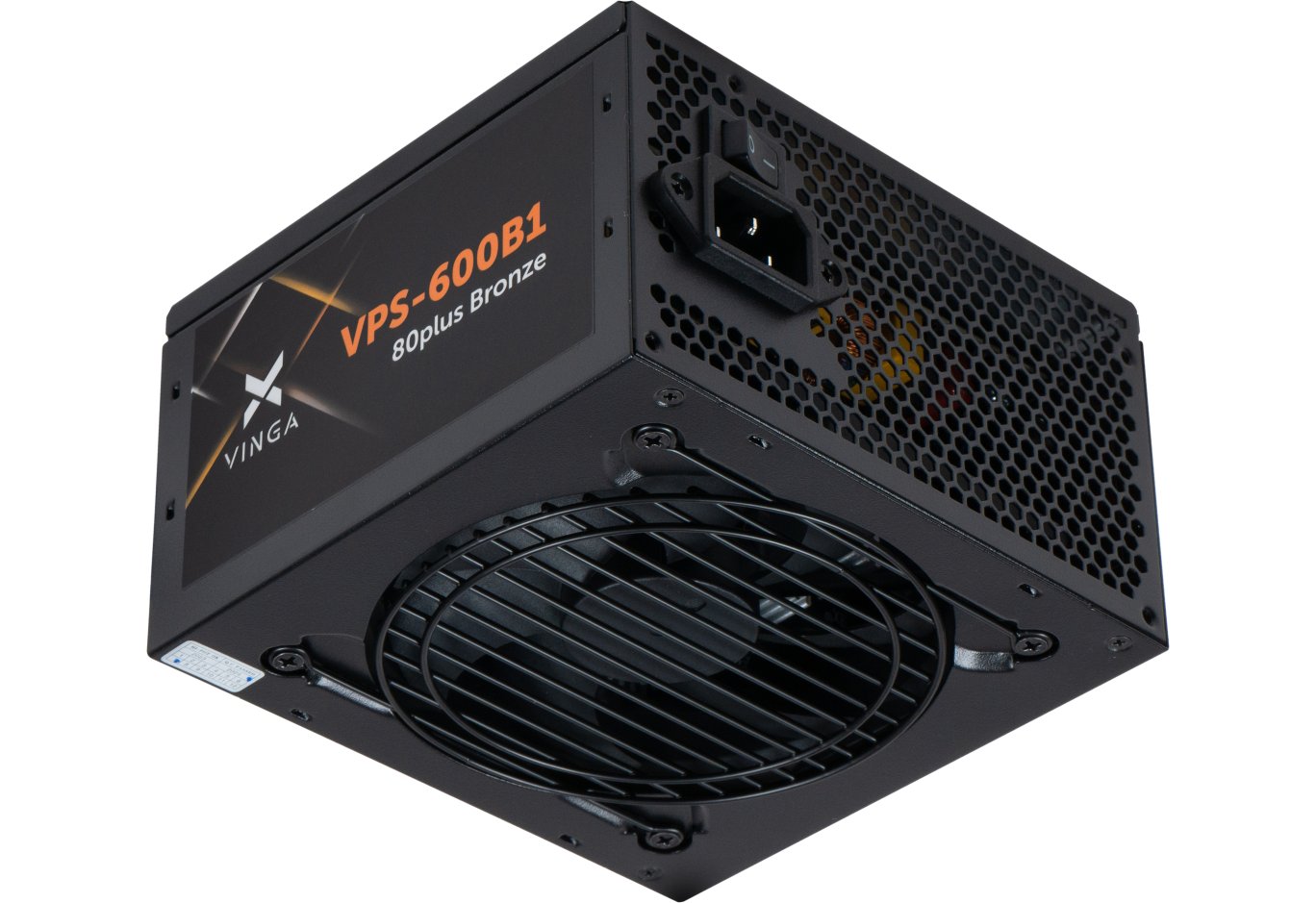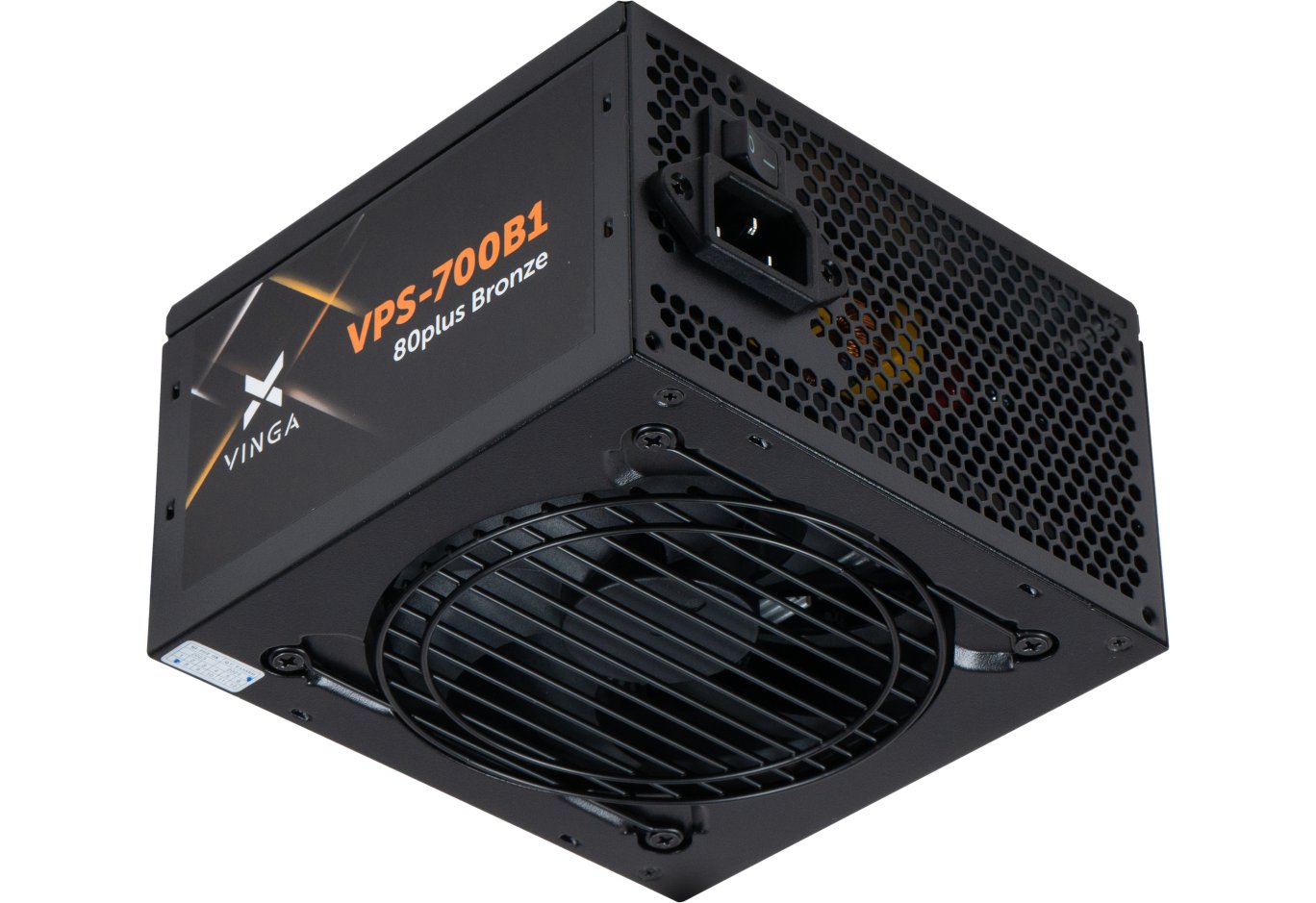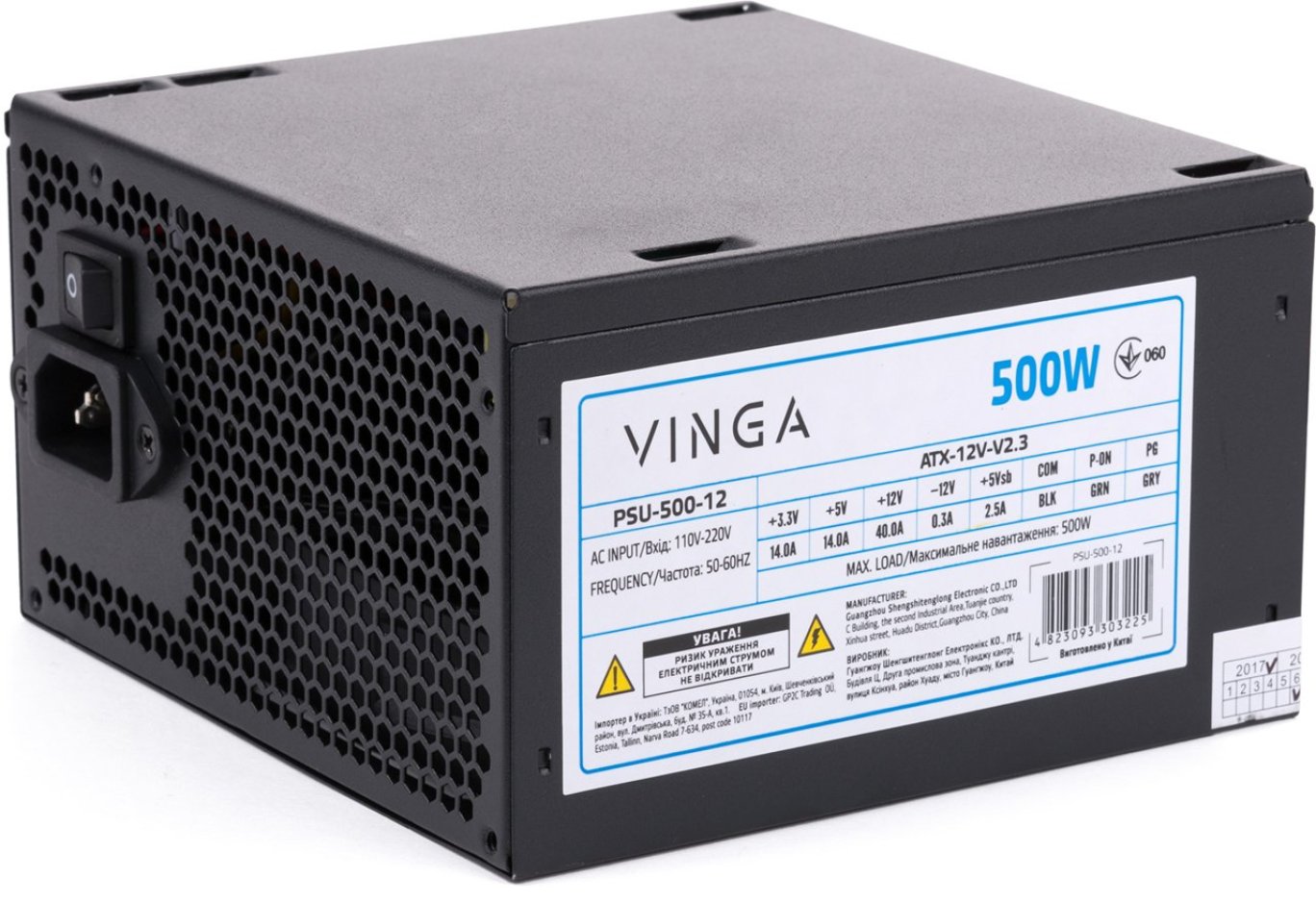





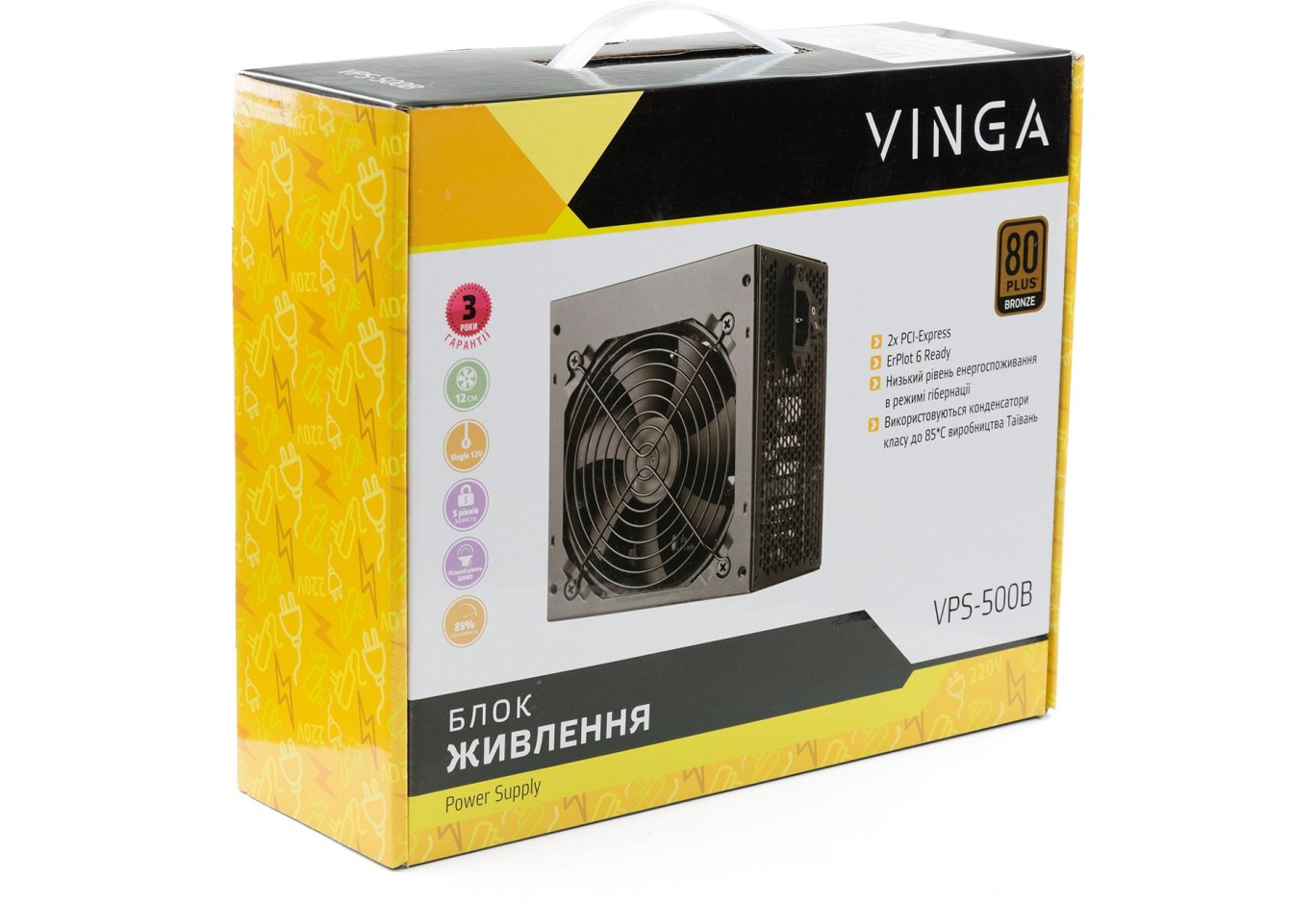
Блок живлення Vinga 500W (VPS-500B)
«Що ви все «золото» та «платину» тестуєте? Для звичайного комп'ютерного користувача треба щось простіше, ближче до гаманця». Якщо у вас виникали такі думки, тоді поспішаємо порадувати поточним оглядом.
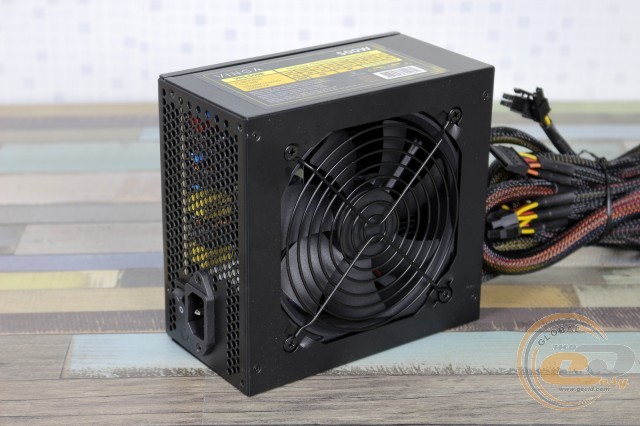
Блок живлення Vinga VPS-500B коштує всього близько $50, і з такою ціною він є найдоступнішим 500-Вт рішенням з сертифікатом 80 PLUS Bronze і можливістю роботи в широкому діапазоні напруг. Більше того, виробник нам обіцяє наявність тайванських конденсаторів і 3-річну гарантію. Що ж, безперечно варто заглянути всередину пристрою і випробувати його на реальній конфігурації, цим ми, власне, і зайнялися.
Специфікація
|
Модель |
Vinga VPS-500B |
|
|
Тип |
ATX12V v2.3 |
|
|
Номінальна потужність, Вт |
500 |
|
|
Потужність по каналу 12В, Вт |
492 |
|
|
Потужність ліній +3,3В и +5В, Вт |
70 |
|
|
Кількість ліній +12В |
1 |
|
|
Виходи, А |
+3,3В |
14 |
|
+5В |
14 |
|
|
+12В |
41 |
|
|
-12В |
0,3 |
|
|
+5Vsb (чергова лінія живлення) |
2,5 |
|
|
Вхідна напруга, В |
115 − 230 |
|
|
Частота, Гц |
50 – 60 |
|
|
Вхідний струм, А |
5 |
|
|
ККД, % |
≤85 |
|
|
Сертифікований 80 PLUS |
Bronze |
|
|
Метод компенсації коефіцієнта потужності |
Активний |
|
|
Коефіцієнт потужності (PF), % |
>90 |
|
|
PCIe-роз'ємів |
2 (6+2-контактні) |
|
|
Модульний |
Ні |
|
|
Розміри вентилятора, мм |
120 х 120 х 25 |
|
|
Захисти |
OPP, OVP, UVP, SCP, SIP |
|
|
Гарантія, років |
3 |
|
|
Сайт виробника |
||
Упаковка і комплект постачання
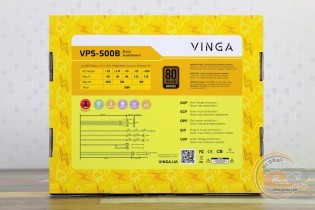
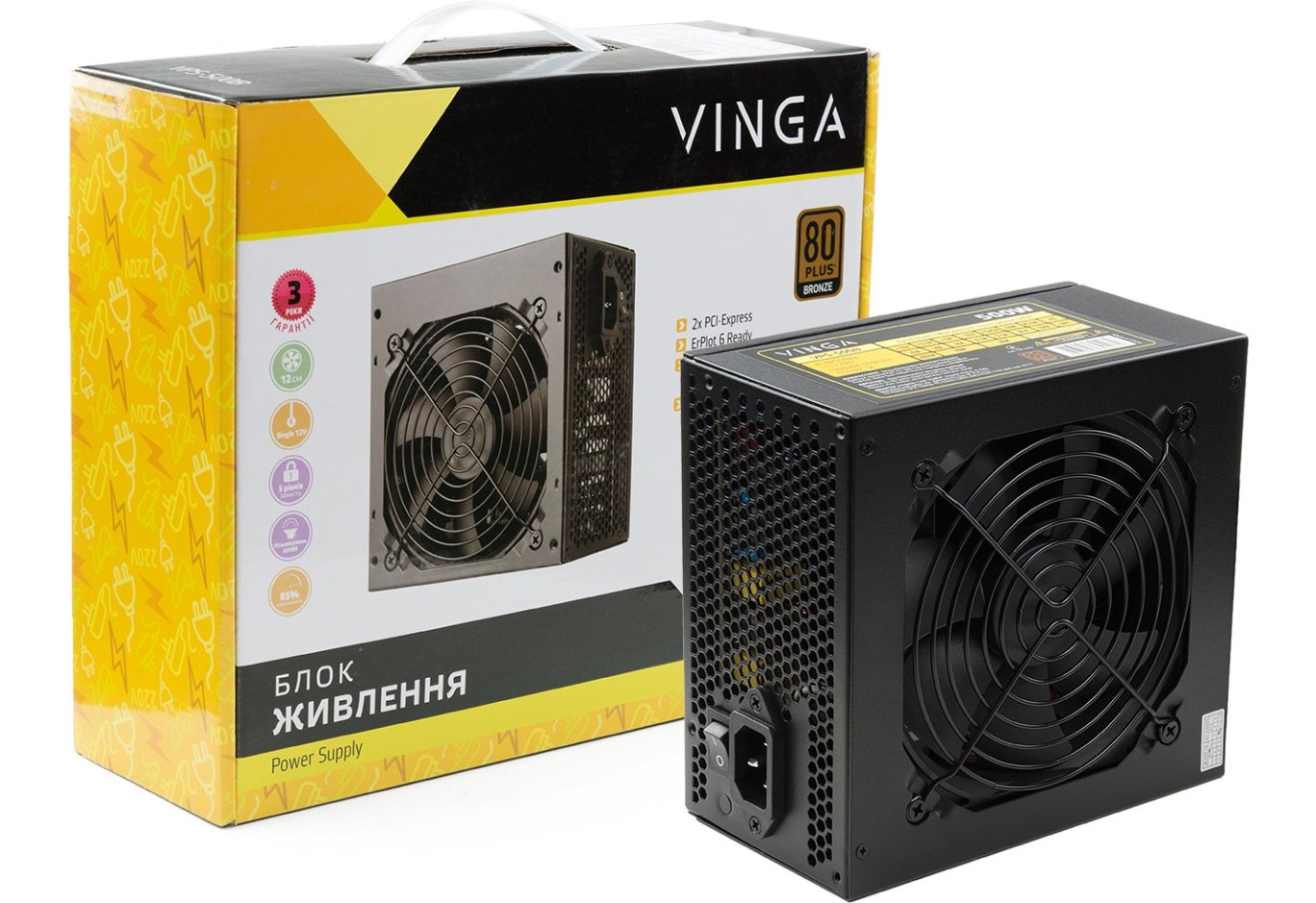
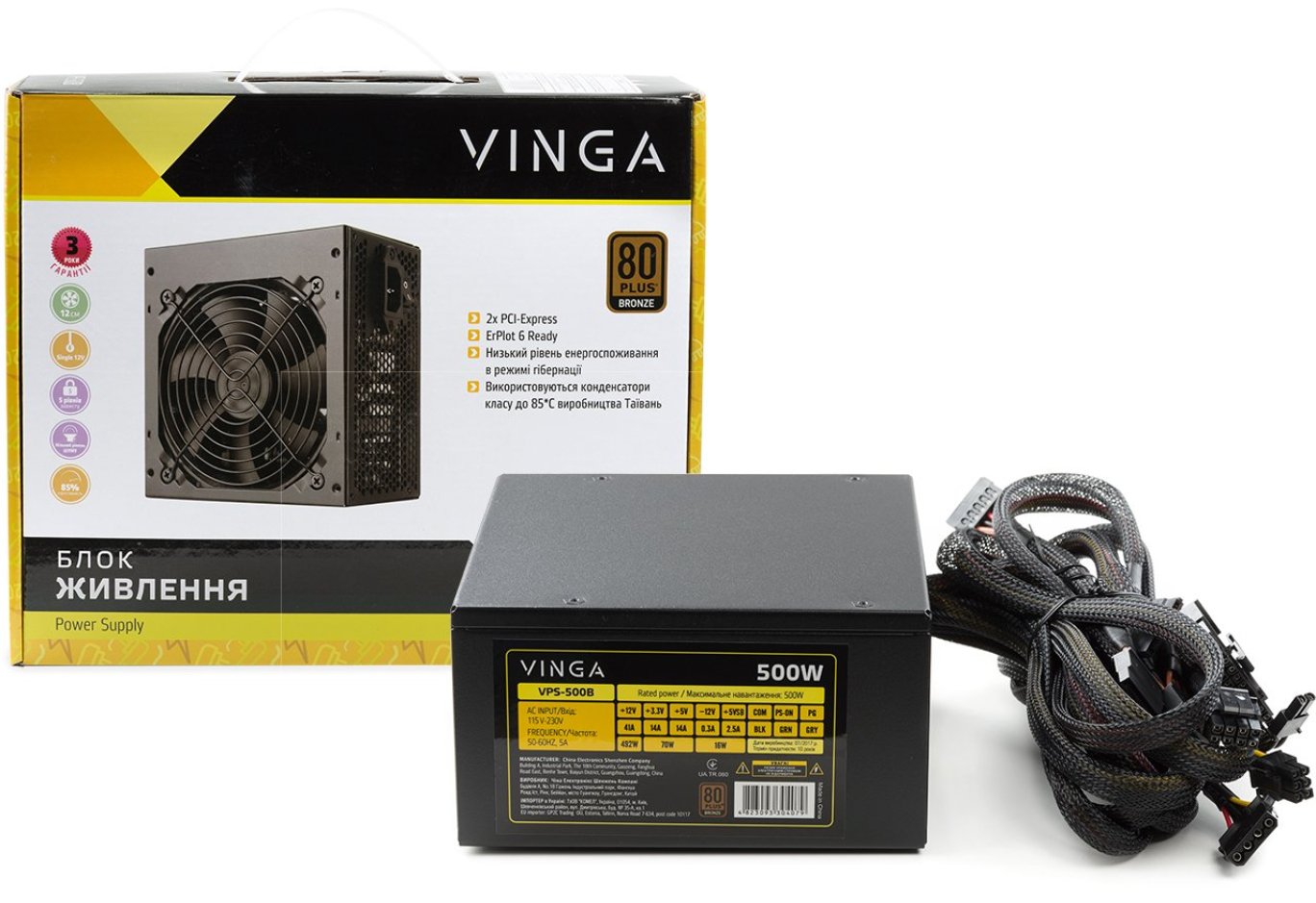
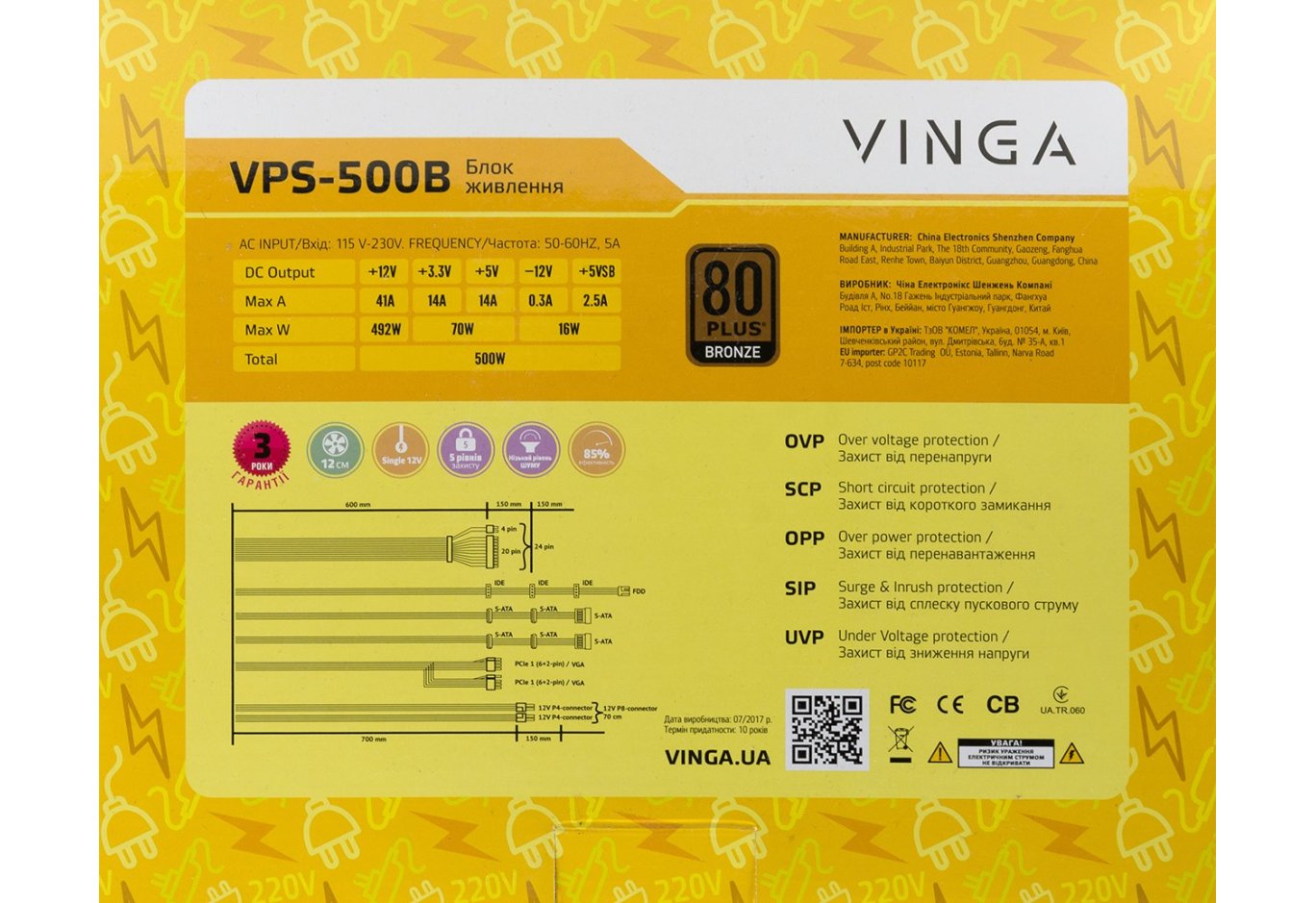
Якщо у разі з тестованими раніше джерелами Vinga упаковки скромно замовчували можливості пристроїв, то тут виробник вирішив похвалитися електротехнічної таблицею і вказав застосовані захисти - ось вони, дрібниці, яких так не вистачало.
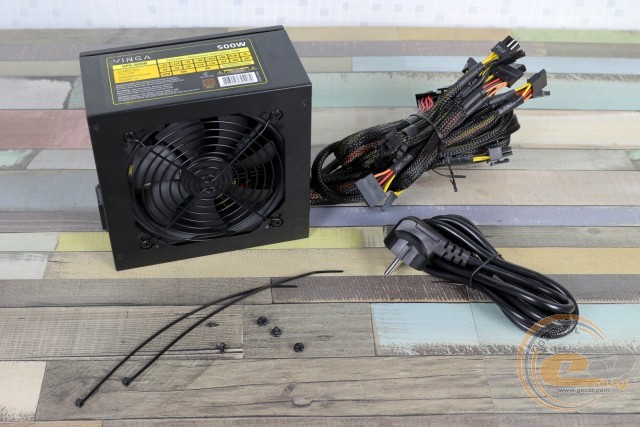
Комплект постачання має мережевий кабель живлення, звичайні гвинти і пару стяжок для дротів. Беручи до уваги ціну, більшого і не потрібно.
Зовнішній вигляд
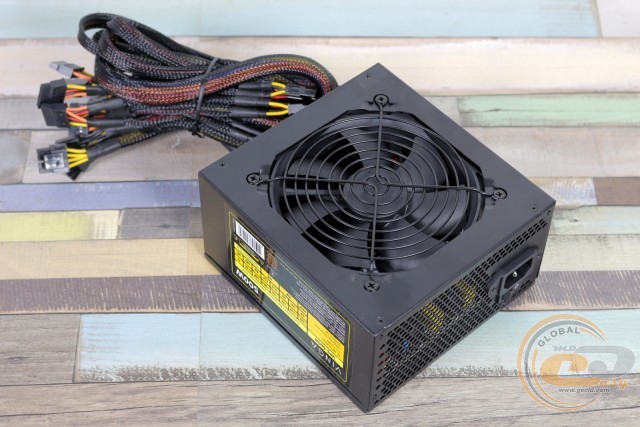
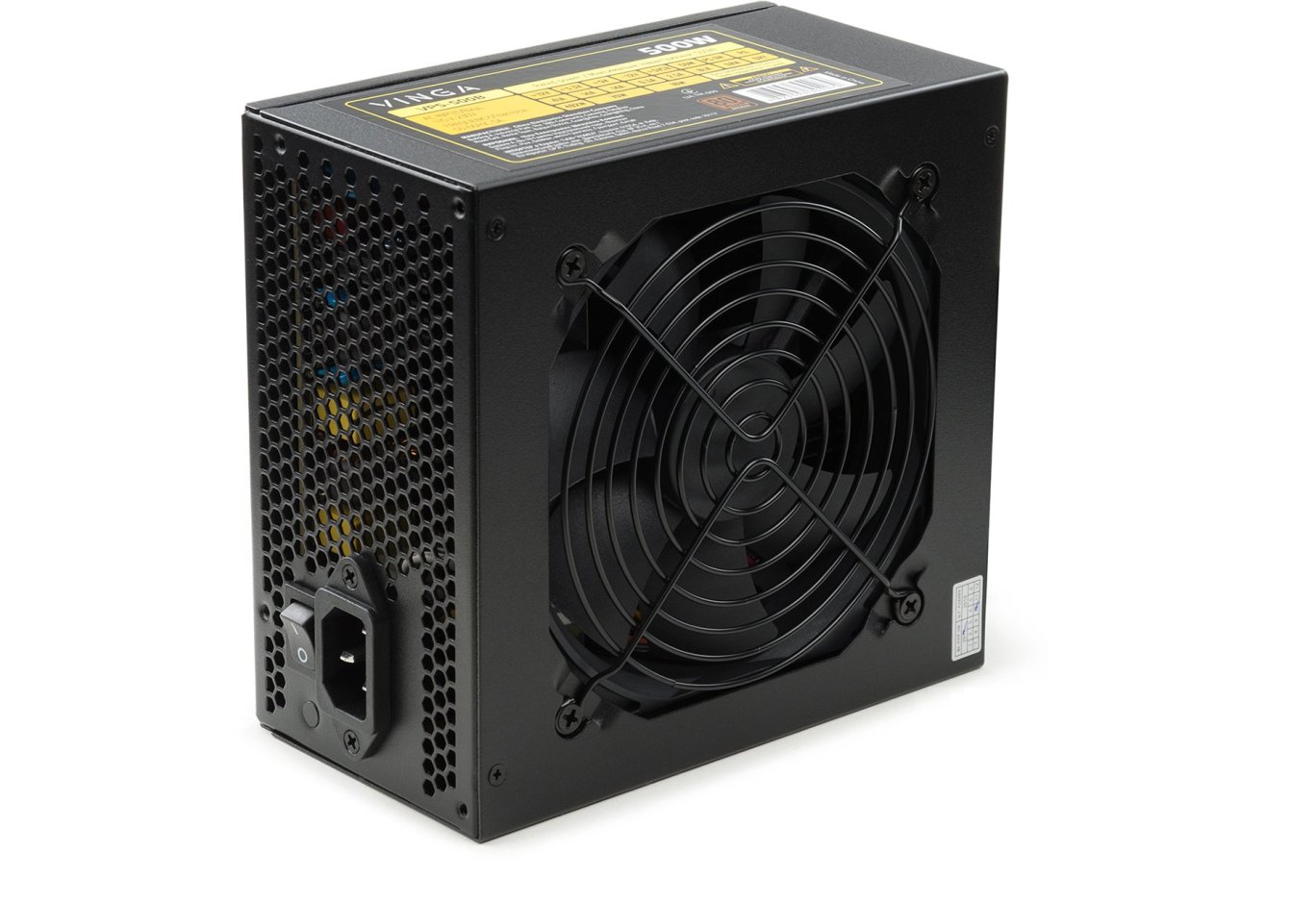
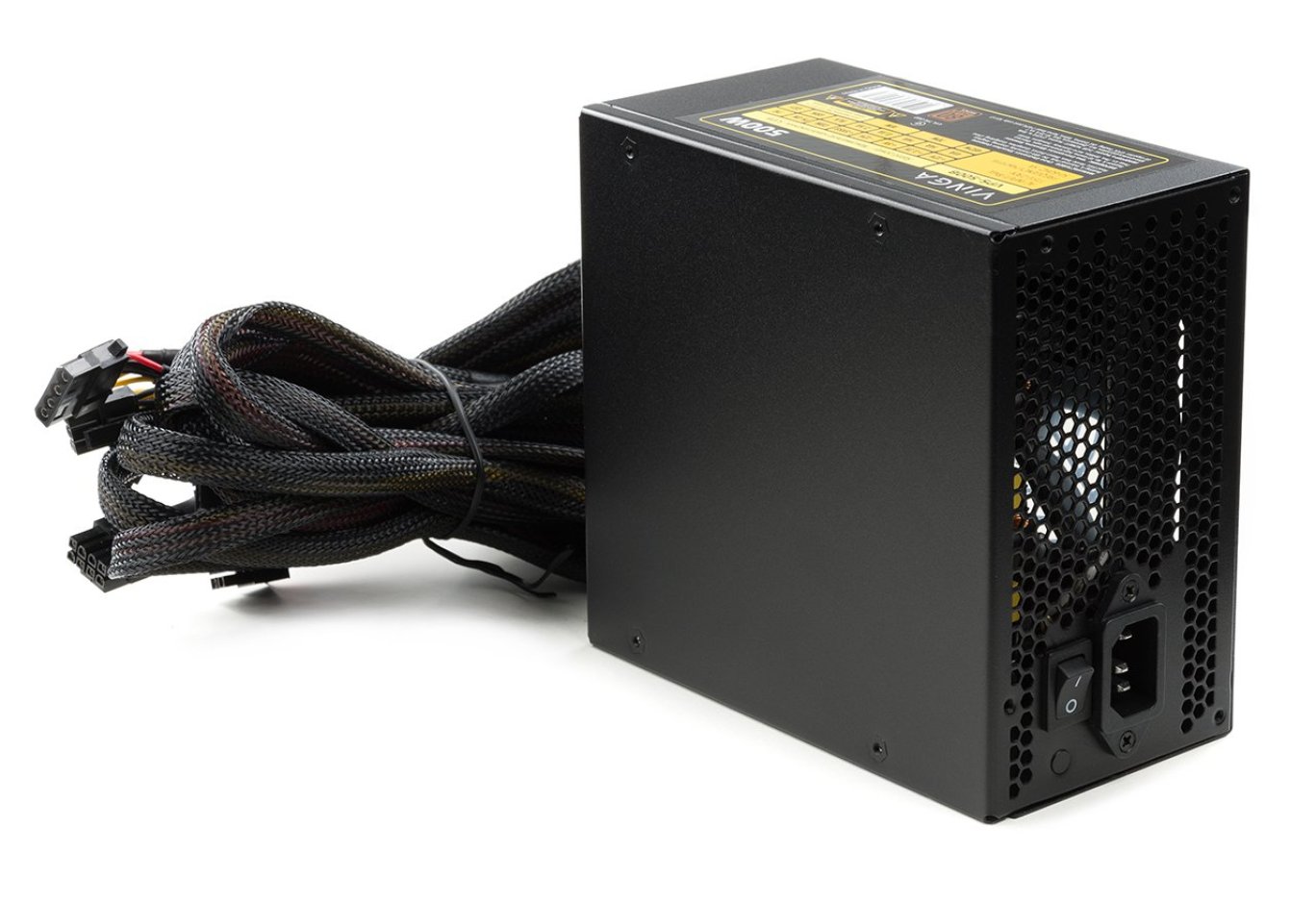
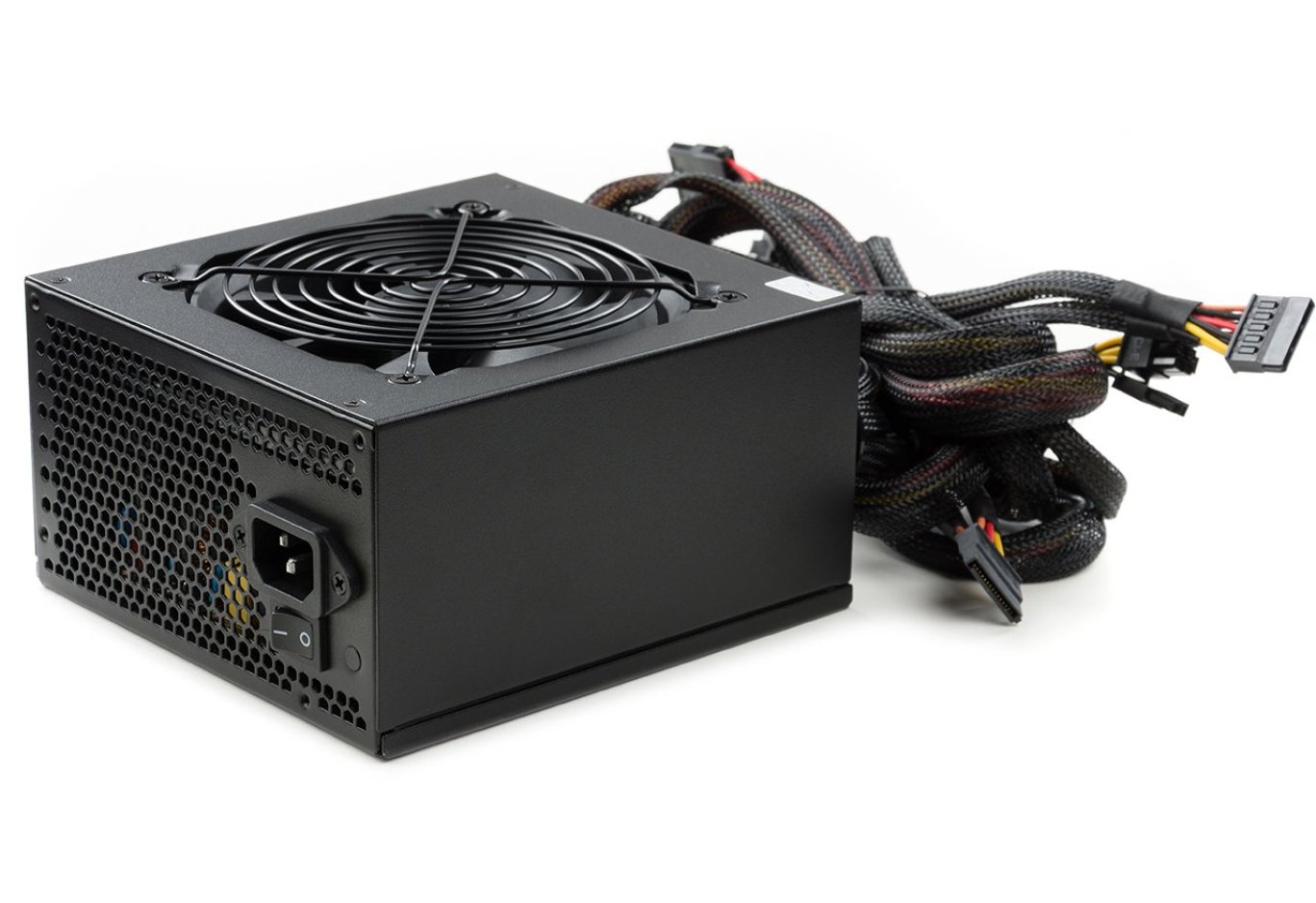
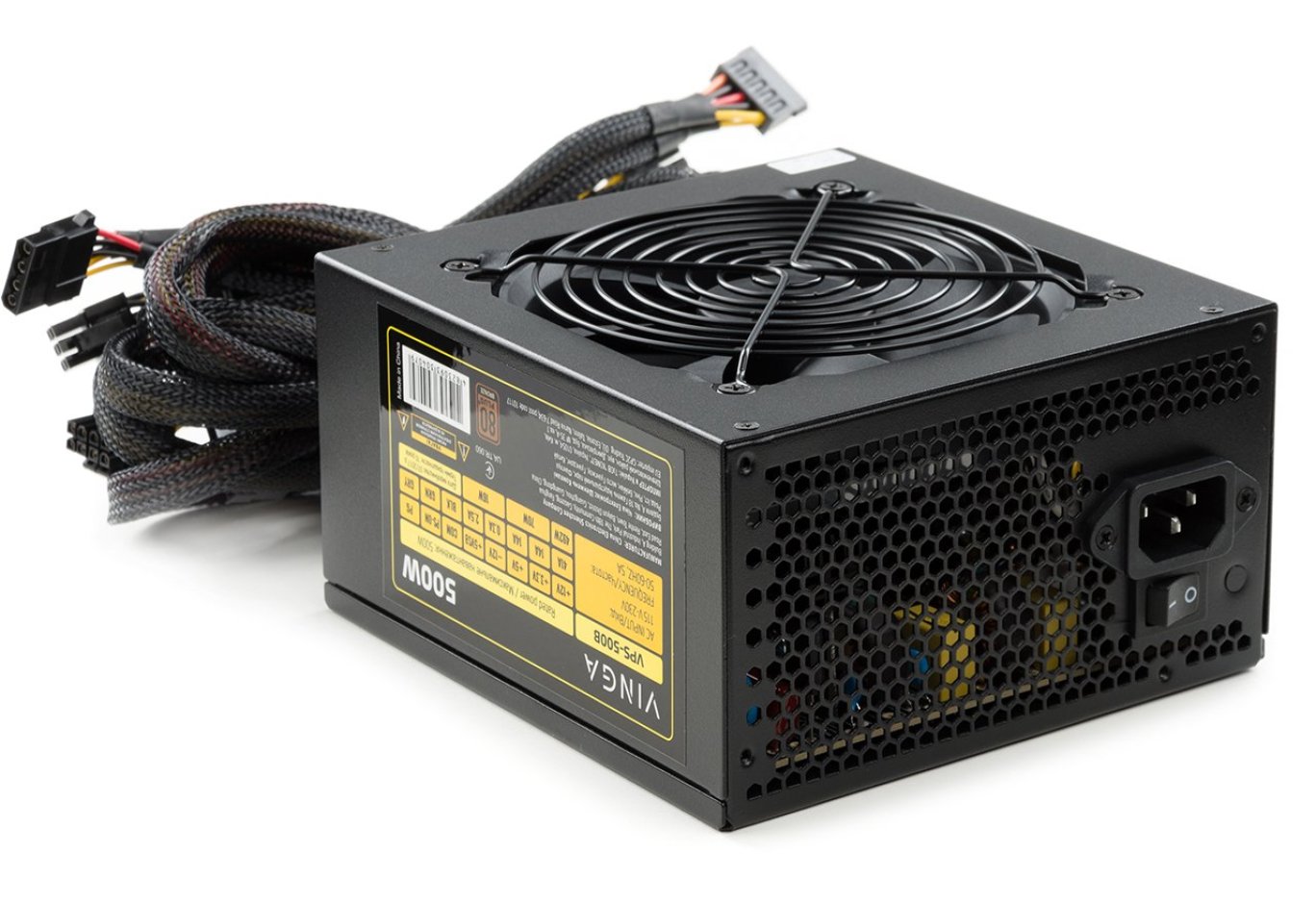
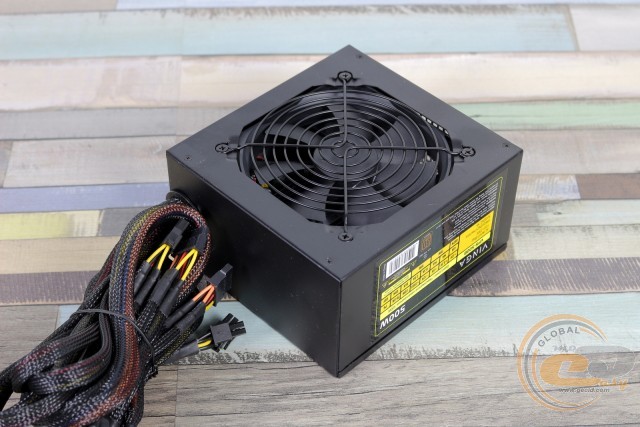
Звичайна зовнішність Vinga VPS-500B і цілком адекватні розміри не дозволять швидким поглядом визначити виробника. Зате проблем з монтажем не виникне, ну а попсовий чорний колір дозволить влитися в абсолютну більшість сучасних корпусів.
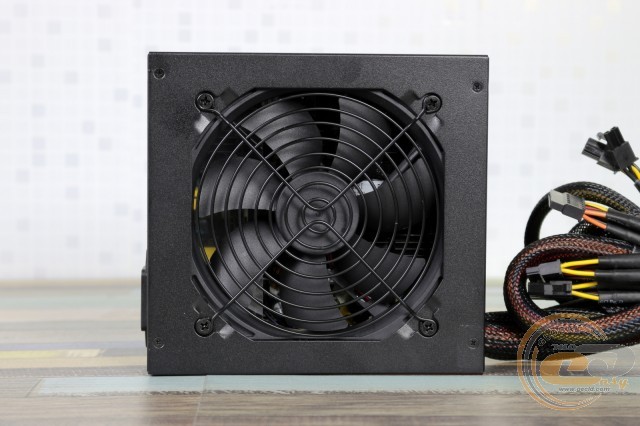
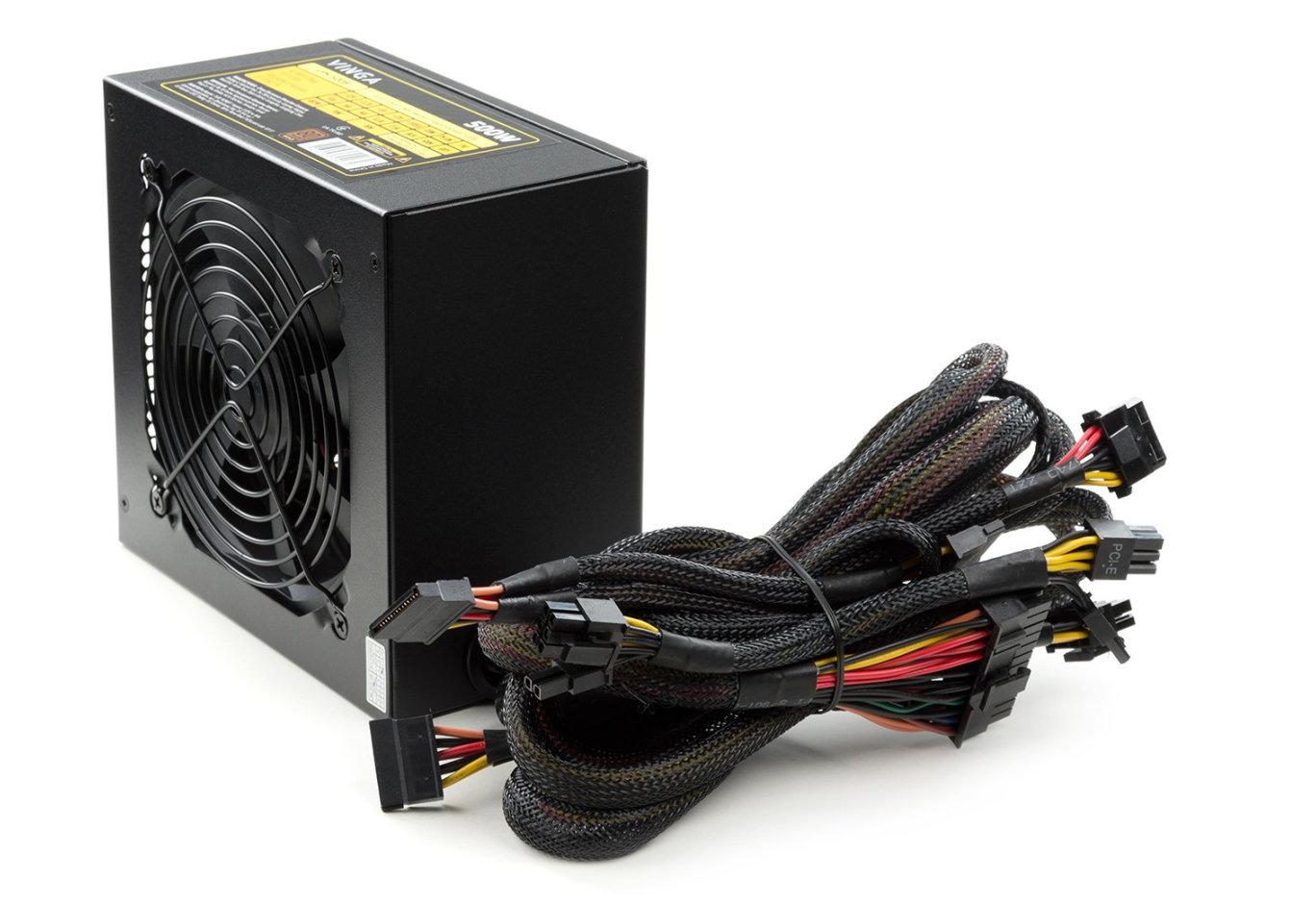
Усередині працює вертушка діаметром 120 мм. Маємо звичну решітку типу «гриль» - ніякої фірмової вишуканості, усе просто і від цього джерело нітрохи не страждає.
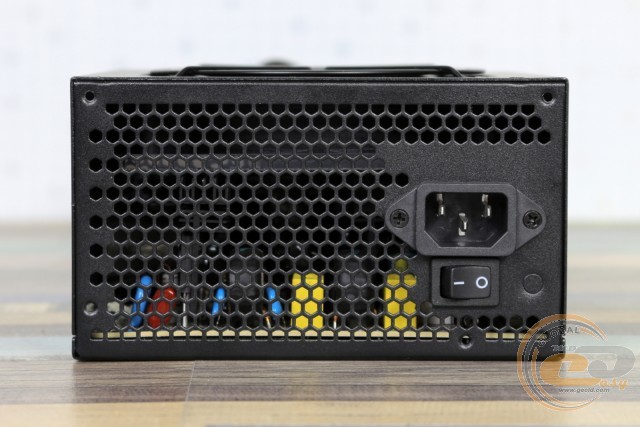
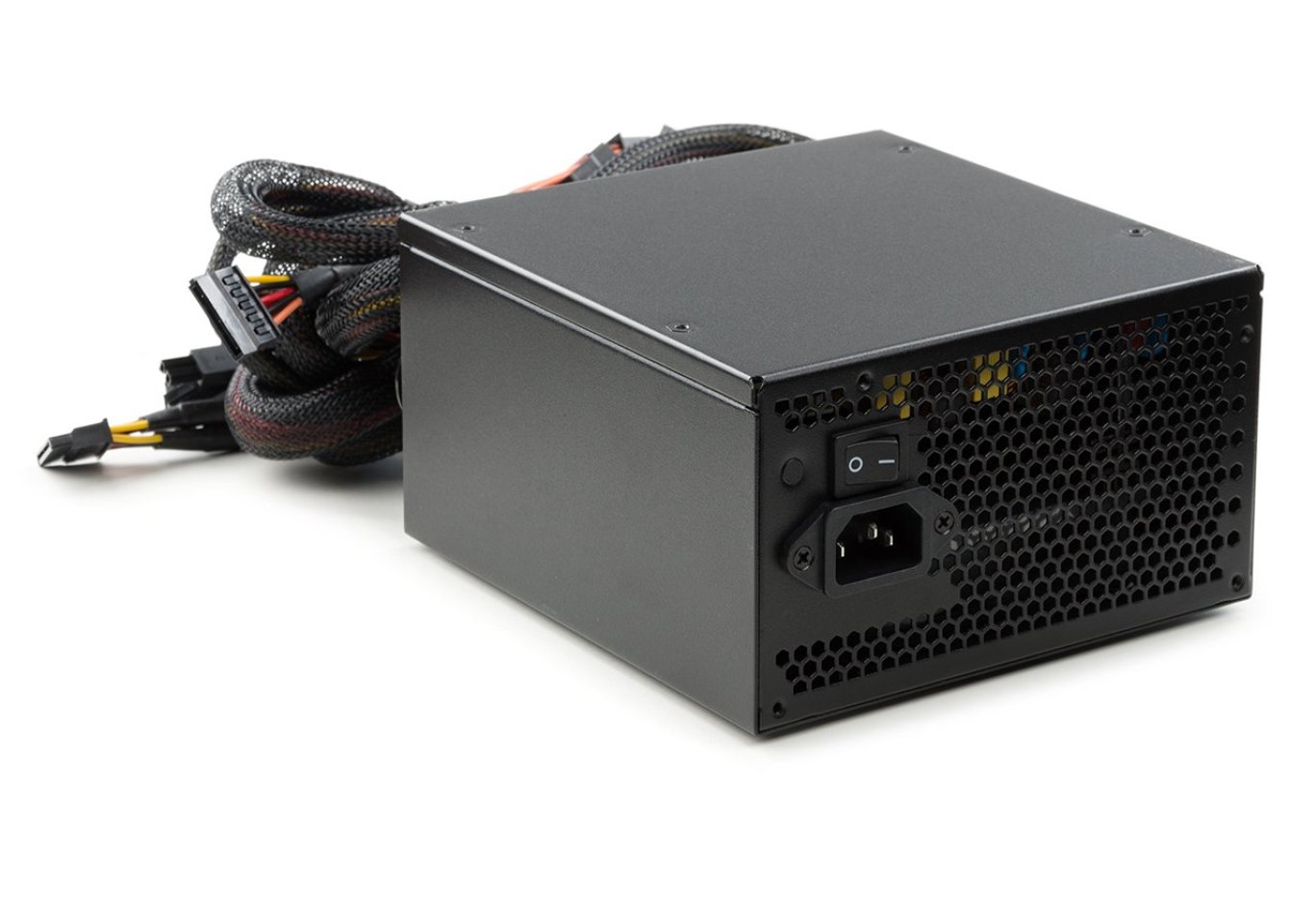
Тильна частина заповнена отворами у вигляді сот, крізь які замість бджіл виводиться нагріте повітря. Тут же знайшлося місце для вхідного мережевого роз'єму і кнопки включення.
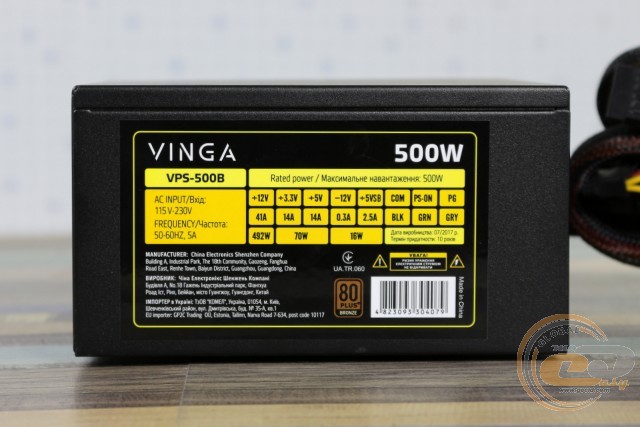
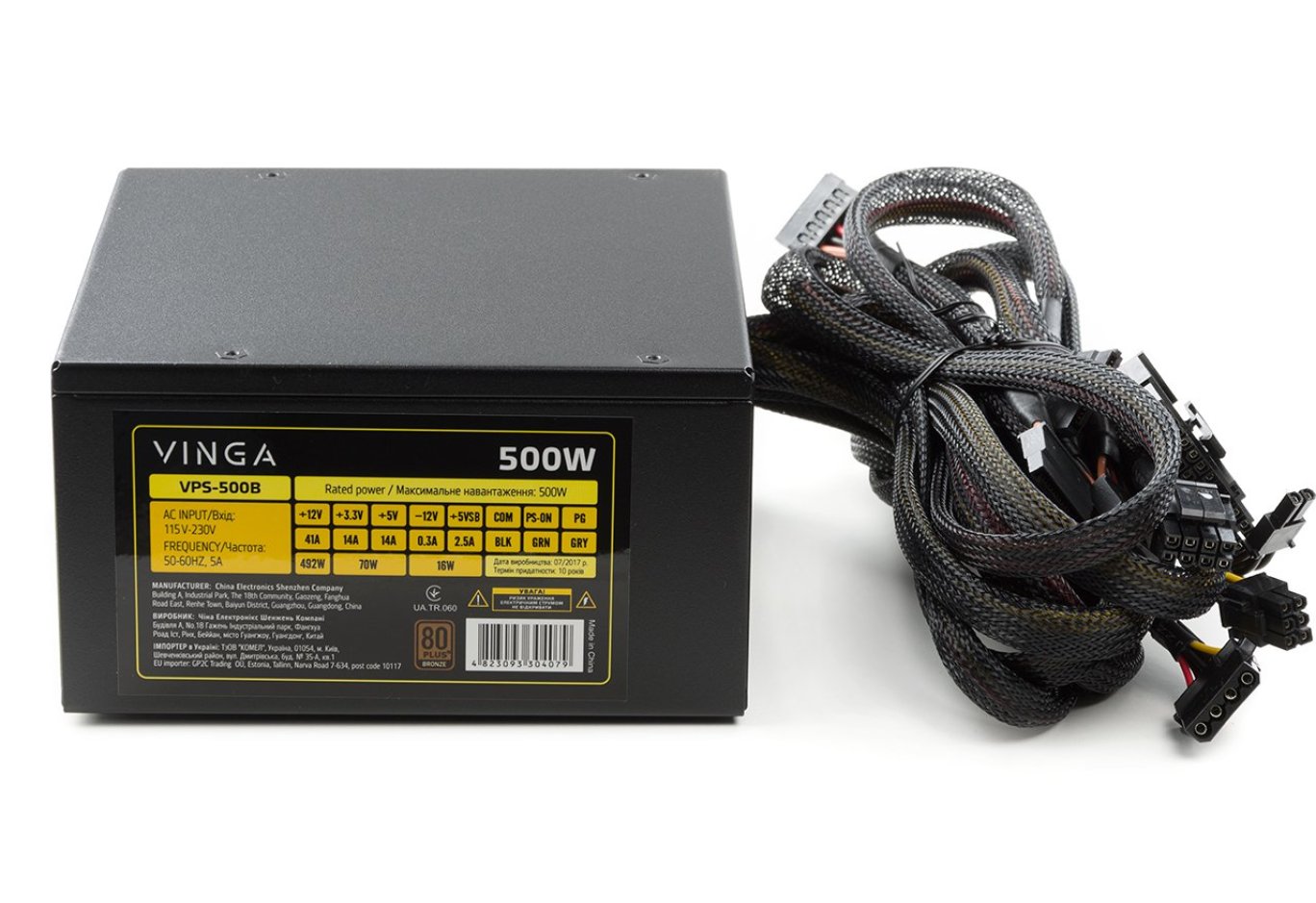
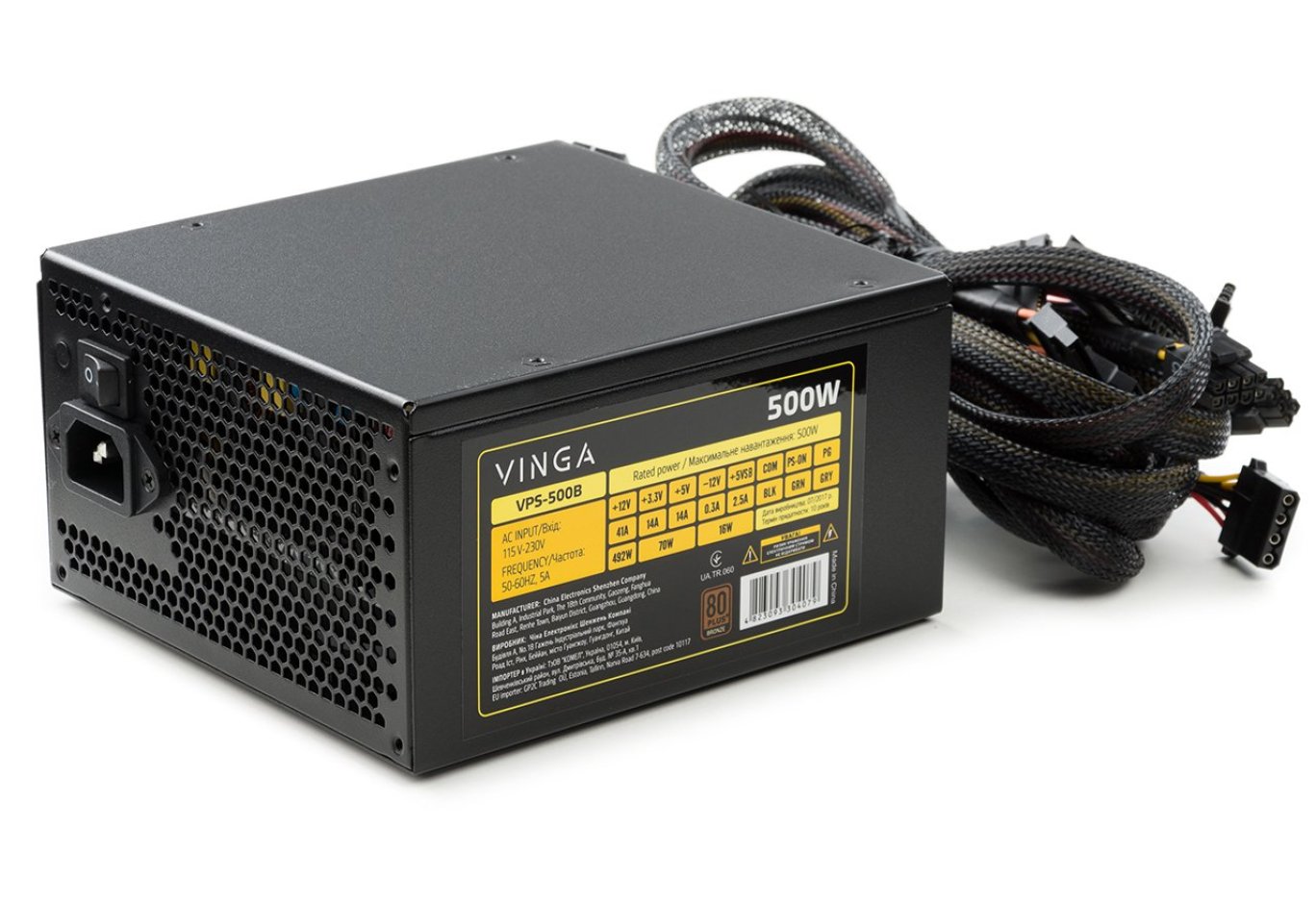
Найцікавішим зовнішнім елементом БЖ є наклейка з переліком електротехнічних характеристик. Максимальне навантаження на пристрій може досягати 500 Вт, і майже 99% з них здатна надати найбільш затребувана лінія +12В. Максимум 70 Вт виділяється для каналів +5В і +3,3В - невеликий показник, проте і такої потужності має цілком вистачити. Утім, тестування дозволить зробити виважений висновок з даного приводу.
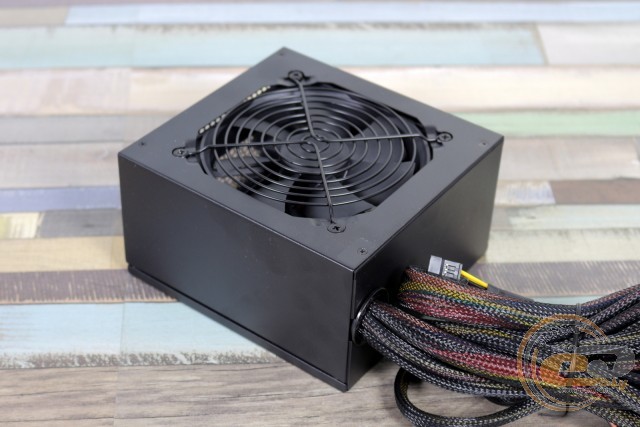
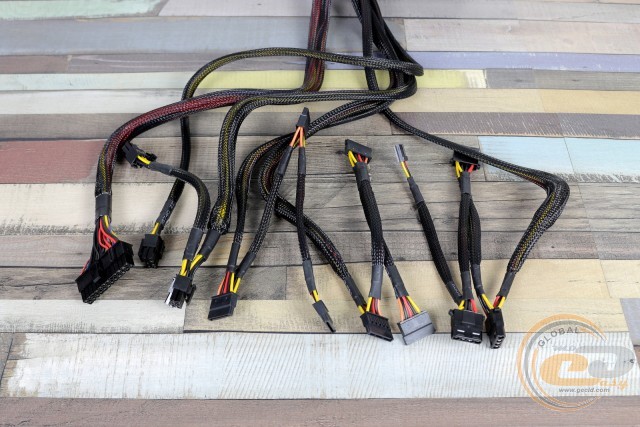
Усі кабелі виведені безпосередньо з джерела живлення - у бюджетному рішенні іншого ми і не чекали. Про шлейфи не йдеться, зате на місці нейлонове обплетення, зафіксоване термоусадками. Калібр дротів був обраний із запасом товщиною - 18 AWG (1,02 мм у діаметрі з площею перетину 0,82 мм2). Та й їх довжина без проблем допоможе виконати приховане укладання.
Повна конфігурація системи кабелів виглядає таким чином:
|
Типи роз'ємів |
Кількість |
Довжина дротів до роз'єма (роз'ємів), см |
|
20+4-контактний роз'єм живлення ATX |
1 |
60 |
|
4+4-контактний роз'єм живлення ATX12V |
1 |
70 |
|
два 6+2-контактні роз'єми PCIe |
1 |
60 |
|
Три роз'єми SATA |
2 |
60-75-90 |
|
три роз'єми PATA + один FDD |
1 |
60-75-90-105 |
Основні конектори представлені 20+4-контактним ATX і 4 + 4-контактним ATX12V. Майже будь-яку відеокарту можна підключити за допомогою двох 6+2-контактних роз'ємів PCIe, а для живлення периферії передбачені шість SATA (на двох окремих дротах) і три PATA з FDD.
Внутрішня будова
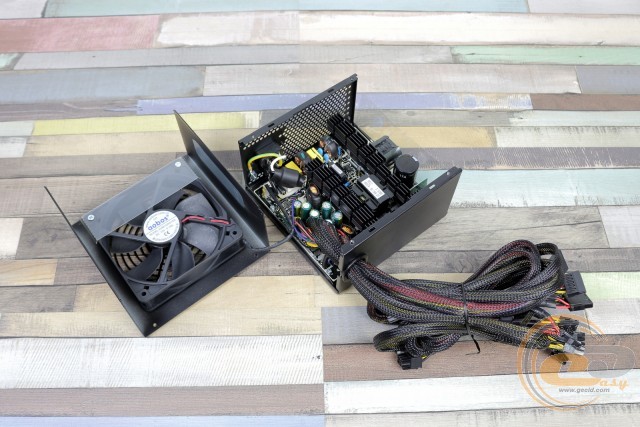
Щоб потрапити всередину корпуса, довелося відкрутити всього-то 4 гвинти. Відразу ж відзначимо хороше пасивне охолодження - два радіатори мають досить великі розміри, а кілька рядів ребер помітно збільшують площу тепловіддачі.
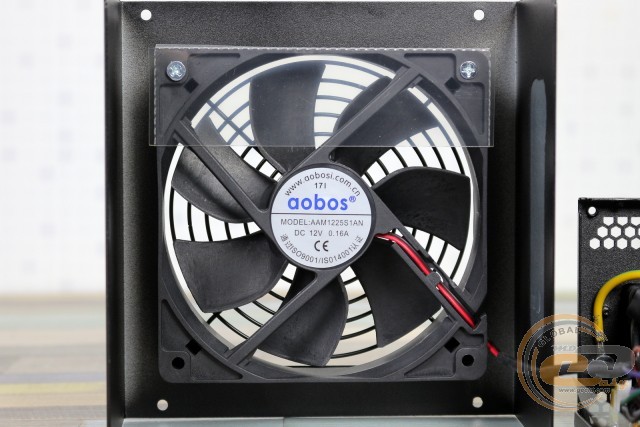
Обдувати нутрощі покликана 120-мм вертушка Aobos AAM1225S1AN (12 В, 0,16 А, 1,92 Вт), очевидно, заснована на підшипнику ковзання. Рішення з аналогічним позначенням ми вже бачили всередині 550-ватного БЖ Vinga VPS-550G, проте там воно споживало трохи більше електроенергії - 2,64 Вт.
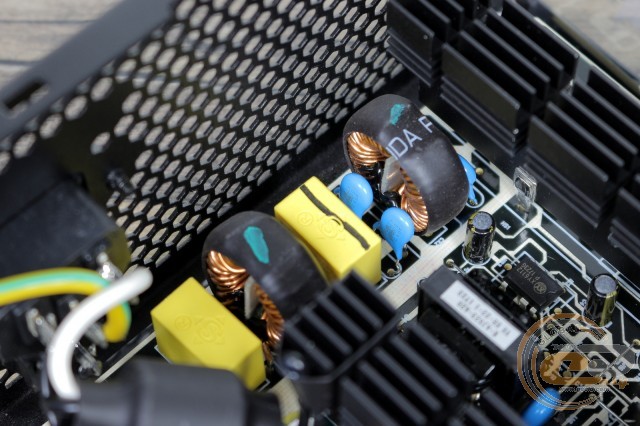
Фільтр електромагнітних перешкод включає до свого складу чотири Y- і два X-конденсатори, пару котушок і феритовий бочонок у вхідного термінала. Також у наявності запобіжник і такий важливий компонент як варистор (модель STE-14D561K), розміщений за радіатором. У цілому даний вузол виконаний на високому рівні, що зазвичай не характерно для бюджетних пристроїв.
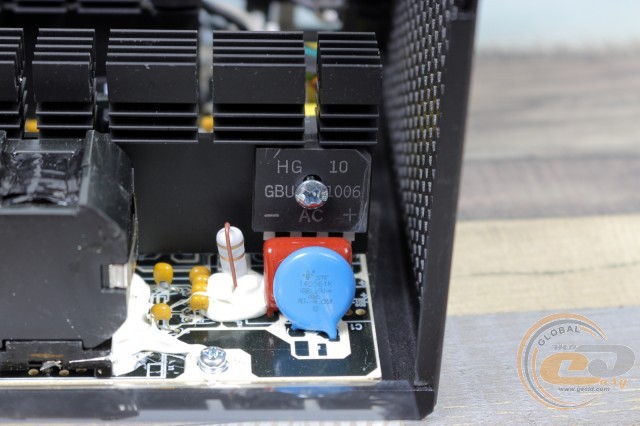
Випрямлення напруги здійснює діодна збірка GBU1006, розрахована на струм силою до 10 А. Оскільки даний елемент прикручений до головного радіатора, то за його нагрівання і збереження ми не переживаємо.
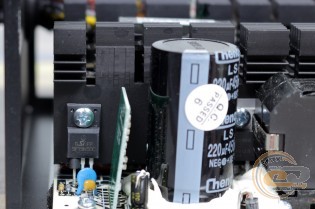
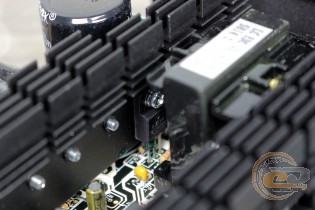
Також на радіаторі розмістилися силові елементи вузла PFC: діод CMPFCD86 і пара транзисторів SIF15N50C. Останні при включенні мають опір 490 мОм, що є досить великим показником. Чим він менший, тим енергоефективнішим буде саме джерело.
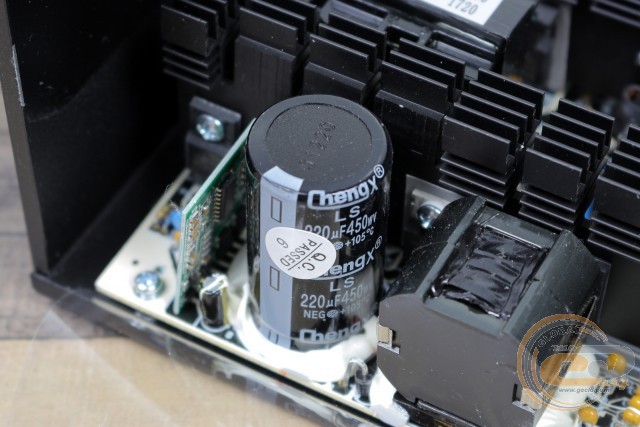
Поруч з дроселем модуля APFC розмістився вхідний електроліт ChengX (220 мкФ х 450 В). На упаковці заявлено використання тайванських конденсаторів, проте визначити місце виробництва даного елемента нам не вдалося. У мережі його якість оцінюється як низька. Що стосується ємності в 220 мкФ, то це відносно невеликий показник. Усередині 500-Вт рішень навіть бюджетного рівня часто зустрічаються елементи на 270-330 мкФ. А ось приналежність до високотемпературної серії все ж дає хоч якийсь привід для радості при огляді даного вузла.
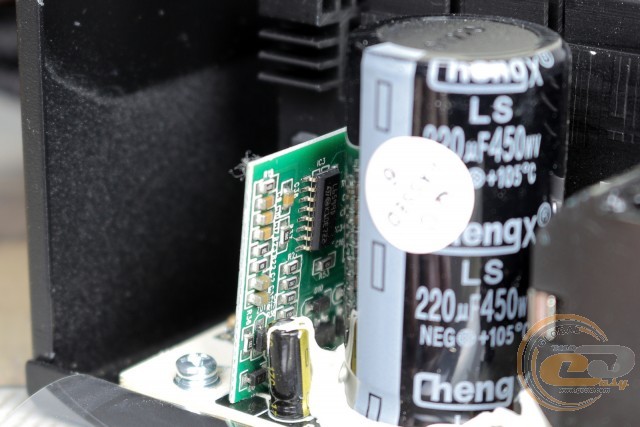
Управління роботою джерела здійснює ШІМ-контролер ST L6599. Він розроблений спеціально для використання в БЖ з півмостовою топологією, яка застосовується і в тестованій моделі.
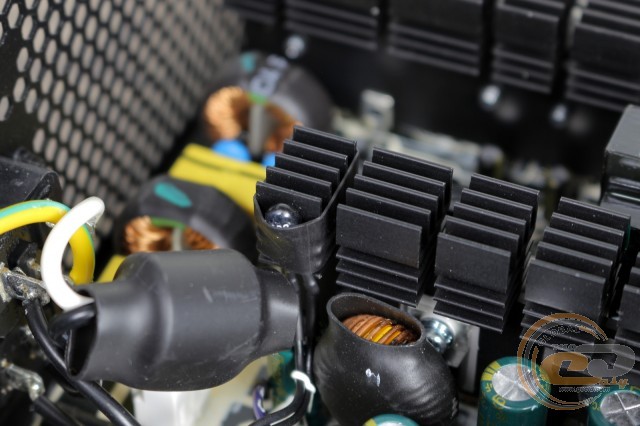
На другому радіаторі зафіксований термодатчик, показники якого і визначають частоту обертання вертушки. Сам гребінець відводить тепло від діодів Шотткі, які тут представлені кількістю 4 штуки: пара для лінії +12 В і по одному для більш дрібних номіналів.
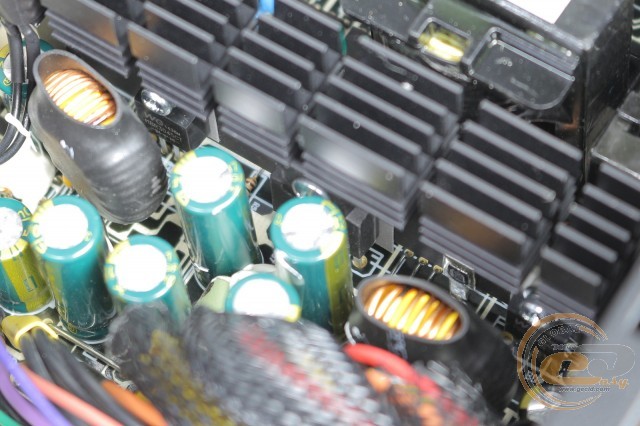
На етикетці виробник вказав максимальний струм для кожного каналу. Наскільки заявлені дані відповідають дійсності? Давайте порахуємо.
Максимальна сила струму розраховується за формулою I/(1 - D), де D - використовуваний робочий цикл (приймаємо 30%, тобто 0,3), а I - максимальний струм, підтримуваний випрямляючим діодом.
Лінія +12В
Середній випрямлений струм діода Шотткі MOSP S30D45CS становить 15 А. Оскільки маємо два діоди, з'єднаних паралельно, загальний струм дорівнює 30 А. Підставляємо в формулу: 30 А/(1-0,3)=42,9 А.
Множимо на номінал каналу, щоб отримати допустиму потужність: 42,9 А * 12 В = 514,8 Вт. Відмінне значення, навіть вище заявленого!
Також відзначимо низьке максимальне падіння напруги на діоді - всього 0,55 В, що позитивно впливає на нагрів і енегроефектівність пристрою в цілому.
Лінія +5В
Середній випрямлений струм діода Шотткі MBR3045CT становить 15 А. Підставляємо в формулу: 15 А / (1 - 0,3) = 21,4 А.
Множимо на номінал каналу, щоб отримати допустиму потужність: 21,4 А * 5 В = 107 Вт. Вище від заявленого показника, отже, залік!
Максимальне падіння напруги тут вище - 0,62 В, однак і цей показник є непоганим - нам зустрічалися навіть елементи зі значенням 0,84 В! Ясна річ, не в бронзових рішеннях ...
Лінія +3,3В
Позначення на транзисторі не розгледіли. Схоже, що застосовується аналогічна каналу +5В модель, у такому разі маємо той же струм 21,4 А, тільки множимо на 3,3 В. У підсумку отримуємо 70,6 Вт.
У цілому отримані показники помітно вищі від заявлених. Чи не здивуємося, якщо Vinga VPS-500B зможе працювати навіть при перевантаженні, що в даному ціновому діапазоні зустрічається рідко.
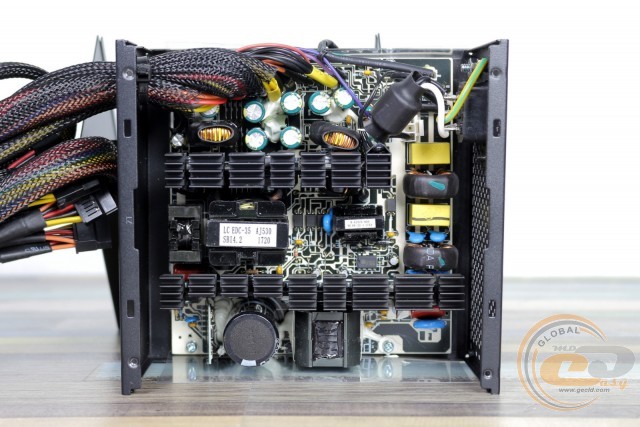
Стабілізація напруги здійснюється за груповим принципом. Маємо дві котушки, які повинні витримати досить велике навантаження.
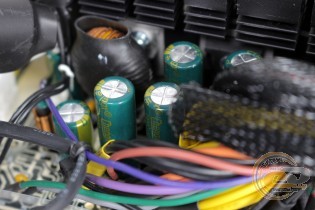
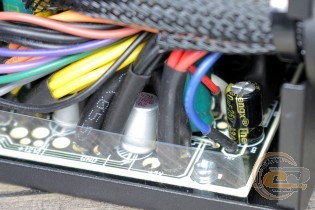
Елементна база вузла фільтрації також має конденсатори ChengX. Правда, є тут і пара надійних твердотілих рішень.
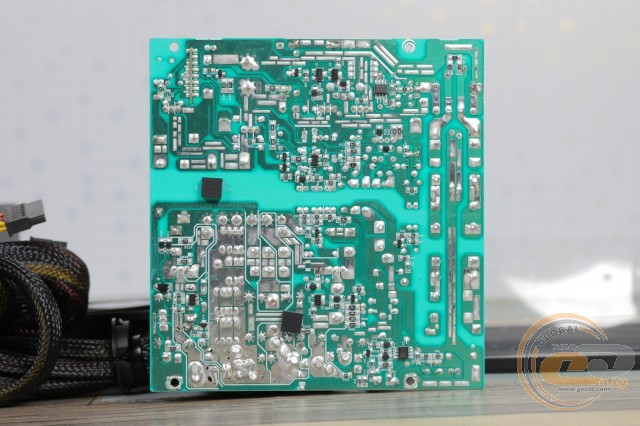
На упаковці зазначено наявність п'яти різних захистів, покликаних зберегти ваші комплектуючі при виникненні нештатних ситуацій:
- захист від підвищеної вихідної напруги (OVP);
- захист від зниженої вихідної напруги (UVP);
- захист від короткого замикання (SCP);
- захист від перевантаження потужності (OPP);
- захист від сплеску пускових струмів (SIP).
Крос-навантажувальні характеристики
Згідно з нормами стандарту ATX12V, допустимий діапазон відхилень напруг для всіх ліній живлення становить ± 5% від їх номіналу.
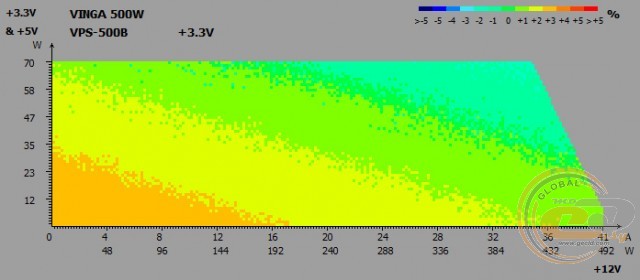
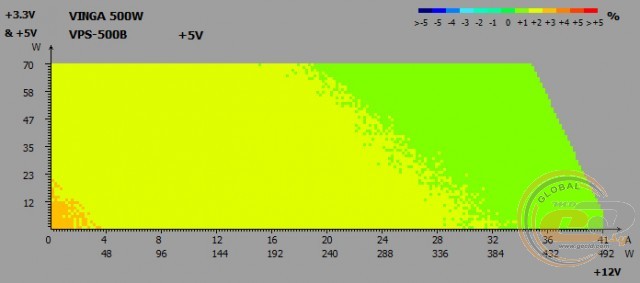
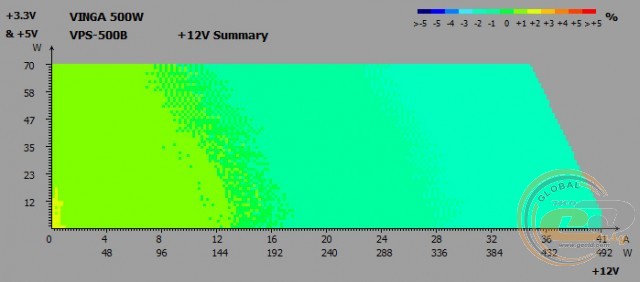
Під час крос-навантажувальних тестів на основних лініях живлення Vinga VPS-500B були зафіксовані такі відхилення напруг:
- лінія +3,3: від -1% до +3%;
- лінія +5: від + 1% до +3%;
- лінія + 12В: від -2% до +1%.
Стабілізація напруги виявилася на належному рівні - відхилення на всіх трьох лініях не перевищували допустимих норм. Та й максимальний їх показник склав всього лише 3% при 5% допуску.
Шуми і пульсації на всьому діапазоні напруг
Для стандарту ATX12V передбачені такі допустимі норми, що стосуються рівня пульсацій (peak-to-peak):
- лінії +3,3 В і +5 В: 50 мВ;
- лінія +12В: 120 мВ.
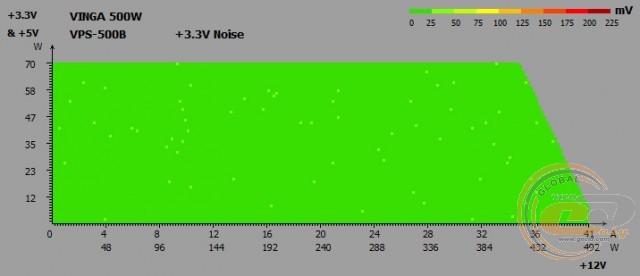
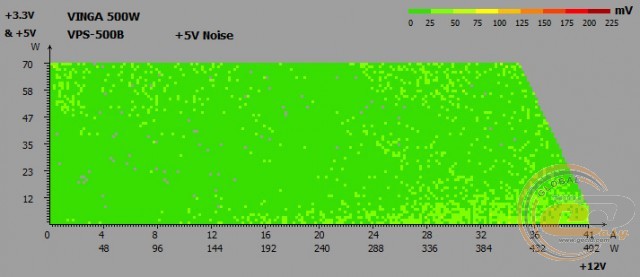
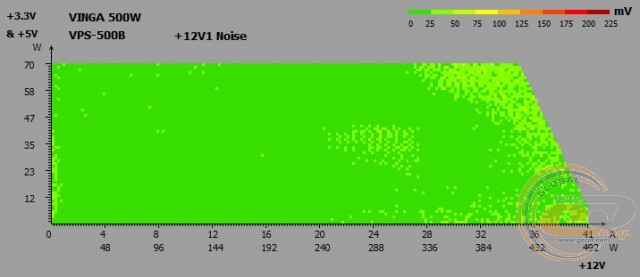
З пульсаціями також все в порядку - низький їх рівень залишив цілком приємне враження, і, знову ж таки, на всіх трьох каналах.
Чергова лінія живлення + 5VSB
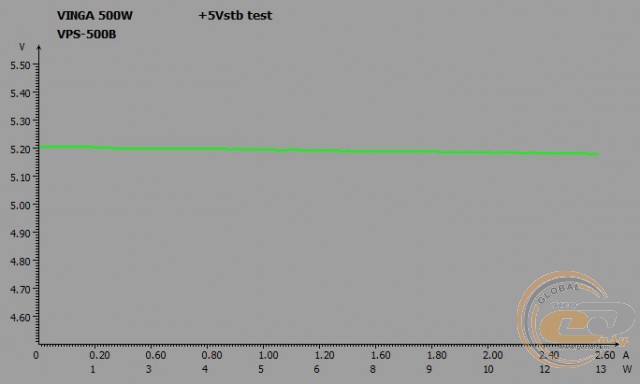
Напруга на черговій лінії живлення Vinga VPS-500 в залежності від навантаження змінюється в допустимих межах: від 5,21 до 5,18 В, не виходячи за рамки ± 5%.
PFC
Таблиця, що показує зміну PFC залежно від завантаження джерела живлення:
|
Навантаження, Вт |
55 |
100 |
150 |
200 |
250 |
300 |
350 |
400 |
500 |
|
Навантаження, % |
11 |
20 |
30 |
40 |
50 |
60 |
70 |
80 |
100 |
|
PFC |
0,74 |
0,86 |
0,94 |
0,96 |
0,97 |
0,98 |
0,99 |
0,99 |
0,99 |
Навантаження* − навантаження у відсотковому співвідношенні до номінальної потужності блока живлення.
На додаток до хорошого стану напруг маємо високий коефіцієнт PFC. Уже при споживаній потужності 150 Вт він досягнув 0,94, максимальне ж значення 0,99 було зафіксовано при навантаженні понад 350 Вт.
ККД
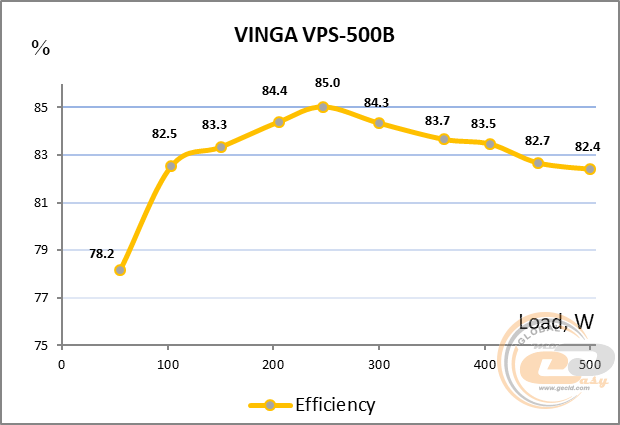
А як тут йдеться з енергоефективністю? Ми за традицією перевірили даний момент, і Vinga VPS-500B не дає приводу для занепокоєння - пристрій цілком відповідає заявленому стандарту 80 PLUS Bronze.
Найбільш ефективним джерелом виявився при половинному навантаженні в 250 Вт, що близько до енергоспоживання системника на базі 65- або 95-ватного процесора і відеокарти рівня NVIDIA GeForce GTX 1060. У такому режимі вертушці доведеться відводити 38 Вт тепла, у той час як при номінальному навантаженні (500 Вт) даний показник сягатиме вже 88 Вт.
Система охолодження і температурний режим
Побічно оцінити рівень шуму пристрою можна за швидкості обертання вентилятора при різній величині навантаження. Інтервал часу, після якого проводилося вимірювання швидкості обертання і наступне збільшення потужності, становив близько двадцяти хвилин. Результати вимірювання відзначені точками на графіку. При цьому температура навколишнього середовища для джерела живлення становила приблизно 27°С. Потрібно відзначити, що повітря всередині корпусу комп'ютера може бути дещо гарячіше, зокрема, температура 40°С є цілком допустимою. У той же час саме навантаження, створюване комп'ютерною системою, носить змінний характер, що полегшує температурний режим джерела живлення.
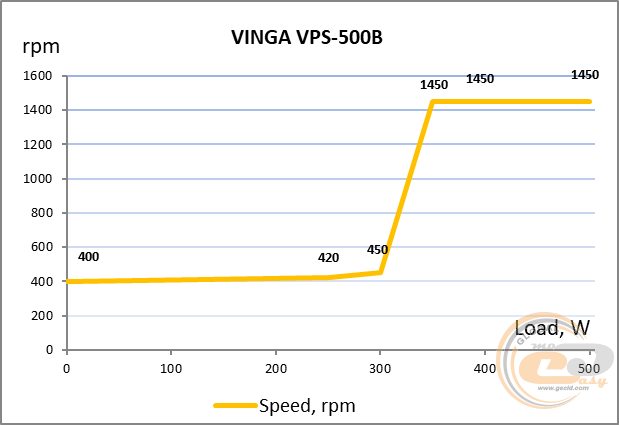
Вертушка в блоці живлення Vinga VPS-500B налаштована досить цікаво. При навантаженні до 300 Вт вона дуже тихо обертається на частоті 400-450 об/хв. Далі швидкість пропелера різко підвищується в діапазоні від 300 до 345 Вт, виходячи на номінальний режим 1450 об/хв. Після цього при підвищенні навантаження частота обертання не змінюється, а шум залишається дуже комфортним, на рівні нижче середнього.
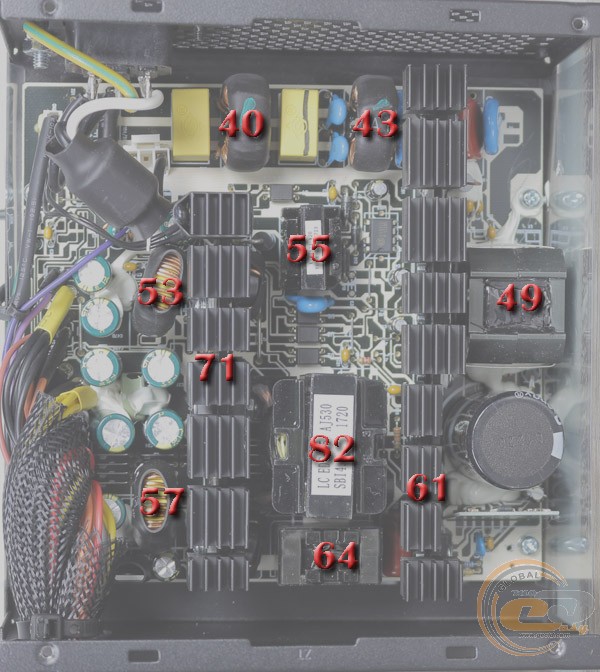
При номінальному ж навантаженні і частоті обертання 1450 об/хв найвища температура спостерігалася у головного трансформатора - 82°C. Нагадаємо, що такі показники були отримані при тривалому постійному навантаженні, тому в реальних умовах зі змінним навантаженням вони будуть ще нижчі.
Сторонні шуми під час роботи блока живлення
Як показала практика, на всьому діапазоні номінальної потужності Vinga VPS-500B не відтворює додаткових шумів у вигляді дратівногої писку дроселів або характерного гудіння трансформатора.
OverLOAD
Навантаження на тестовану модель ми збільшували до 600 Вт (+20% до номіналу). При цьому напруги на виході все ще залишалися в межах норми, а джерело працювало належним чином.
Практичні випробування на реальній конфігурації
Для побудови реальної комп'ютерної системи був задіяний потужний 6-ядерний процесор Intel Core i7-4960X, який працює в номінальному режимі. Як відеоприскорювач ми використали досить ненажерливу модель ZOTAC GeForce GTX 480 AMP! із заводським розгоном. Відзначимо, що метою даного експерименту є відтворення реальних навантажень продуктивного ПК і перевірка того, як при цьому працює блок живлення на практиці.
|
Материнська плата |
ASUS P9X79 PRO (Socket LGA2011, Intel X79 Express) |
|
Процесор |
Intel Core i7-4960X (Socket LGA2011, 3,6 ГГц, L3 12 МБ) |
|
Кулер |
Thermalright TRUE Spirit 120M |
|
Оперативна пам'ять |
4 x 4096 MБ DDR3-1333 Transcend PC3-10600 |
|
Відеокарта |
ZOTAC GeForce GTX 480 AMP! |
|
Жорсткий диск |
WD Caviar Blue 1 ТБ (WD10EALX) |
|
Корпус |
Spire SwordFin SP9007B з двома 120-мм вентиляторами |
|
Ватметр |
Seasonic PowerAngel |
|
Мультиметр |
MASTECH MY64 |
Виміри проводилися у двох режимах: «Простій» і «Максимальне завантаження», яке створювалося утилітами Linpack і FurMark 1.10.4. Під час тестування загальне енергоспоживання системи вимірювалося за допомогою приладу Seasonic PowerAngel, напруга на лініях живлення +12В, +5В і +3,3В фіксувалася за допомогою мультиметра MASTECH MY64.
У результаті виміру напруги живлення на вихідних лініях були отримані такі значення:
|
|
Vinga VPS-500B |
|||||
|
Режим |
Величина, В |
Відхилення % |
Величина, В |
Відхилення, % |
Величина, В |
Відхилення, % |
|
+12В |
||||||
|
Idle |
12,12 |
+1,0 |
12,27 |
+2,3 |
12,22 |
+1,8 |
|
Burn |
12,13 |
+1,1 |
12,23 |
+1,9 |
12,16 |
+1,3 |
|
+5В |
||||||
|
Idle |
5,18 |
+3,6 |
5,19 |
+3,8 |
5,11 |
+2,2 |
|
Burn |
5,19 |
+3,8 |
5,20 |
+4,0 |
5,05 |
+1,0 |
|
+3,3В |
||||||
|
Idle |
3,44 |
+4,2 |
3,39 |
+2,7 |
3,39 |
+2,7 |
|
Burn |
3,46 |
+4,8 |
3,38 |
+2,4 |
3,34 |
+1,2 |
|
Вхідне енергоспоживання, Вт |
||||||
|
Idle |
92 |
93 |
90 |
|||
|
Burn |
503 |
532 |
500 |
|||
Вихідні напруги Vinga VPS-500B при тестуванні на реальній конфігурації не виходять за межі допустимого діапазону. І під навантаженням (режим «Burn»), і при бездіяльності системи (режим «Idle») немає ніяких просідань нижче від номіналу, та й самі відхилення в максимум в 0,02 В дуже і дуже малі. Ось тільки показники лінії +3,3В все ж впритул підходять до максимально допустимої позначки 3,47 В.
Енергоспоживання в простої та вимкненому стані комп'ютера
| Блок живлення | Енергоспоживання в режимі, Вт | |
|
Sleep |
Power Off |
|
|
Vinga VPS-500B |
7 |
3 |
|
CHIEFTEC PROTON BDF-500S |
8 |
3 |
|
Vinga VPS-550G |
8 |
3 |
Енергоспоживання тестованого блок живлення у вимкненому стані комп'ютера і в режимі сну відповідає показникам інших порівнюваних за потужністю джерел, що побували в нашій тестовій лабораторії.
Висновки
За ціною менше ніж $50, блок живлення Vinga VPS-500B виявився вельми цікавим представником бюджетного сегмента. Головна його перевага - здатність не тільки видати заявлені 500 Вт потужності (і навіть більше), але при цьому продемонструвати високу якість живлення з повною відсутністю просадок напруги. Також він має хороший рівень ККД і можливість роботи в широкому діапазоні мережевих напруг, за що заслужено отримав сертифікат 80 PLUS Bronze. Порадувало і наявність повноцінного EMI-фільтра з усіма складовими, низки захистів, довгих і товстих дротів у нейлоновому обплетенні з актуальними конекторами в достатній кількості - багато в чому Vinga VPS-500B є прикладом для наслідування.
Однак не будемо забувати, що перед нами бюджетник зі звичною для даної цінової категорії економією. Так, використовувані конденсатори мають далеко не найкращу репутацію, хоча 3-річна гарантія від виробника все ж дозволяє деякий час не переживати про вихід пристрою з ладу. Що стосується роботи вентилятора, то він не потривожить вас шумом. А ось при певному навантаженні (до 300 Вт) можливий підвищений нагрів компонентів через низькі частоти його обертання. Справедливості заради відзначимо, що при навантаженні понад 350 Вт вертушка розганяється до номінальних 1450 об/хв, і в такому режимі нагрівання внутрішніх елементів далеке від критичного.
Переваги:
- високий рівень ККД (сертифікація 80 PLUS Bronze);
- наявність великого запасу потужності (не менше +20%);
- хороший стан напруги на лініях живлення;
- невеликі відхилення при зміні навантаження на 12-вольтному каналі без просадок нижче від номіналу;
- наявність EMI-фільтра в повному складі;
- низькі пульсації;
- наявність ряду захистів;
- можливість роботи в широкому діапазоні мережевої напруги;
- низьке енергоспоживання в режимі сну і у вимкненому стані комп'ютера;
- використання довгих дротів в нейлоновому обплетенні;
- досить тиха система охолодження;
- активний метод компенсації реактивної потужності.
Особливості:
- використання конденсаторів із не найкращою репутацією.
Автор: Олесь Пахолок
Переклад: Лілія Масюк
Висловлюємо подяку компаніям ASUS, Intel, Thermalright, Transcend, Western Digital і ZOTAC за надане для тестового стенда обладнання.